
What Is an Ellipse? The Stretched Circle Explained
An ellipse is a stretched circle with two special points inside it, called foci. For any point on the edge of an ellipse, the distances to the two foci always add up to the same total. Planets, fruit and even the Colosseum follow this shape.

How do you draw an ellipse?
You need paper on a firm surface, a pencil, a loop of string and two pins. Stick the two pins into the paper and loop the string around both. Put the pencil inside the loop, pull the string tight and move the pencil around, keeping the string stretched. The shape you get is an ellipse. With only one pin, the same trick draws a perfect circle. Be careful with the pins.
Key facts
- An ellipse always has two foci.
- For any point on an ellipse, the total distance to the two foci is the same.
- All ellipses are ovals, but not all ovals are ellipses.
Where do we find ellipses?
In nature, shapes are rarely perfect circles. Planets move around the Sun in elliptical orbits, and rockets often follow elliptical paths to save fuel. Many fruits have shapes close to ellipses. The Colosseum was built as a giant ellipse so everyone could see the shows in the centre. Satellite dishes use ellipses to focus signals at a single point.
Where can I read the full story?
This is a short version of “Ellipses Around Us” from OYLA Junior #12. The full article in OYLA Junior walks through the string-and-pins experiment step by step and adds brainstorm questions, such as how a bike with elliptical wheels would ride.
Read next
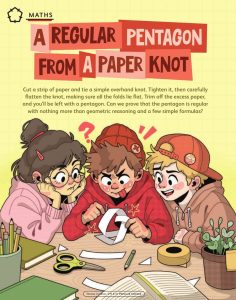
How to Make a Regular Pentagon from a Paper Knot
Cut a strip of paper of constant width, tie a simple overhand knot, tighten it and carefully flatten…
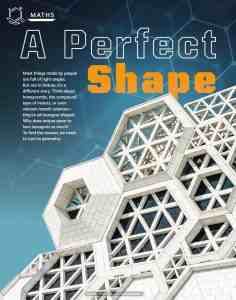
Why Are Hexagons So Common in Nature?
Hexagons are common in nature because they are efficient. Only three regular shapes can cover a flat surface…

Galileo Galilei: The Rebel Who Changed Science
Galileo Galilei (born 1564 in Pisa, Italy) is often called the father of the experimental method: he tested…
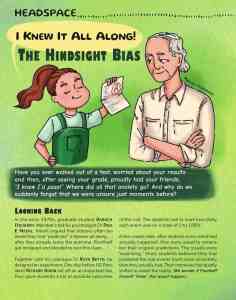
What Is Hindsight Bias? Why We Say “I Knew It All Along”
Hindsight bias is the tendency to see past events as more predictable than they really were. Once we…
Science like this, every month
OYLA Junior is a printed science magazine for curious kids and their parents, delivered to your door across India.
Made for ages 8+
Simple language, stories, comics and activities for young readers.
12 issues a year
A new printed issue every month, delivered to your door.
Free OYLA Workbook
Hands-on activities that turn reading into doing.
Trusted by 150,000+ readers
Loved by families and used in 1,500+ schools.
Keep asking "why?" with OYLA Junior
Every issue answers the questions kids ask about the world. Start your child's science journey today.