
How Do Cities Survive in the Desert?
Desert cities survive by solving two problems: water and heat. They pump water from underground aquifers, carry it through canals for hundreds of kilometres or remove the salt from seawater. To stay cool they use ancient windcatchers, white paint, trees and air conditioning.

Where do desert cities get water?
Before the Industrial Revolution, people could only settle in deserts near natural water sources such as oases. Technology changed that. People learned to pump water from deep aquifers, build canals to move it over hundreds of kilometres and remove salt from seawater. Each method has a downside. Groundwater takes hundreds of years to collect but can be pumped out in a few. Canals lose water to evaporation and seepage. Desalination uses a huge amount of energy.
Key facts
- In the Sahara, temperatures can swing by 40°C between day and night.
- Windcatchers can be up to 18 metres high and were first used in ancient Egypt.
- Nearly 100 million people live in the Nile Valley, the world’s largest oasis.
How did people cool buildings before air conditioning?
With windcatchers: tall towers, sometimes up to 18 metres high, with air channels that let hot air escape from the rooms below while cooler air is drawn in. They were first used in ancient Egypt; the oldest known image of one dates back to the 14th century BCE. In Iran they are called badgir. Whole cities can be cooled too, by painting buildings white and planting trees.
Where can I read the full story?
This is a short version of “Beat the Heat: A Guide to Desert Survival” from OYLA 12+, Vol. 8, Issue 8. The full article in OYLA 12+ explains aquifers and windcatchers with diagrams and shows how desert technology is now spreading to cooler countries.
Read next

Types of Mountains and the World’s Most Amazing Peaks
Mountains cover about a quarter of Earth's land surface, and no two are exactly alike. Besides the ranges…
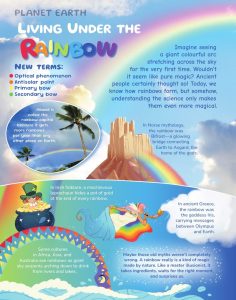
How Do Rainbows Form? Why Every Rainbow Is Really a Circle
A rainbow forms when sunlight shines into raindrops. Sunlight looks white, but it is really all colours mixed…
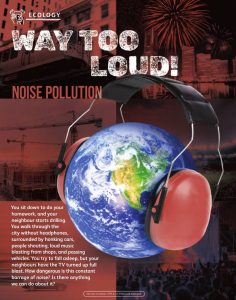
What Is Noise Pollution and How Does It Affect People and Animals?
Noise pollution is excessive or unwanted sound that drowns out the natural sounds of an environment. Traffic, aircraft,…

Louis-Nicolas Vauquelin: The Chemist Who Discovered Chromium
Louis-Nicolas Vauquelin (born 1763) was a French chemist who discovered the element chromium in 1797 and also discovered…
Science like this, every month
OYLA is a printed science magazine for curious teens and their parents, delivered to your door across India.
Made for ages 12+
In-depth articles on space, technology, biology and maths for teens.
12 issues a year
A new printed issue every month, delivered to your door.
Free OYLA Workbook
Hands-on activities that turn reading into doing.
Trusted by 150,000+ readers
Loved by families and used in 1,500+ schools.
Keep exploring with OYLA
Every issue answers the questions kids ask about the world. Start your child's science journey today.