
What Is Onomatopoeia? Words That Sound Like Noises
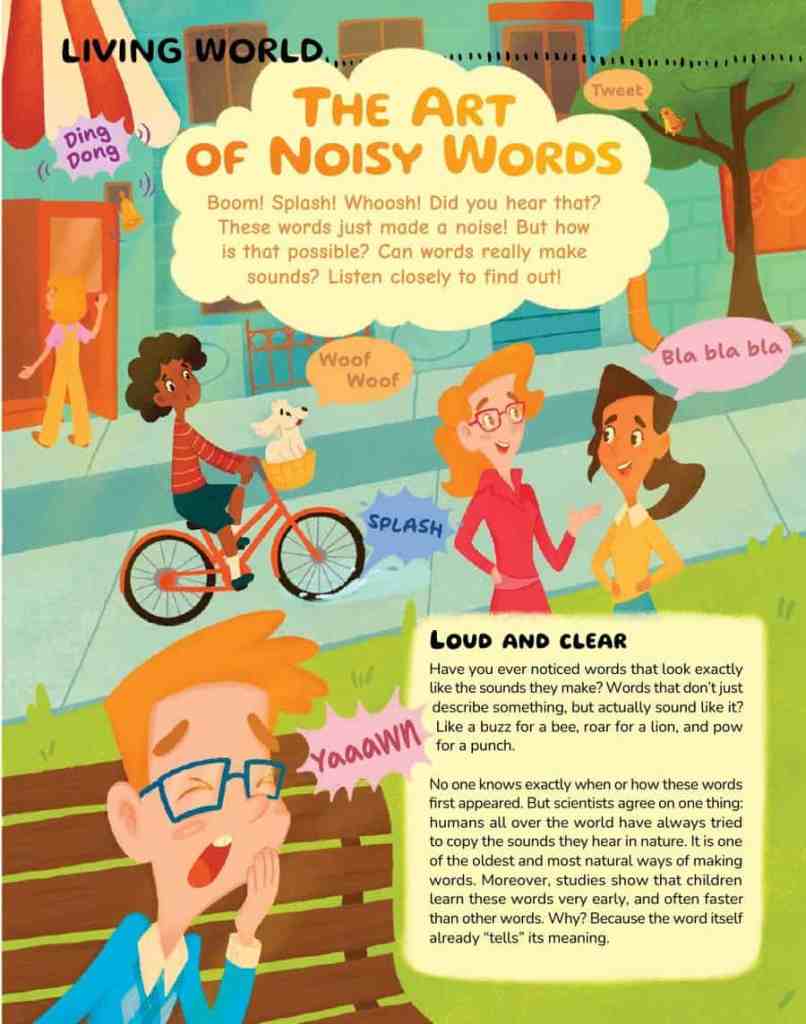
Onomatopoeia is the name for words that sound like the noise they describe, such as buzz, roar, boom and splash. People all over the world have always copied the sounds around them, and it is one of the oldest and most natural ways of making words.
Greetings Around the World: How Do People Say Hello?

People in every culture greet each other before they start talking, but they do it in very different ways: with words, handshakes, bows, hugs or even by touching noses. Greetings show friendly intentions and help people trust each other.
How Did People Send Messages Before Phones?
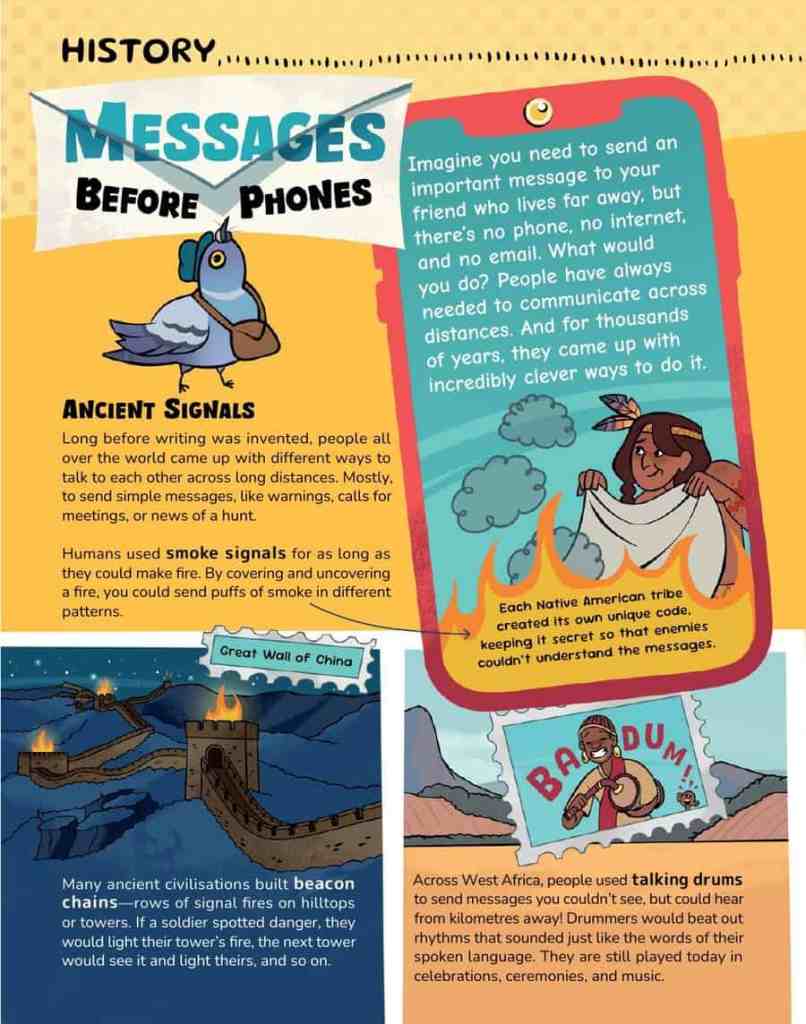
Before phones, people sent messages with smoke signals, beacon fires and talking drums, then with couriers, horses, pigeons and ships. Public postal services appeared in the early 1500s, and the electric telegraph of 1837 finally made messages almost instant.
3D Bioprinting: How Do Scientists Print Living Tissue?
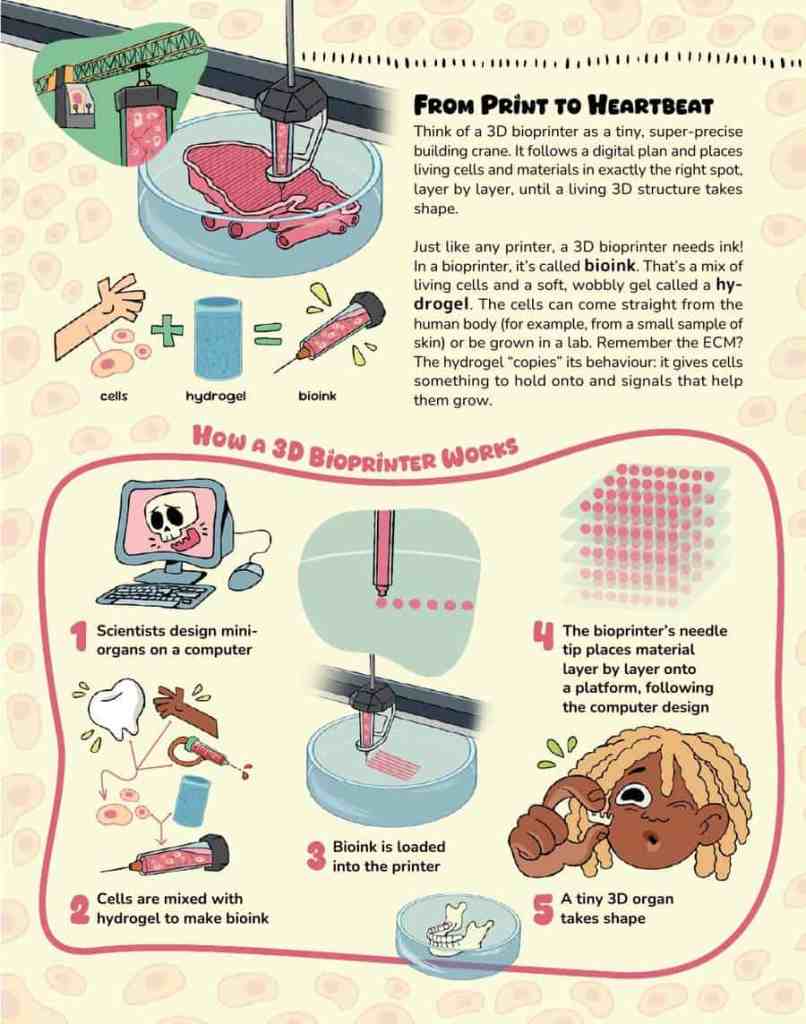
A 3D bioprinter builds tiny body parts and mini-organs from real human cells instead of plastic. It places a mix of living cells and gel, called bioink, layer by layer, following a digital plan. Bioprinted heart cells can start beating on their own within a few days.
How Does a Microscope Work?
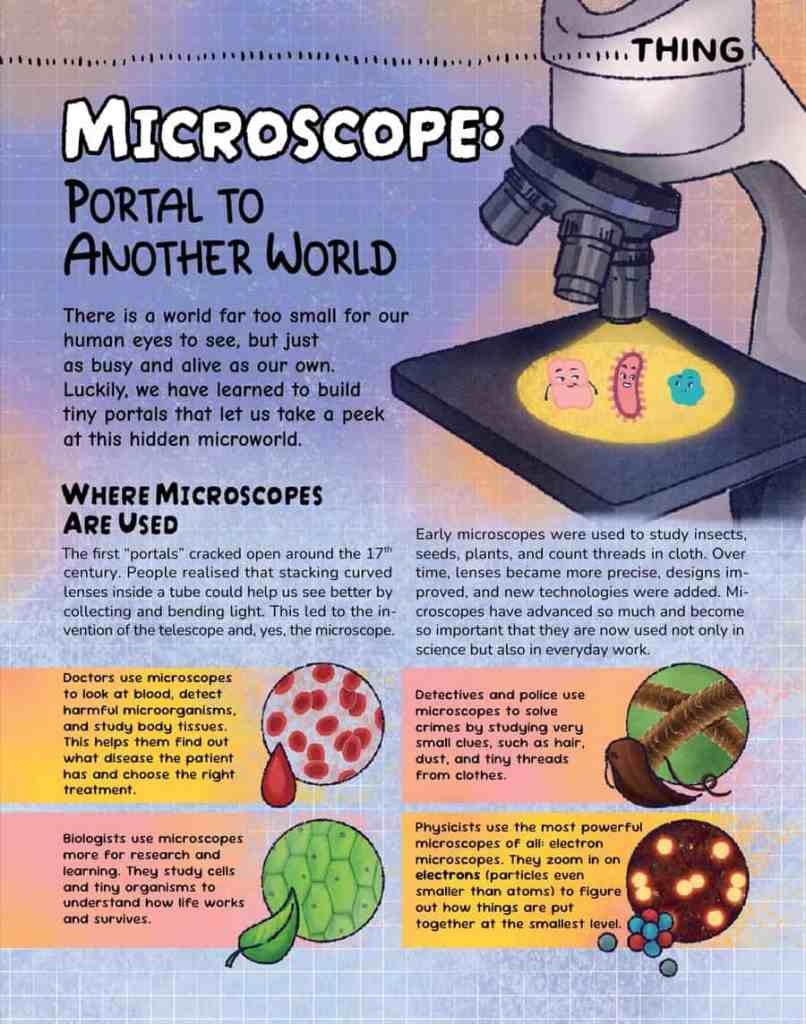
A light microscope uses two sets of lenses to collect and bend light so that tiny things look much bigger. With a 40× objective lens and a 10× eyepiece, you see an object 400 times larger than it really is.
Can Bacteria Survive in Space?
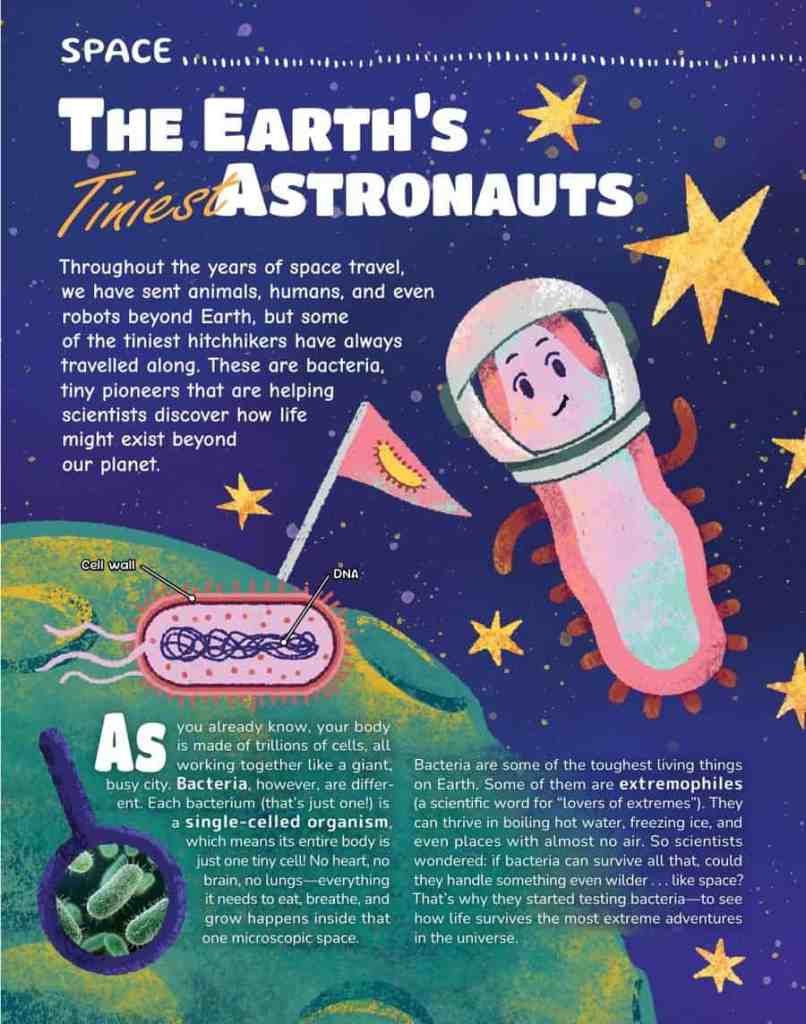
Yes, some bacteria can survive in space. One species, Deinococcus radiodurans, stayed alive for three years on the outside of the International Space Station, and another survived a rocket ride with forces 13 times stronger than gravity. That is why space scientists follow strict rules about germs.
Sea Turtles: 7 Species and Their Secret Lives

There are seven species of sea turtle, and each one lives differently: leatherbacks dive to about 1.3 kilometres, loggerheads cross the Pacific as babies, and flatbacks never leave the coast of northern Australia. Scientists also treat turtles as living mirrors of ocean health.
How Do Animals Communicate? Talk of the Wild

Animals communicate in four main ways: sound, body language, smell and colour. A humpback whale’s song can travel up to 16,000 kilometres through the ocean, a chameleon’s colour change is a mood message, and a cat rubbing against your legs is claiming you as its own. Can you learn to read their secret messages?