
How Did Animals Learn to Fly? Insects, Pterosaurs, Bats and Birds
Animals learned to fly not once but four separate times. Insects took to the air first, more than 320 million years ago, followed by pterosaurs, birds and bats. Scientists call this convergent evolution: the same ability appearing in animals that did not inherit it from a shared ancestor.

How did insects get wings?
Insects were flying long before any dinosaur walked the Earth, so good fossils are hard to find, and we still don’t know exactly how their wings evolved. One leading idea is that early insects grew stiff little flaps on their backs that helped them parachute or skim across water. Over time, the flaps gained muscles, joints and nerves and became wings. Flies now use only two wings: their back pair turned into tiny balance sensors called halteres.
Key facts
- Bats are the only mammals that can truly fly; they took to the air about 50 million years ago.
- The hummingbird is the only bird that can fly backwards.
- The wandering albatross has wings up to about 3.5 metres across.
How could a giant pterosaur fly?
Pterosaurs were flying reptiles that lived alongside the dinosaurs. Each wing was a sheet of skin stretched from an incredibly long fourth finger down to the back legs. Quetzalcoatlus had wings more than 10 metres across and stood as tall as a giraffe, yet it could fly because its bones were hollow, as thin as an eggshell and braced inside with tiny struts. A wing pushes air down, and the air pushes back up: that push is called lift.
Are birds really dinosaurs?
Yes. Feathers appeared more than 160 million years ago on several kinds of dinosaurs, first as soft fuzz that may have kept them warm. Some feathered dinosaurs later used their arms to fly, and those flying, or avian, dinosaurs are what we now call birds. Scientists still debate whether bird ancestors glided down from trees or flapped their feathered arms as they ran along the ground.
Where can I read the full story?
This is a short version of “How Wings Conquered the Sky” from OYLA Junior #15 (October 2026). The full article in OYLA Junior shows how a bat builds its wing from its hand and explains the main parts of a bird’s wing.
Read next
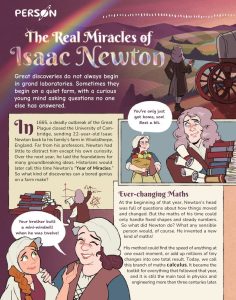
Isaac Newton’s Year of Wonders: Gravity, Light and the Laws of Motion
In 1665, the Great Plague closed the University of Cambridge and sent 22-year-old Isaac Newton home to his…

What Do Colours Mean Around the World?
The same colour can mean very different things in different cultures. In European countries, brides traditionally wear white,…

Types of Mountains and the World’s Most Amazing Peaks
Mountains cover about a quarter of Earth's land surface, and no two are exactly alike. Besides the ranges…
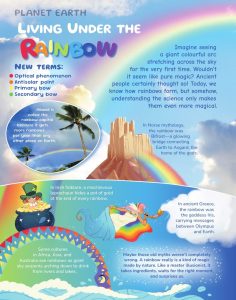
How Do Rainbows Form? Why Every Rainbow Is Really a Circle
A rainbow forms when sunlight shines into raindrops. Sunlight looks white, but it is really all colours mixed…
Science like this, every month
OYLA Junior is a printed science magazine for curious kids and their parents, delivered to your door across India.
Made for ages 8+
Simple language, stories, comics and activities for young readers.
12 issues a year
A new printed issue every month, delivered to your door.
Free OYLA Workbook
Hands-on activities that turn reading into doing.
Trusted by 150,000+ readers
Loved by families and used in 1,500+ schools.
Keep asking "why?" with OYLA Junior
Every issue answers the questions kids ask about the world. Start your child's science journey today.