
What Were Terror Birds? The Giant Birds That Ruled South America
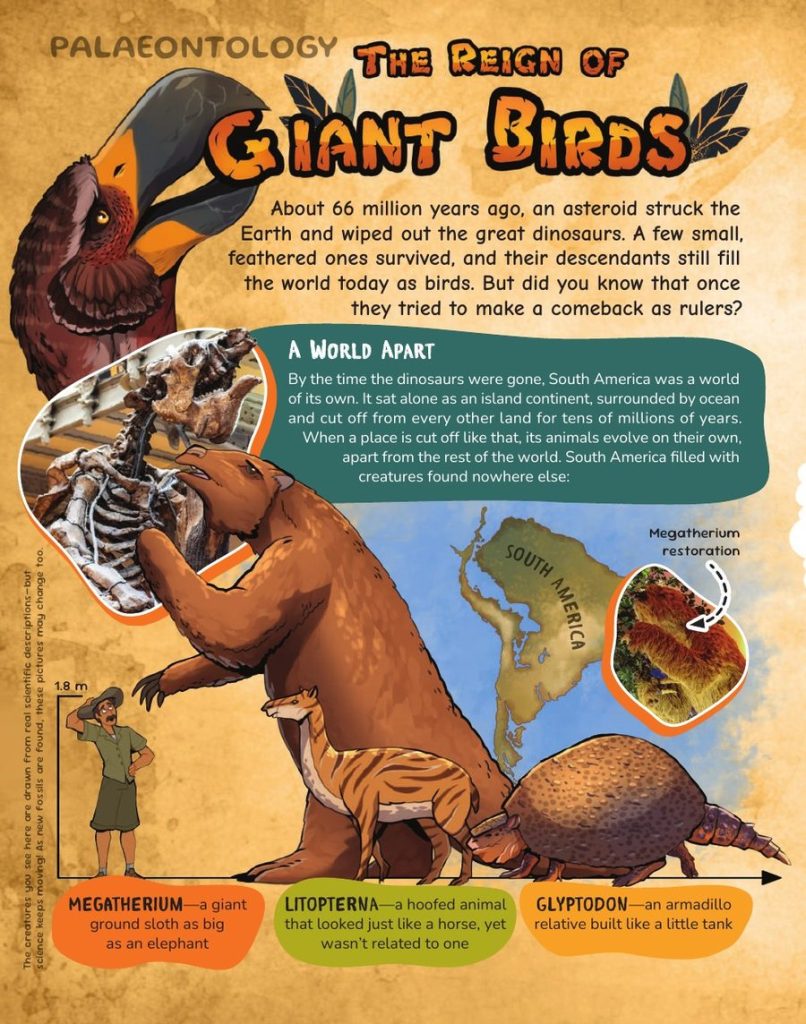
Terror birds, or Phorusrhacids, were flightless predatory birds that ruled South America for tens of millions of years after the great dinosaurs died out. With no lions, wolves or bears on the island continent, some grew as tall as a basketball hoop and became top predators, hunting with hooked beaks and powerful legs.
How Did Animals Learn to Fly? Insects, Pterosaurs, Bats and Birds

Animals learned to fly not once but four separate times. Insects took to the air first, more than 320 million years ago, followed by pterosaurs, birds and bats. Scientists call this convergent evolution: the same ability appearing in animals that did not inherit it from a shared ancestor.
Why Are Most Mammals Colour-Blind?

Most mammals see fewer colours than we do because they have only two types of colour-sensitive cone cells, while humans have three. Scientists think this goes back to the age of dinosaurs, when early mammals became mostly nocturnal and colour vision gave them little advantage in the dark.
Giant Panda Facts: Why Pandas Eat So Much Bamboo

Giant pandas eat so much bamboo because they digest it poorly. Like other members of the order Carnivora, they have a short digestive tract and digest only about 17% of what they eat, and bamboo is low in nutrients. So an adult may spend 10–14 hours a day eating, and up to 38 kg of bamboo.
Sea Turtles: 7 Species and Their Secret Lives

There are seven species of sea turtle, and each one lives differently: leatherbacks dive to about 1.3 kilometres, loggerheads cross the Pacific as babies, and flatbacks never leave the coast of northern Australia. Scientists also treat turtles as living mirrors of ocean health.
How Do Animals Communicate? Talk of the Wild

Animals communicate in four main ways: sound, body language, smell and colour. A humpback whale’s song can travel up to 16,000 kilometres through the ocean, a chameleon’s colour change is a mood message, and a cat rubbing against your legs is claiming you as its own. Can you learn to read their secret messages?