
The History of Sports Balls: Why Do Balls Bounce?
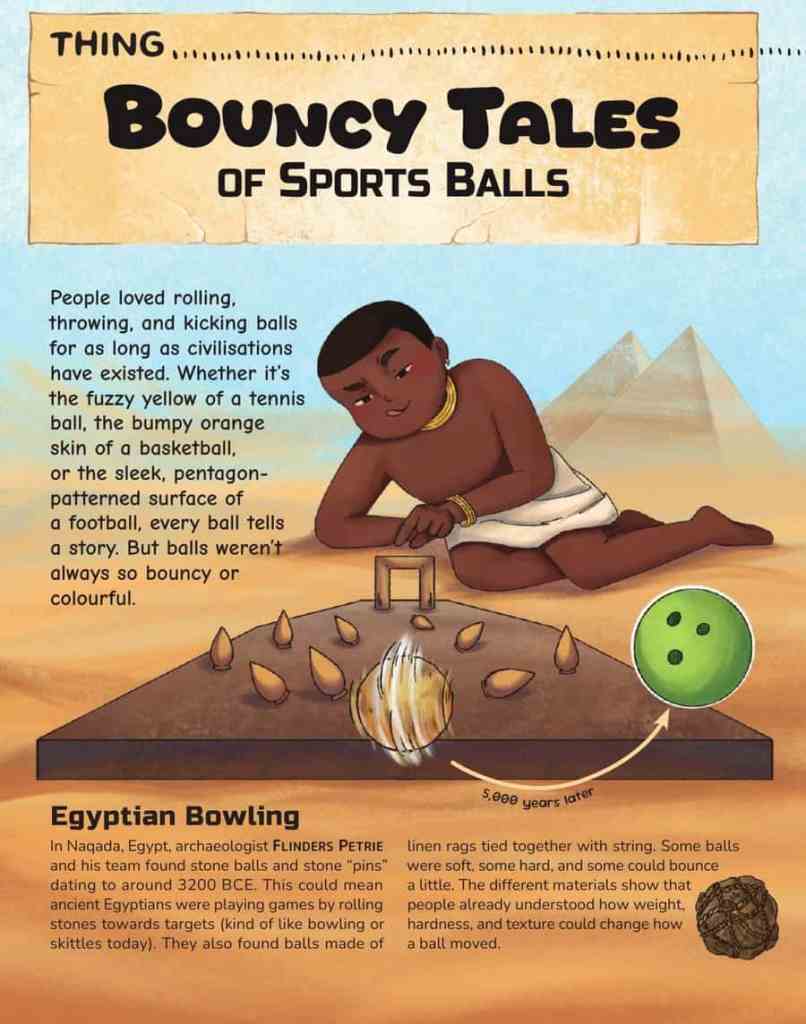
People have played with balls for at least 5,000 years. The first balls were made of stone, linen and leather; the Maya and Aztecs made the first rubber balls over 3,500 years ago; and in the 1800s vulcanised rubber finally made balls that bounce the same every time.
Who made the first rubber balls?
Over 3,500 years ago, the Maya, Aztecs and other Indigenous peoples of Mesoamerica mixed the milky sap of rubber trees with juice from morning glory vines to make solid, heavy balls. In a game called Pitz, players hit the ball with their hips, thighs or shoulders. But this rubber was unreliable: sticky in hot weather and cracked in the cold. Bigger balls could weigh up to 4 kilograms.
Key facts
- Stone balls found in Naqada, Egypt, date to around 3200 BCE.
- The peoples of Mesoamerica made rubber balls over 3,500 years ago.
- Charles Goodyear discovered vulcanisation in the 1800s.
Why does a ball bounce?
When a ball hits the ground, the air inside gets squeezed and pushes back. A strong outer shell helps it pop back quickly. Stretchy materials like rubber squash and spring back without cracking. A round shape spreads the force evenly, so the ball bounces straight. How hard you throw it and what it lands on matter too: a hard throw on hard ground gives a higher bounce.
Where can I read the full story?
This is a short version of “Bouncy Tales of Sports Balls” from OYLA Junior #12. The full article in OYLA Junior compares an Aztec rubber ball with the oldest vulcanised football and explains the design of seven modern sports balls.
Read next

What Is a Lingua Franca? The Search for a Universal Language
A lingua franca is a language people use to communicate when they do not share a native language.…

Famous Markets Around the World, from the Grand Bazaar to Floating Markets
Markets are as old as trade itself: people began exchanging goods when they realised that each of them…

Galileo Galilei: The Rebel Who Changed Science
Galileo Galilei (born 1564 in Pisa, Italy) is often called the father of the experimental method: he tested…

What Is Hindsight Bias? Why We Say “I Knew It All Along”
Hindsight bias is the tendency to see past events as more predictable than they really were. Once we…
Science like this, every month
OYLA Junior is a printed science magazine for curious kids and their parents, delivered to your door across India.
Made for ages 8+
Simple language, stories, comics and activities for young readers.
12 issues a year
A new printed issue every month, delivered to your door.
Free OYLA Workbook
Hands-on activities that turn reading into doing.
Trusted by 150,000+ readers
Loved by families and used in 1,500+ schools.
Keep asking "why?" with OYLA Junior
Every issue answers the questions kids ask about the world. Start your child's science journey today.