
Why Can’t Humans Have Naturally Blue Hair?
Human hair cannot be naturally blue because its colour comes from only two pigments: eumelanin, which gives dark shades, and pheomelanin, which gives golden and reddish ones. Every natural hair colour is a mix of the two, and neither can produce blue, green or purple.

What decides the colour of your hair?
Two natural pigments. Eumelanin is responsible for dark shades, from chestnut brown to jet black: the more eumelanin you have, the darker your hair. Pheomelanin is responsible for golden or reddish hues.
Key facts
- Hair colour is determined by two pigments: eumelanin and pheomelanin.
- More eumelanin means darker hair.
Why do we have only these two pigments?
The answer is likely evolution. For millions of years, our ancestors needed to blend in with their surroundings to avoid predators and to hunt.
Where can I read the full story?
This is a short version of “Why Don’t Humans Naturally Have Blue or Red Hair?” from OYLA 12+, Vol. 8, Issue 8. The same issue tells the story of Louis-Nicolas Vauquelin, the chemist who first studied what hair is made of.
Read next

Cognitive Biases: Thinking Traps That Fool Even Scientists
Cognitive biases are mental shortcuts that help the brain decide quickly but can lead it astray. We notice…
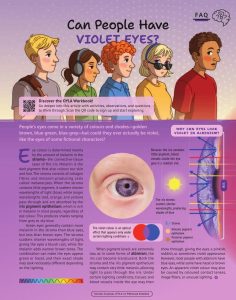
Can People Have Violet Eyes?
Human eyes are never truly violet. Eye colour depends mainly on how much melanin is in the stroma,…

What Does the Spleen Do? Facts About a Forgotten Organ
The spleen is a small organ tucked under the ribs on the upper left side of the abdomen,…
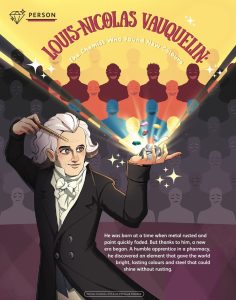
Louis-Nicolas Vauquelin: The Chemist Who Discovered Chromium
Louis-Nicolas Vauquelin (born 1763) was a French chemist who discovered the element chromium in 1797 and also discovered…
Science like this, every month
OYLA is a printed science magazine for curious teens and their parents, delivered to your door across India.
Made for ages 12+
In-depth articles on space, technology, biology and maths for teens.
12 issues a year
A new printed issue every month, delivered to your door.
Free OYLA Workbook
Hands-on activities that turn reading into doing.
Trusted by 150,000+ readers
Loved by families and used in 1,500+ schools.
Keep exploring with OYLA
Every issue answers the questions kids ask about the world. Start your child's science journey today.