
Isaac Newton’s Year of Wonders: Gravity, Light and the Laws of Motion
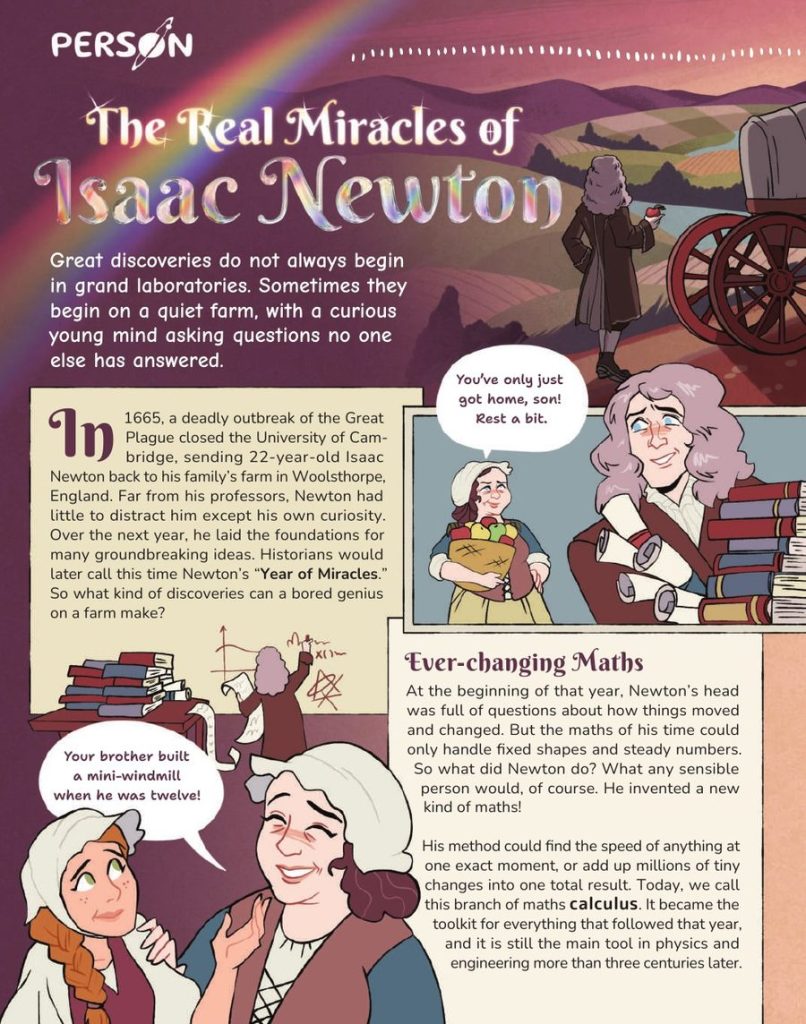
In 1665, the Great Plague closed the University of Cambridge and sent 22-year-old Isaac Newton home to his family’s farm in Woolsthorpe, England. Over the next year he laid the foundations of calculus, his ideas about gravity and his discoveries about light. Historians call this time his “Year of Miracles”.
Carl Friedrich Gauss: Facts About the Prince of Mathematicians
Carl Friedrich Gauss (1777–1855) was a German mathematician known as the “Prince of Mathematicians”. Born into a working-class family in Brunswick, he made discoveries in number theory, geometry, astronomy and physics, and helped build one of the world’s earliest electromagnetic telegraphs.
Louis-Nicolas Vauquelin: The Chemist Who Discovered Chromium
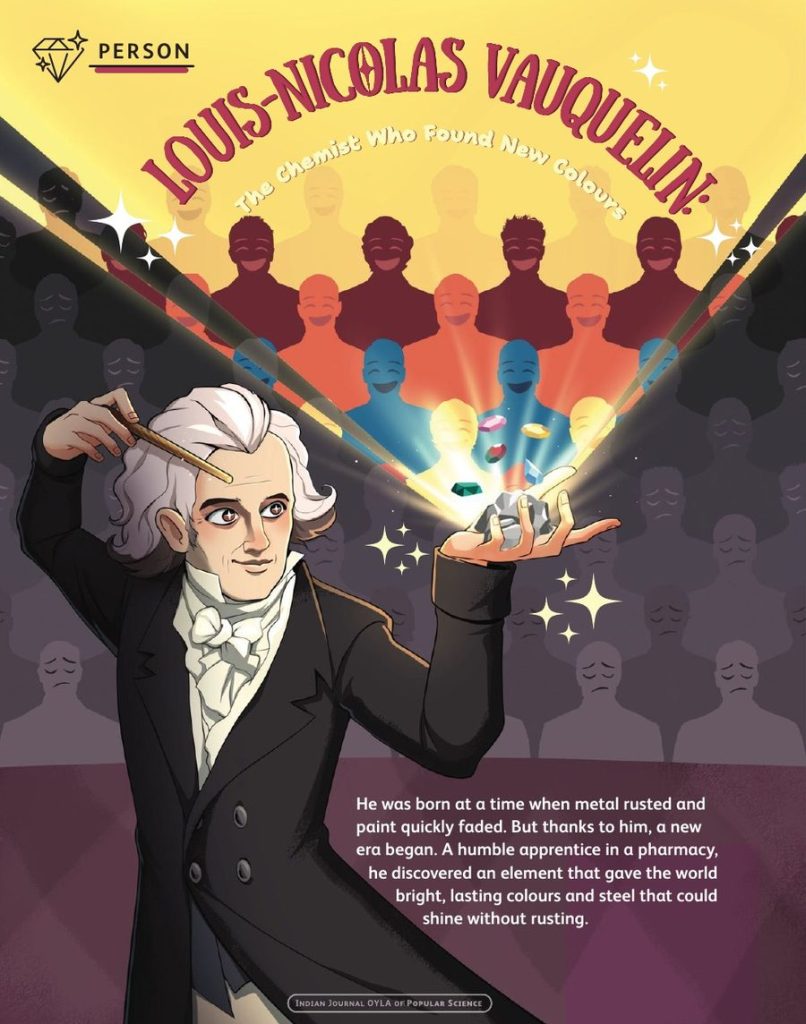
Louis-Nicolas Vauquelin (born 1763) was a French chemist who discovered the element chromium in 1797 and also discovered beryllium. His work led to bright, lasting pigments such as chrome yellow and, later, to stainless steel. He was also the first person to isolate an amino acid.
Galileo Galilei: The Rebel Who Changed Science
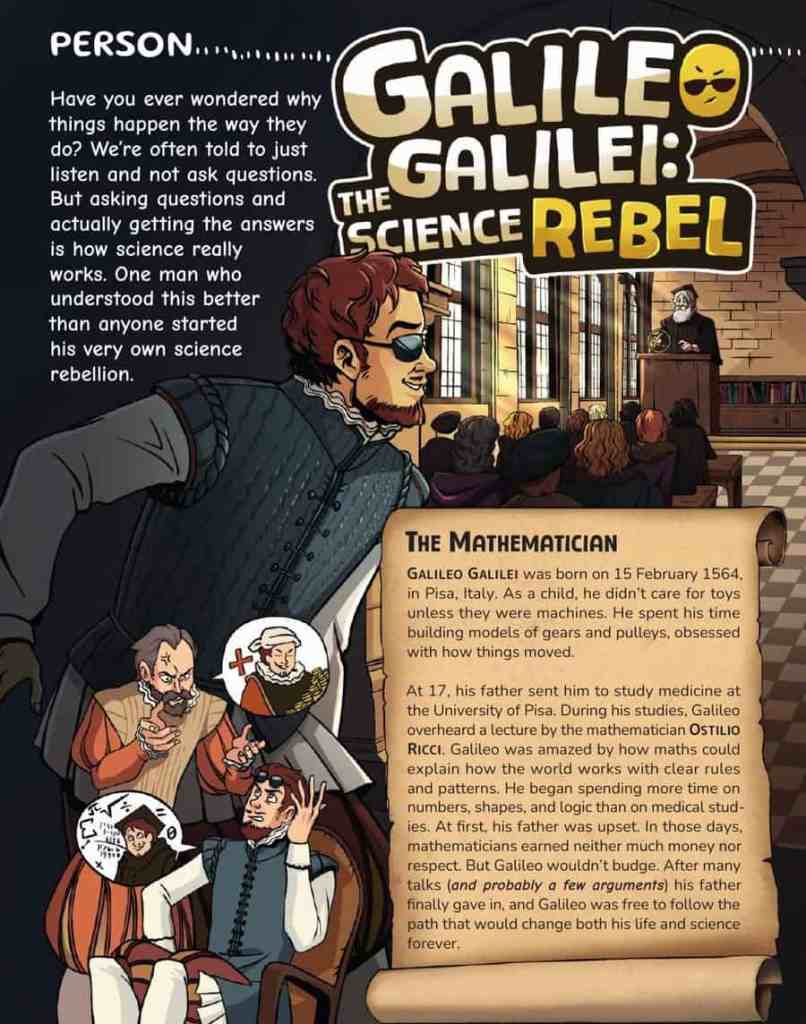
Galileo Galilei (born 1564 in Pisa, Italy) is often called the father of the experimental method: he tested ideas by observing and measuring instead of trusting old beliefs. He showed that heavy and light objects fall at the same rate, improved the telescope and defended the idea that the Earth moves around the Sun.