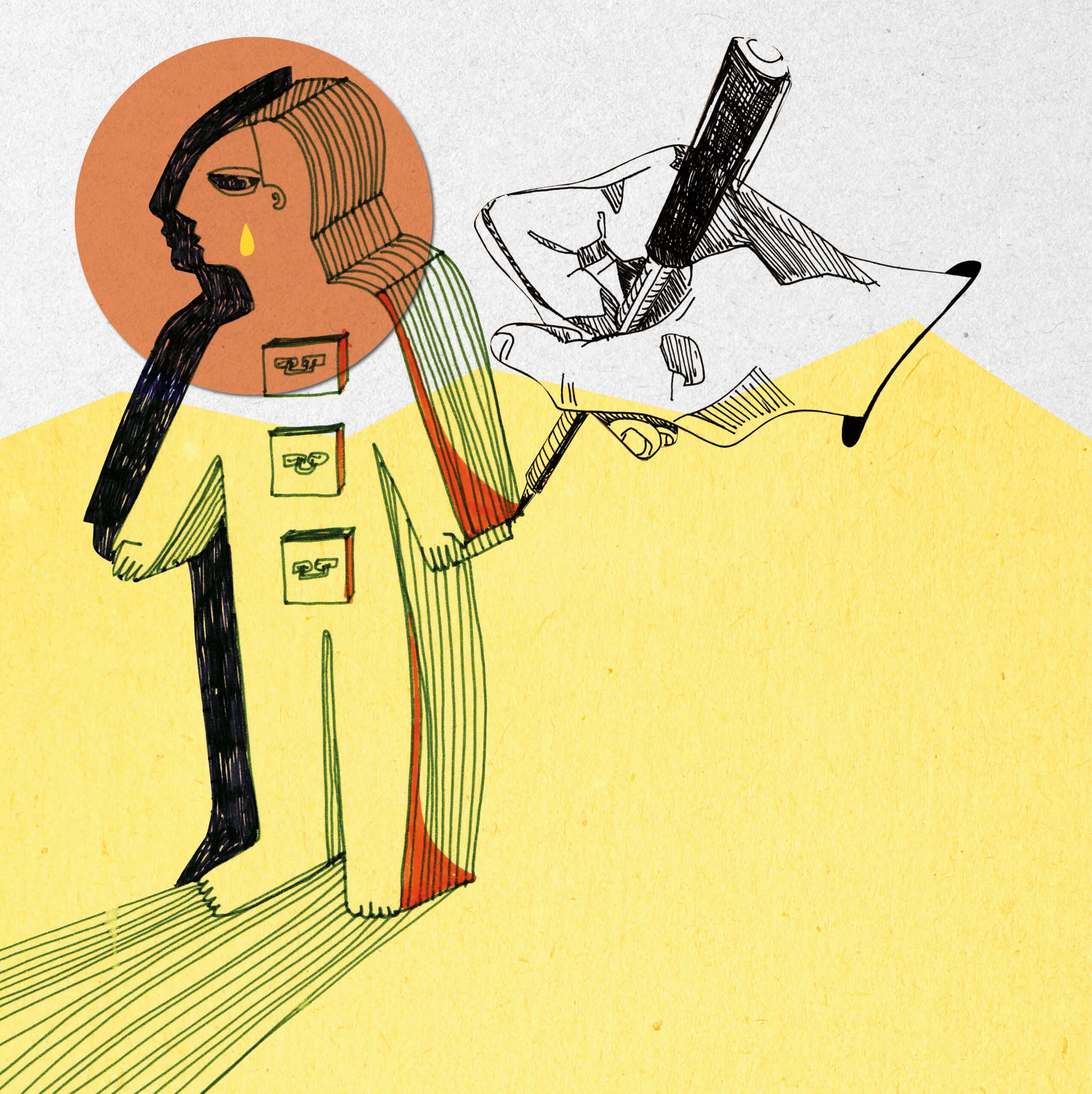
Behind Closed Doors
The conviction that people always get the things they deserve in accordance with their actions and personal qualities is a cognitive bias called the <b>just-world fallacy</b>. The first person to bring attention to this phenomenon was <b>Melvin J. Lerner</b>.
Melvin J. Lerner was a psychologist and, as part of his clinical training, he observed how people with mental disorders were treated in mental health facilities. Lerner personally knew the medical professionals who worked there, and they were kind and educated individuals. That’s why he was very surprised when he overheard them judging their patients behind closed doors, saying that the patients were to blame for their own suffering. Lerner speculated that by shifting the responsibility for the disorder to the patient, the healthcare workers protected their own psyches. After all, working in a psychiatric hospital wasn’t easy — the doctors had to reconcile themselves with the fact that some of their patients’ problems were incurable.
Once, Lerner overheard university students disparaging poor people, claiming that they were responsible for their own misfortunes. The students held that poor people were probably just lazy and didn’t try to do anything to improve their circumstances. However, these students didn’t consider arguments regarding basic inequality and other uncontrollable forces. For example, children from poor families have fewer opportunities to learn foreign languages, engage in extracurricular activities, or go to private schools. This means that, as a rule, it’s much harder for them to gain the skills that would help them get high-paying jobs in the future, as opposed to their peers from wealthier families.
Such experiences with his colleagues and students perplexed Lerner as they couldn’t be explained by the psychological theories that existed at the time. That’s when the psychologist set out to investigate this phenomenon himself.

Do You Get What You Deserve?
In 1966, Melvin J. Lerner and his colleague Carolyn Simmons conducted an experiment for which they recruited 72 participants. The research subjects, seated in a separate room, had to observe a woman through a special window (you’ve probably seen such rooms with one-way mirrors in movies — they are usually used in police interrogations). The woman was solving mathematical problems. The observers were told that she could neither hear nor see them and that, for every wrong answer, she’d receive an electric shock. In reality, the woman was an actress: she made mistakes on purpose and pretended as though she was in pain from the electric shock. The participants were concerned about the woman’s distress, but they couldn’t influence the events they were observing.
Lerner’s Experiment and the Psychological Mechanism Behind the Just World Fallacy
After a while, Lerner asked the participants to describe the woman, and their portrayals were overwhelmingly deprecating. They criticized her appearance and personality and even said she deserved the treatment she received — even though they were seeing her for the first time! The more the actress “suffered,” the more negative the observers’ descriptions of her became. Lerner proposed a new theory, according to which reactions like these help observers protect their own minds by maintaining belief in the existence of a just world.
According to this logic, the woman suffered for a reason — because she was a bad person. In a different version of the experiment, the research subjects were told that the woman would receive compensation for the discomfort to which she was subjected during the study. In this case, she was described more positively and with fewer criticisms. The participants subconsciously believed that since the woman received compensation, she’d be rewarded for her suffering like any good person — and thus justice would be restored.
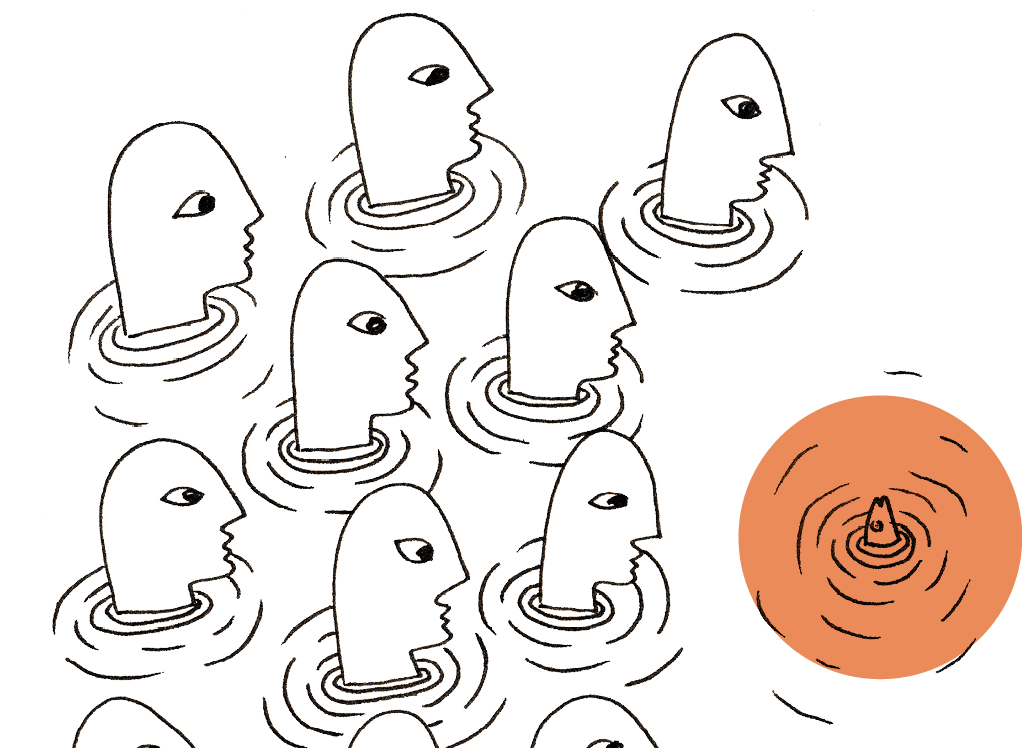
Belief in magical thinking nudges us towards a temptingly simple possibility: instead of searching for plausible causes, we explain events away with the help of mysterious forces unknown to humans. It’s more comfortable to shift responsibility to these forces instead of fixing previous mistakes or facing potential failures. It’s even more difficult to reconcile with the fact that achievements, healthy relationships, and rewards require hard work and don’t just happen out of the blue to good people, like in fairy tales.
An Allowance for Karma
In the 1970s, scientists from different countries joined forces to research the just-world belief phenomenon. They studied how observers reacted to and described victims of traffic accidents and violence, as well as unemployed, poor, and disabled individuals. It turned out that people around the world who were forced to witness the suffering of others tended to blame the victim.
In 1975, psychologists Zick Rubin and Letitia Anne Peplau developed the Just World Scale — a questionnaire in which respondents had to agree or disagree with twenty statements, in addition to providing personal information and beliefs. The results showed the following correlation: the more people believed in a just world, the worse their attitudes were towards those who were poor, discriminated against, or suffering from social injustice. Generally, people who believed in a just world tended to be more conservative, authoritarian, and religious.
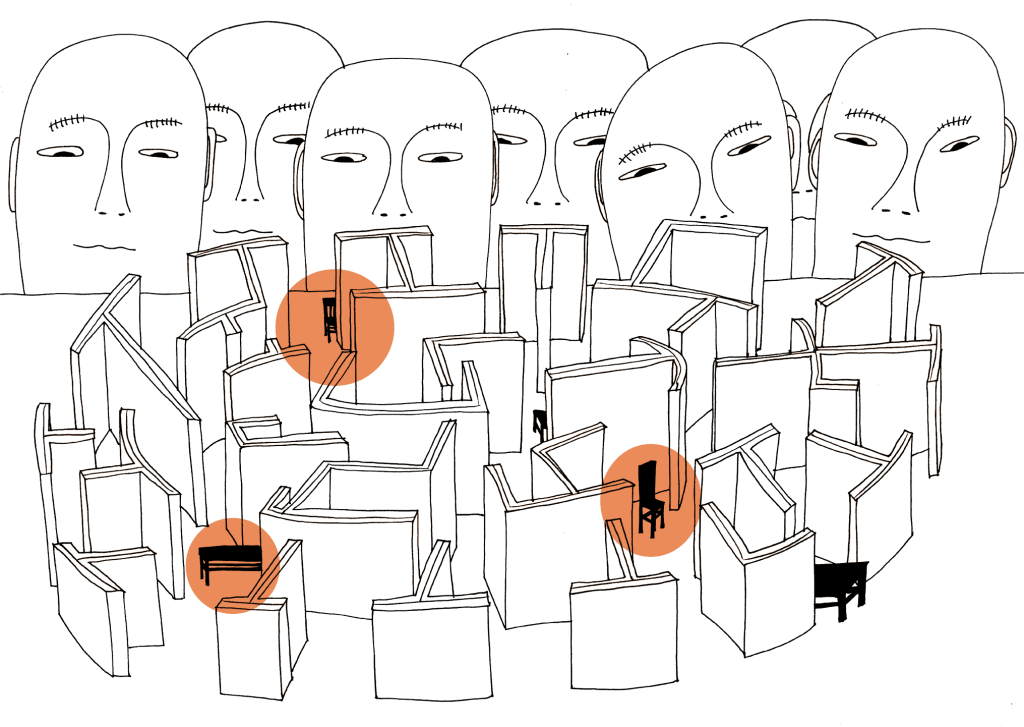
These people often live under severe restrictions and rigid hierarchies, and their belief in a just world helps them cope with these conditions. In their view, it is only natural that they’d be rewarded for their patience and sacrifices while everyone else would be punished. It is as though the universe has a myriad of watching eyes that gather information about all the virtuous and evil deeds in the world and special mathematical formulas for calculating the respective rewards and punishments in accordance with previously documented rules, as well as an entire staff that makes sure everyone gets what they deserve. How would you ensure absolute justice otherwise?
Rubin’s and Peplau’s Just World Scale
For every statement below, assign a number from 1 to 6 depending on how strongly you agree with it. 1 means that you absolutely disagree with the statement, and 6 means you absolutely agree.
- I’ve found that a person rarely deserves the reputation they have. (U)
- Basically, the world is a just place. (J)
- People who get “lucky breaks” have usually earned their good fortune. (J)
- Careful drivers are just as likely to get hurt in traffic accidents as careless ones. (U)
- It is a common occurrence for a guilty person to get off free in courts. (U)
- Students almost always deserve the grades they receive in school. (J)
- People who keep in shape have little chance of suffering a heart attack. (J)
- The political candidate who sticks up for their principles rarely gets elected. (U)
- It is rare for an innocent person to be wrongly sent to jail. (J)
- In professional sports, many fouls and infractions never get called by the referee. (U)
- By and large, people deserve what they get. (J)
- When parents punish their children, it is almost always for good reasons. (J)
Measuring Belief in a Just World
13. Good deeds often go unnoticed and unrewarded. (U)
14. Although evil men may hold political power for a while, in the general course of history, good wins out. (J)
15. In almost any business or profession, people who do their jobs well rise to the top. (J)
16. Parents tend to overlook the things to be admired in their children. (U)
17. It is often impossible for a person to receive a fair trial. (U)
18. People who experience misfortune have often brought it upon themselves. (J)
19. Crime doesn’t pay. (J)
20. Many people suffer through absolutely no fault of their own. (U)
Calculate your total score for the answers marked with the letter U. Then, calculate your score for answers marked with J the same way. If you have more J answers, you believe in a just world. If, however, you scored higher on the questions marked with U, you see the world as unjust. You may also judge how strongly you agree that virtues are always followed by a reward (Question 3), evil acts are punished (Question 12), and that bad people are often rewarded (Question 5).
It’s Not the Victim’s Fault
The myth of a just world can lead to a false sense of personal security. It may seem as though not doing anything wrong ensures that nothing terrible will happen to you in return — as if losing your livelihood and the roof over your head, getting a terminal illness, or falling victim to a crime could only happen to other, less righteous people. Nobody wants to live in an unpredictable world where bad things could happen to anybody for no particular reason.

“The woman was attacked by a criminal because she was dressed provocatively. Don’t dress like that, and you will be safe,” — so goes the reasoning of those who believe in a just world. The victim of a crime or accident is burdened with the responsibility for the terrible events that happened to them. Such accusations against the victim are called victim-blaming, but, in reality, the only party responsible for the crime is the one who perpetuated it. By blaming the victim, believers in a just world spare the real culprit — the offender. At the same time, the victim, who is already suffering, receives judgment or even threats instead of the help and compassion that they deserve.
The real world isn’t fair, and we’re offered proof of this on a daily basis: people who do important and dangerous work aren’t rewarded for their efforts, while some innocent people suffer for no reason at all. However, this doesn’t fit our desire for justice. To make the world conform to our expectations, we may try to “censor” our perceptions of reality and past events, thereby restoring our belief in justice.
Taking Justice into Your Own Hands
There are two strategies to do so: rational and irrational. The irrational strategy involves “twisting” the facts and refusing to believe they are true. For example, a person employing this strategy may call an individual infected with HIV “sinful” or claim that a victim is lying about a crime.
Another matter is when the person chooses the rational strategy by putting in the effort to make the unjust world a little bit better. For example, they might collect food and clothes for people in need, support a friend, or become a volunteer, providing assistance to people who are facing difficult circumstances. Such individuals also raise money for expensive medical treatment for people who fall ill, provide opportunities to those who can’t afford education, fight discrimination against marginalized groups, provide psychological assistance to survivors of crimes, and ensure that perpetrators receive appropriate punishment. Little by little, such actions transform our society.
For example, only a few centuries ago, women didn’t have the right to receive an education, vote, or access their rightful inheritances. At the end of the 19th century, the Women’s Suffrage Movement began to actively campaign for gender equality in the social, political, and economic spheres. Nowadays, it’s not exceptional for a woman to study the subject of her choosing at university or inherit property.
There is still a lot of work left to be done, but thanks to rational strategies, the world is becoming a more just, comfortable, and reliable place. Even if your actions are just a drop in the ocean of injustice, they still can help someone cope with a challenging period or change their life for the better.

A Skeptic’s Toolbox

1. Don’t be quick to rationalize someone’s misfortune. Bad things can happen to anybody through no fault of their own.

2. A crime is always the responsibility of the offender and not the victim.

3. The world is unpredictable, so be sure to take precautions to lessen potential risks.
Post on topic: Just World.
Did you like the post? We invite you to read our other topics in Education category.
Follow us on Instagram.
<svg xmlns="http://www.w3.org/2000/svg" xmlns:xlink="http://www.w3.org/1999/xlink" id="Layer_1" x="0px" y="0px" viewBox="0 0 597.03 475.39" style="enable-background:new 0 0 597.03 475.39;" xml:space="preserve"><style type="text/css"> .st0{clip-path:url(#SVGID_00000021828697454809692600000004318893268413411000_);fill:#54A7B7;}</style><g> <defs> <rect id="SVGID_1_" x="63.22" y="2.39" width="470.59" height="470.65"></rect> </defs> <clipPath id="SVGID_00000125586198135712050590000014503595150480814249_"> <use xlink:href="#SVGID_1_" style="overflow:visible;"></use> </clipPath> <path style="clip-path:url(#SVGID_00000125586198135712050590000014503595150480814249_);fill:#54A7B7;" d="M352.92,237.74 c0-30.06-24.38-54.38-54.38-54.38c-30.06,0-54.38,24.32-54.38,54.38c0,30.01,24.32,54.38,54.38,54.38 C328.54,292.12,352.92,267.74,352.92,237.74 M440.15,237.74c0,78.06-63.55,141.62-141.62,141.62 c-78.12,0-141.62-63.55-141.62-141.62c0-78.12,63.5-141.62,141.62-141.62C376.6,96.12,440.15,159.61,440.15,237.74 M533.83,237.74 c0-129.78-105.58-235.3-235.3-235.3c-129.78,0-235.3,105.52-235.3,235.3s105.52,235.3,235.3,235.3 C428.26,473.03,533.83,367.51,533.83,237.74"></path></g></svg>