Post on topic: Books.
SEEING DOUBLE
Typography was invented twice: first in East Asia and then again in Medieval Europe. Confucius’ works were printed throughout China in the 10th century. Europe launched the mass production of printed paper products starting around 1425. But the official date of the invention of typography is considered to be around 1445, when Johannes Gutenberg proposed the use of moveable type — a printing technique that uses movable metal pieces to reproduce text on paper.
An Unrelenting Author
The Swiss cartoonist Patrick Chappatte made a comic strip that accurately reflects the current state of the publishing industry. In it, two people are standing in front of a brightly-lit bookstore window. One of them laments, “People don’t read books anymore,” to which the other replies: “It’s because everyone writes them now!”
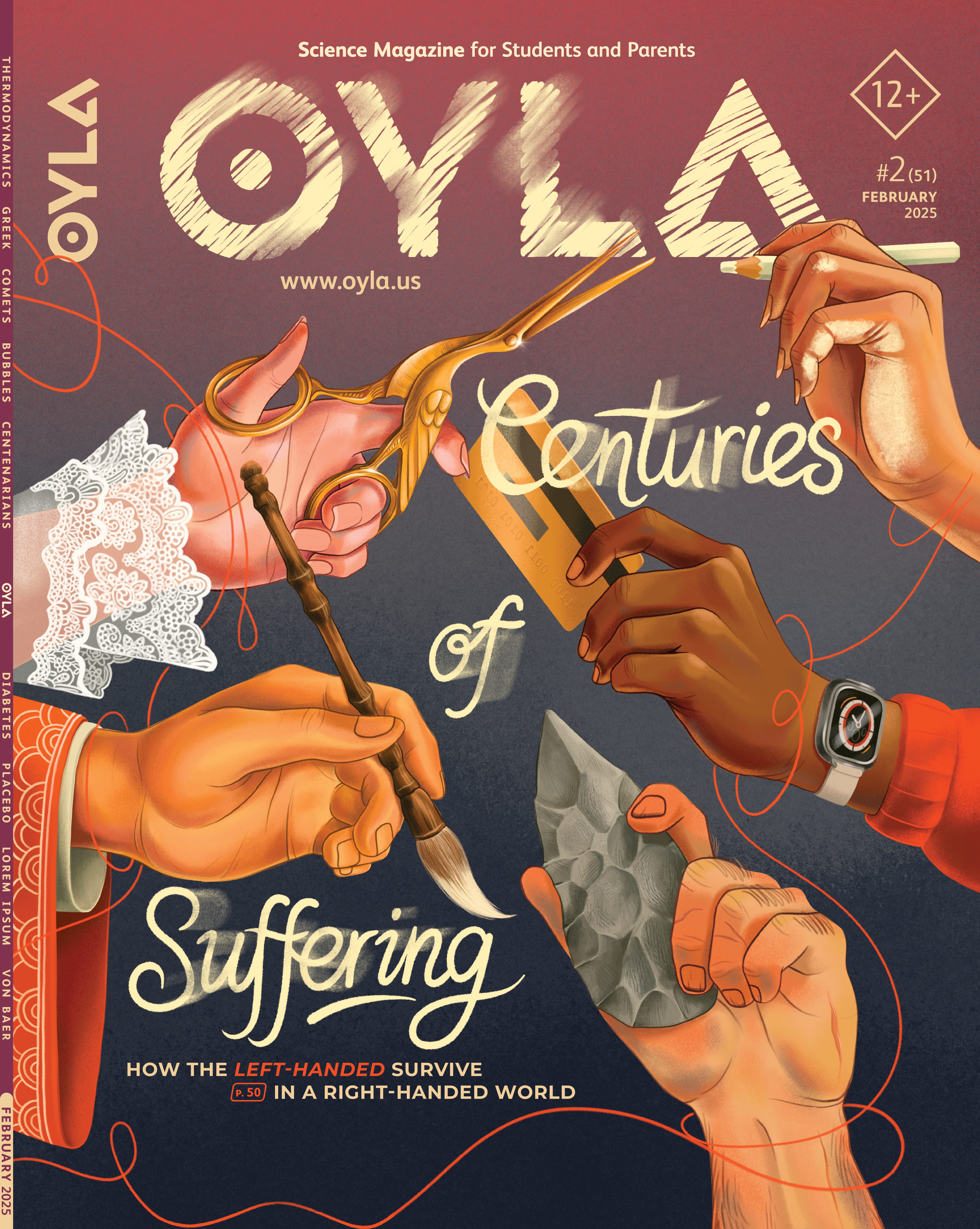
Not every manuscript turns into a book. What is a manuscript? It’s an author’s typed or handwritten text that has not yet been published.
There are very many people around the world who write: some devote their whole lives to writing, while for others, it’s just a hobby. In today’s world, it is easy to find your audience — all you need to do is start an online blog. But if we’re talking about traditional book publishing, the first step is to get a publishing house to take an interest in your manuscript. So, what happens to your creation next?
A never-ending nightmare. I doubt that readers would be interested in this novel. I think that their verdict will be: Do not read this monstrous book.
Publisher Representative about The War of the Worlds by H.G. Wells, 1898
The Good, the Bad, and the Ugly
This is how editors are often described. More than once in the history of world literature, famous authors grew to resent their editors, not to mention countless anecdotes about the battles between authors and editors! However, all that drives professionals in the field is the desire to create a high-quality product. Many professionals are involved in the creation of a single book, and although they are all referred to as editors, each has their own unique function.
In a large publishing house, the first person to meet the author and read their manuscript is the commissioning editor. This editor evaluates manuscripts and the future book’s concept, oversees the work of the literary editor, proofreader, illustrators, and designers, and calculates the project’s potential value and costs. In essence, the commissioning editor is involved with the book production process “from A to Z” — from manuscript to print.
The Unsung Heroes of Book Publishing
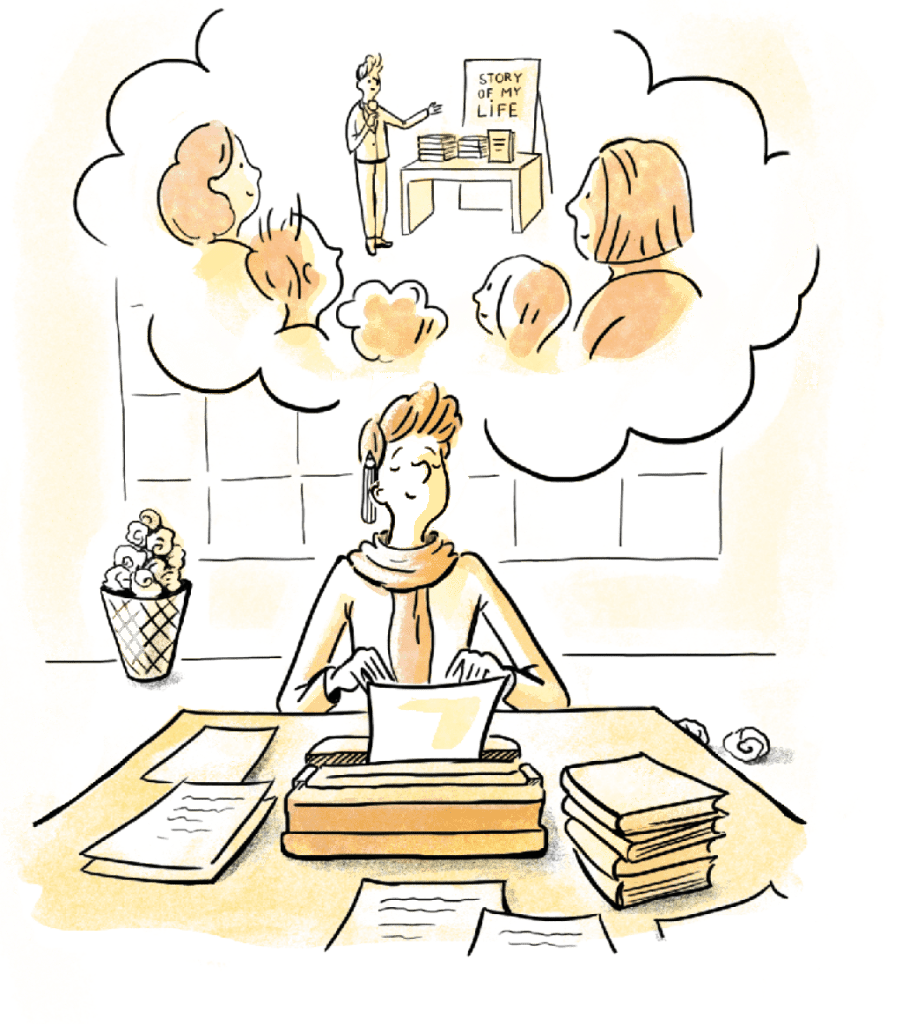
Once the contract between the author and the publishing house has been finalized and all questions regarding the design and concept of the future book have been resolved, the literary editor comes into the picture.
This hero does not wear a cape: rather, they have many years of experience of working on literary texts, have read hundreds of books, and corrected a myriad of manuscripts. Their genius is grounded in a broad perspective, a firm grasp of the humanities, and the power of logic. The work of a literary editor deals with form and content but not technical things like spelling.
A literary editor works with the style of the text, but their main duty isn’t to rewrite the text but to help the author better convey their ideas to the reader. Indeed, high-quality literary pieces are born out of the successful collaboration between an author and an editor. An editor cannot be superficial in their work: they must carefully consider and critically assess every word and phrase to understand their logic, correctness, and style.
                                                <img width="800" height="872" src="https://oyla.us/wp-content/uploads/2023/11/img04-939x1024.png" alt="Books | An illustration of a woman sitting at a desk with a laptop." srcset="https://i0.wp.com/oyla.us/wp-content/uploads/2023/11/img04.png?resize=939%2C1024&ssl=1 939w, https://i0.wp.com/oyla.us/wp-content/uploads/2023/11/img04.png?resize=275%2C300&ssl=1 275w, https://i0.wp.com/oyla.us/wp-content/uploads/2023/11/img04.png?resize=768%2C838&ssl=1 768w, https://i0.wp.com/oyla.us/wp-content/uploads/2023/11/img04.png?w=1045&ssl=1 1045w" sizes="(max-width: 800px) 100vw, 800px" />
                <blockquote>
        <p>
            Proofreaders are rioting against your punctuation system. We will have to quell them with violence.
                </blockquote>
    <i>A letter from the publisher to </i><b>Maxim Gorky</b><i>, 1927</i>
Does the editor-in-chief of a publishing house work on the book as well? Only in exceptional cases — for example, when there is a new novel by a star author. An editor-in-chief is, above all, a leader who determines the publishing house’s direction.
They meet with investors and journalists and, as the face of the publishing house, are responsible for both the internal work of the organization and its external image.
All-Important Proofreading
Proofreaders rule the world — at least, the print world. Not a single publication, whether print, digital, or especially a book, can do without this professional. The proofreader receives the text from the literary editor and ensures it is free from grammatical, spelling, punctuation, and formatting errors. They must be organized, meticulous, and firm, as well as demonstrate extensive knowledge of text formatting — from headings to reference lists. The proofreader has to read the text several times so they don’t miss a single sneaky typo.
Judging a Book by Its Cover
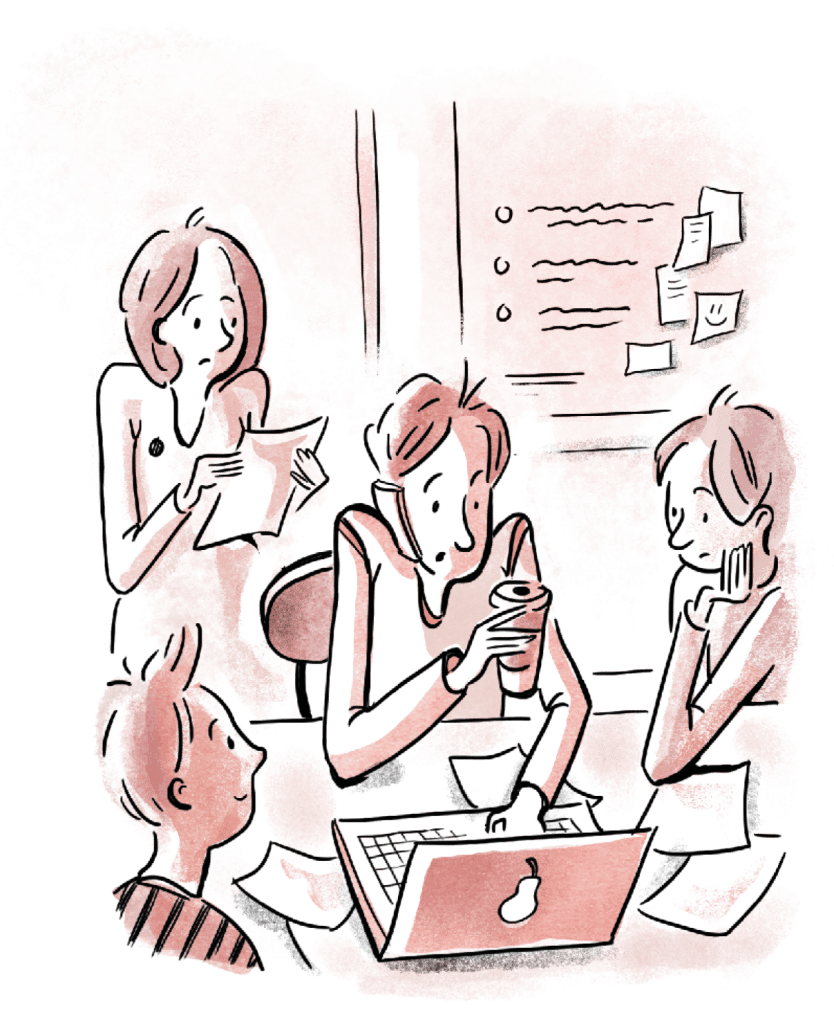
Imagine that you have a book in front of you: everything that you see, from the cover to the last page, falls under the scope of book design. In major publishing houses, an art director works together with the commissioning editor on the development of a visual concept for the book.
A completed book has several components: a book block, a cover, endpapers, and a spine. Properly presented, each of these elements should make a book easy and interesting to read.
The book block starts from the first (title) page and ends with the last (the endpaper). A designer is responsible for the readability, layout, and overall composition of the text. An illustrator works in tandem with the designer.
Together, they think about how illustrations should be arranged in a book so that the text and images complement each other and don’t interfere with reading.
Final Preparations
After the typesetting is done, the proofreader reviews the text once again. They check the text for correct line breaks and hyphenation, make sure the text is compatible with the design, and look out for other details that the designer may have missed.
Once the manuscript has completed a final review, it’s ready to go to press. A camera-ready copy is a properly-formatted electronic version of the book that requires no further changes.
The binding can be soft or hard. A book cover is used to bind together the pages of a book. Therefore, it’s technically inaccurate to refer to softcover or hardcover books, and more accurate to classify them as having soft or hard binding.
The cover, as the book’s face, is crafted down to the tiniest detail, and it’s created by the art director or the designer.
                                                <img width="800" height="450" src="https://oyla.us/wp-content/uploads/2023/11/img06-1024x576.png" alt="A cartoon illustration of a group of people looking at a computer screen." srcset="https://i0.wp.com/oyla.us/wp-content/uploads/2023/11/img06.png?resize=1024%2C576&ssl=1 1024w, https://i0.wp.com/oyla.us/wp-content/uploads/2023/11/img06.png?resize=300%2C169&ssl=1 300w, https://i0.wp.com/oyla.us/wp-content/uploads/2023/11/img06.png?resize=768%2C432&ssl=1 768w, https://i0.wp.com/oyla.us/wp-content/uploads/2023/11/img06.png?resize=1200%2C675&ssl=1 1200w, https://i0.wp.com/oyla.us/wp-content/uploads/2023/11/img06.png?w=1412&ssl=1 1412w" sizes="(max-width: 800px) 100vw, 800px" />
                <blockquote>
        <p>
            Dear Editors,
As can be seen from the color of the ink, I write with my heart’s blood. I simply don’t see how my graphic interpretations can be combined with five different fonts. Either I’ll ruin the cover with my drawings, or it will ruin me.
                </blockquote>
    <i>From a letter to the editorial staff of illustrator </i><b>Yevgeny Migunov</b><i> about the covers for a series of science-fiction books by </i><b>Kir Bulychev</b><i>, 1996</i></p>
        <h2>Books | HANDIWORK</h2>
    <p>Before the advent of the printing press, books were copied by hand, so they were expensive and rare. In the Western Roman Empire, scribes were divided into <b>copyists</b>, <b>calligraphers</b>, <b>proofreaders</b>, <b>rubricators</b>, and <b>illuminators</b>. Copyists reproduced books for mass reading, calligraphers worked exclusively on important books, proofreaders checked the copied text against the original, and rubricators and illuminators worked on book design.</p>
        <h2>The Wonders of Print</h2>
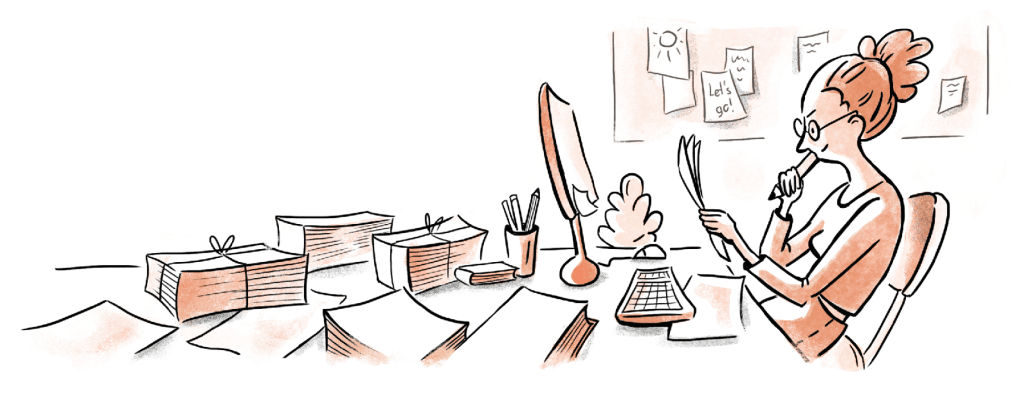
    <p>By this time, the manuscript has been read several times by the editors and proofreaders, laid out for design, proofread again, given a cover, and transformed into a camera-ready copy. <b>Printing takes place at a printing house or center and can be either </b><b>digital</b><b> or </b><b>offset</b><b>.</b></p>
                                                <img width="252" height="300" src="https://oyla.us/wp-content/uploads/2023/11/img07-2.jpg" alt="A cartoon illustration of people working in a warehouse." />
        <h2>THE ANATOMY OF A BOOK</h2>
                                                <img width="300" height="208" src="https://oyla.us/wp-content/uploads/2023/11/img08-300x208.png" alt="The anatomy of a book." srcset="https://i0.wp.com/oyla.us/wp-content/uploads/2023/11/img08.png?resize=300%2C208&ssl=1 300w, https://i0.wp.com/oyla.us/wp-content/uploads/2023/11/img08.png?resize=1024%2C711&ssl=1 1024w, https://i0.wp.com/oyla.us/wp-content/uploads/2023/11/img08.png?resize=768%2C533&ssl=1 768w, https://i0.wp.com/oyla.us/wp-content/uploads/2023/11/img08.png?resize=1536%2C1066&ssl=1 1536w, https://i0.wp.com/oyla.us/wp-content/uploads/2023/11/img08.png?resize=1200%2C833&ssl=1 1200w, https://i0.wp.com/oyla.us/wp-content/uploads/2023/11/img08.png?w=1889&ssl=1 1889w, https://i0.wp.com/oyla.us/wp-content/uploads/2023/11/img08.png?w=1600&ssl=1 1600w" sizes="(max-width: 300px) 100vw, 300px" />
    <p><b>Digital printing</b> is designed for small runs: with the help of digital printing machines, it is possible to produce 1–500 copies. These are devices that print directly from electronic files, much like a typical office printer does.
Offset printing, on the other hand, is used for large print runs. This technology is distinguished by the use of a prefabricated printing plate that transfers the image to paper with an offset cylinder. The image is typically transferred using printing plates, but recently, printing houses have switched to machines operating on the principle of the CTP (computer-to-plate). In this case, the image is transferred directly to paper using laser-light exposure and a chemical “seal.”
Books | Bound to Happen
For hard binding, sheets are gathered in notebooks and fastened into blocks using a sewing machine. Then, the binding threads are set with glue so that the pages are securely fastened, and an even cut of the block is made on three sides according to the format of the publication. In the last stage binding covers are created and glued to the block using the headband and endpapers. These endpapers not only protect the initial and final
pages of the book, not to mention the covers themselves, but they can also be used as a decorative element.
A paperback differs from a hardbound book in that the pages are glued to the cardboard cover using hot-melt glue. The printed pages are cut in half, assembled in the right order, and passed through a special machine that first cuts along the spine with a milling cutter (the sheets are cut to allow the glue to be better absorbed by the paper) and then glues the sheets to the cover. The completed book is trimmed from three sides only after it is attached to the cover.
It’s very important to wait until the glue is fully dry; otherwise, the book will fall apart right in the hands of the reader.
THE IMPORTANCE OF FONT
Fonts are classified according to technical style and specifications, and a typeface is a set of fonts that share common design features. Typefaces should, above all, be easy to read so as not to strain our eyes. Therefore, in the publishing business, they pay close attention to the choice of the main typeface in book design.
A Story within a Story
Finally, you hold the completed book in your hands. It doesn’t only represent the work of the author and the publishing house — it’s also the product of the creative labor of many generations of people who lived before us: the invention of paper in ancient China, the development of mechanical movable-type printing, the first steam-powered printing press, the centuries of font design, the advent of computers, and many other innovations. In this way, every book offers you a look into the history of humankind as a whole and the story of each person who’s taken part in its creation, starting from the author and ending with the packer at the printing house.
Did you like the post? We invite you to read our other topics in Education category.
Follow us on Instagram.
<svg xmlns="http://www.w3.org/2000/svg" xmlns:xlink="http://www.w3.org/1999/xlink" id="Layer_1" x="0px" y="0px" viewBox="0 0 597.03 475.39" style="enable-background:new 0 0 597.03 475.39;" xml:space="preserve"><style type="text/css"> .st0{clip-path:url(#SVGID_00000021828697454809692600000004318893268413411000_);fill:#54A7B7;}</style><g> <defs> <rect id="SVGID_1_" x="63.22" y="2.39" width="470.59" height="470.65"></rect> </defs> <clipPath id="SVGID_00000125586198135712050590000014503595150480814249_"> <use xlink:href="#SVGID_1_" style="overflow:visible;"></use> </clipPath> <path style="clip-path:url(#SVGID_00000125586198135712050590000014503595150480814249_);fill:#54A7B7;" d="M352.92,237.74 c0-30.06-24.38-54.38-54.38-54.38c-30.06,0-54.38,24.32-54.38,54.38c0,30.01,24.32,54.38,54.38,54.38 C328.54,292.12,352.92,267.74,352.92,237.74 M440.15,237.74c0,78.06-63.55,141.62-141.62,141.62 c-78.12,0-141.62-63.55-141.62-141.62c0-78.12,63.5-141.62,141.62-141.62C376.6,96.12,440.15,159.61,440.15,237.74 M533.83,237.74 c0-129.78-105.58-235.3-235.3-235.3c-129.78,0-235.3,105.52-235.3,235.3s105.52,235.3,235.3,235.3 C428.26,473.03,533.83,367.51,533.83,237.74"></path></g></svg>