Appearance and Relatives
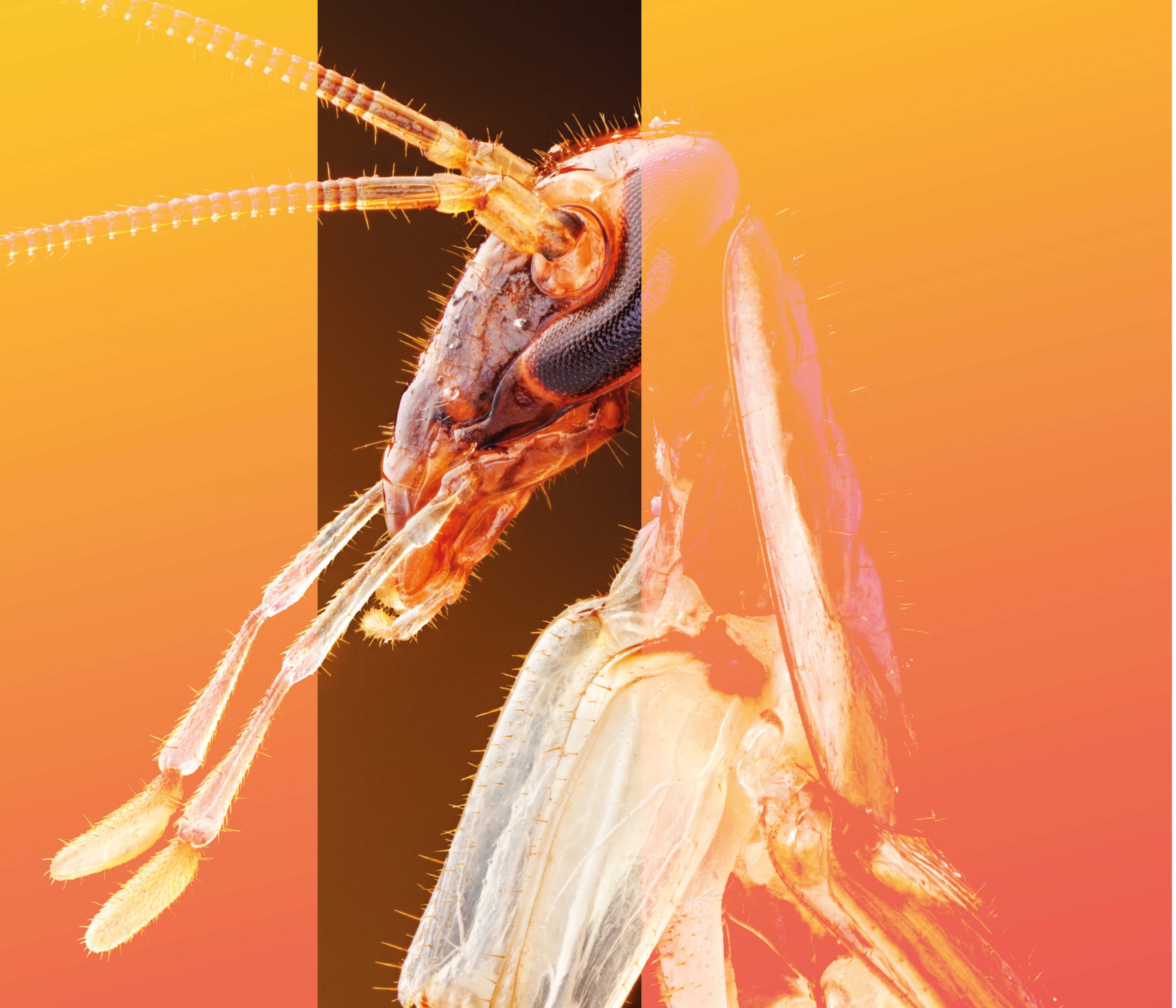
Who hasn’t seen a cockroach? A head with gnawing jaws and long antennae; a torso with six legs adapted for running; dense forewings and thinner folding wings; a flat, jointed abdomen — and all wrapped up in a (typically) brownish-red package.
The length of one of the most common species of this insect, the German cockroach (Blattella germanica), is usually ¼ to ½ an inch, but much larger ones do exist. The record-holder is the South American Megaloblatta longipennis, which can reach nearly 7 in. Meanwhile, the smallest cockroach, the ant-eating Attaphila fungicola, found in Texas, does not grow any longer than ⁹/64 in. In many species of cockroaches, females differ considerably from males in size and the shape of their various body parts — this is called sexual dimorphism.
Until very recently, scientists believed that cockroaches do not form complex communities as their closest relatives, predatory mantises and termites do. In October 2020, Slovakian entomologists found several exceptions to this notion. As it turns out, Melyroidea magnifica cockroaches from the forests of Ecuador live in groups of 90–200 individuals, possibly even with a queen. No “king” has been found yet, but it’s clear that there is a division of labor between the cockroaches in the colony. Scientists also described a new genus of cockroaches, Aclavoidea, who are also quite collectivist in their labor system.
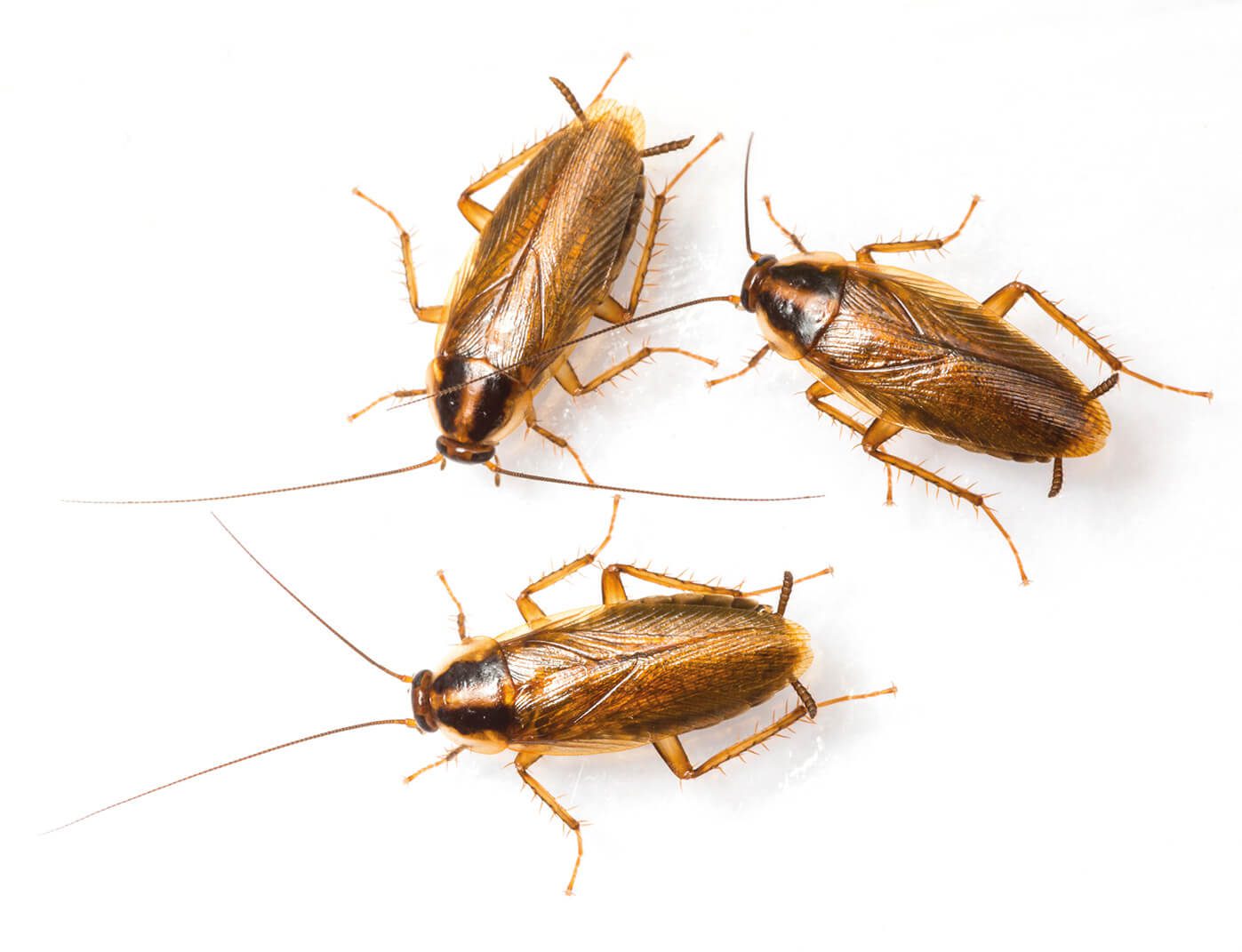
Blatella Germanica

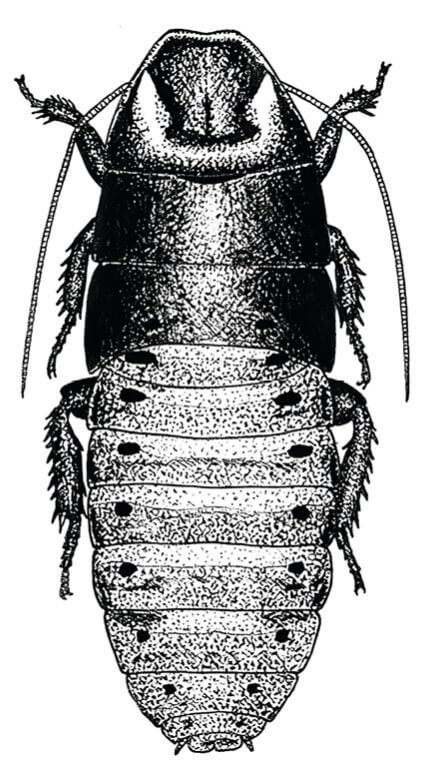
A female German cockroach
Ancient Superheroes
Cockroaches have seen a lot in their days. They appeared earlier than most other insects, about 300 million years ago in the Carboniferous period, with different genera of cockroaches arising at different times.
The common ancestor of all extant cockroaches (some families of cockroaches died out long before the appearance of modern humans, so the cockroaches we see today are the very distant relatives of those extinct forms) lived 235 million years ago, even before the break-up of the supercontinent Pangaea. The climate was humid and warm, there was plenty of food, and there weren’t any vertebrates fast enough to keep up with cockroaches. Thus, the insects fared pretty well.
The Survival and Evolution of Cockroaches
Cockroaches endured the most massive of the major extinctions, which occurred during the transition between the Permian and Triassic periods about 250 million years ago. Ninety percent of all animal species, including two-thirds of all insect species, went extinct, but these creepy little creatures survived. However, they faced some problems later, in the Mesozoic period. More clever and agile reptiles and other animals began to appear, and they were well-suited for catching cockroaches. Therefore, the insects had to adapt by changing their anatomy and lifestyle.
According to paleoentomologists (scientists who study insect fossils), 120–160 million years ago, cockroaches were forced to move underground because of nimble predators who loved to eat the insect’s delicious protein. They switched to a nocturnal lifestyle, and they began to huddle in all sorts of crevices and other hard-to-reach places, feeding on the remains of plants and animals that we might think of as being inedible.
                                                <img width="800" height="185" src="https://oyla.us/wp-content/uploads/2023/11/infg02-1024x237.png" alt="A diagram showing the different stages of the human body." srcset="https://i0.wp.com/oyla.us/wp-content/uploads/2023/11/infg02.png?resize=1024%2C237&ssl=1 1024w, https://i0.wp.com/oyla.us/wp-content/uploads/2023/11/infg02.png?resize=300%2C69&ssl=1 300w, https://i0.wp.com/oyla.us/wp-content/uploads/2023/11/infg02.png?resize=768%2C178&ssl=1 768w, https://i0.wp.com/oyla.us/wp-content/uploads/2023/11/infg02.png?resize=1536%2C356&ssl=1 1536w, https://i0.wp.com/oyla.us/wp-content/uploads/2023/11/infg02.png?resize=2048%2C474&ssl=1 2048w, https://i0.wp.com/oyla.us/wp-content/uploads/2023/11/infg02.png?resize=1200%2C278&ssl=1 1200w, https://i0.wp.com/oyla.us/wp-content/uploads/2023/11/infg02.png?w=1600&ssl=1 1600w" sizes="(max-width: 800px) 100vw, 800px" />
    <p>There were also determined cockroaches who chose to imitate species of the Hymenoptera order as a defense strategy — they mostly copied the behavior of wasps and ants. This baffled their predators: they took the cockroaches to be dangerous biting or stinging insects, and they didn’t dare to touch them. Some of the precocious cockroaches even mimicked ordinary beetles.</p>
                                                <img width="224" height="300" src="https://oyla.us/wp-content/uploads/2023/11/img02-2.jpg" alt="A fossil of an insect on a rock." />
                                                <img width="178" height="300" src="https://oyla.us/wp-content/uploads/2023/11/img03-1.jpg" alt="A fossil of a bee on a piece of stone." />
    <p>The cockroach <i>Grant viridifluvius</i> and its counterpart, <i>Chimaeroblattina brevipes</i>, mimicked wasps. Both insects lived 47 million years ago in Colorado.</p>
                                    <figure>
                                    <img width="768" height="373" src="https://oyla.us/wp-content/uploads/2023/11/img06-2.jpg" alt="A black and white image of an insect flying in the air." />                                         <figcaption></figcaption>
                                    </figure>
    <p>It’s hard to believe, but this is also a cockroach. <i>Teyia branislav</i> looks more like an ant and lived in one US state, Colorado, long before modern cockroaches — 99 million years ago.</p><b>For the larvae of black, German, and American cockroaches, loneliness can be dangerous. Without their peers, they grow more slowly and therefore reach puberty later.</b>
        <h2>Ootheca Nursery
An adult cockroach (called an imago, the final stage of an insect’s metamorphosis) is a lithe and mobile creature, but it must first survive the perils of its childhood. Like other insects, cockroaches hatch from eggs that can’t hide or protect themselves (though some species display viviparity). However, they undergo a partial transformation; that is, the newly-hatched baby cockroach is already very similar in appearance to an adult, meaning it can skip over the defenseless pupa stage.
Around 125 million years ago or even earlier, cockroaches learned to protect the smallest members of their genus and created a form of offspring care called an ootheca. This is a nest of sorts with several dozen individual spaces for eggs, which a female carries on her abdomen for some time. In most species, the eggs mature inside of the ootheca until it opens, at which time the young cockroaches, called nymphs, hatch out of it.

The Protective Nature of the Ootheca and Maternal Care
The shell of the ootheca consists of very resistant compounds that can withstand most negative environmental factors and do not absorb chemical substances, resisting both insecticides and cold. It is formed from secretions of special glands in the female’s abdomen.
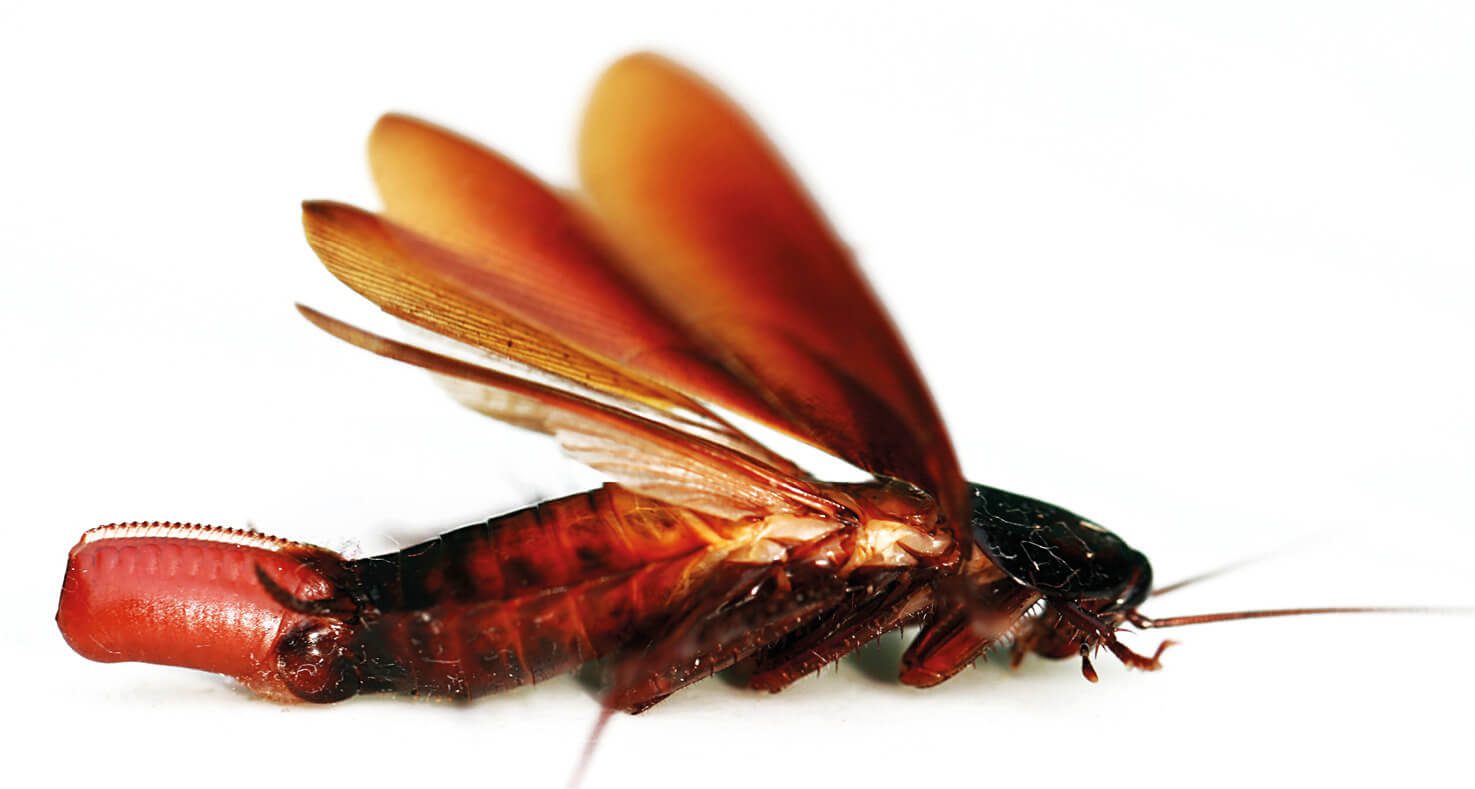
Female American cockroach with an ootheca
Different types of cockroaches live anywhere from three months to four years. Before reaching adulthood, larvae usually need to shed their skin five to six times.
Cockroaches don’t leave their children to get by on their own. Before the ootheca separates from the mother’s body, the mother finds a suitable hiding place for her offspring and provides a supply of nutrients for the first moments of their independent lives. Some even continue to carry their young after they hatch.
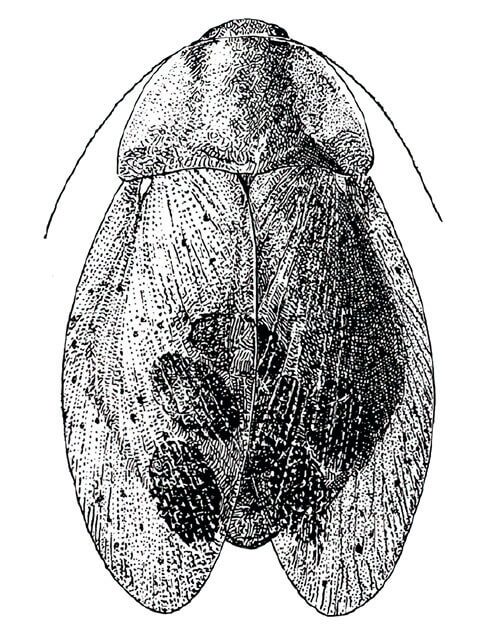
The female Phlebonotus pallens carries nymphs
for some time, covering them with her wings
Over time, the Earth’s climate grew harsher, and when the Cenozoic period came to an end 65 million years ago, the ootheca proved to be very useful: it enabled survival during the cold seasons. Today, in some species, only oothecae hibernate during the winter months, rather than adults or nymphs.

The oldest cockroach that has been found to have oothecae is Piniblattella yixianesis, the female form of which was found in northeast China. Its estimated age is 122-129 million years.
Access to People
Although the evolution of cockroaches never stood still, modern representatives of this group have retained some of the habits of their Paleozoic ancestors. For example, they never adapted to the cold: to this day, the majority of all cockroach species live in the tropics and subtropics, rarely moving to colder areas that are closer to the poles.
There aren’t many cockroaches that live independently from human populations in northern Eurasia. In Central Asia, the Turkestan cockroach (Shelfordella tartara) is widespread, and in Europe, the dusky cockroach (Ectobius lapponicus) has spread nearly to the tundra. They tend to settle some distance away from humans: the dusky cockroach, for example, prefers the forest floor. The Turkestan cockroach, on the other hand, nests in gutters and canals, and they prefer to mate in manure. However, they rarely enter high-rise buildings.
How Human Settlements Became Ideal Habitats for Cockroaches
Cockroaches have been drawn to human settlements over time in the interest of housing. People, similar to insects, are not very resistant to cold. We like our homes to be warm all year round so that water and food supplies are always at hand. This feature of human life has been taken advantage of by at least six dozen species of cockroaches, of which three are widespread: the German cockroach (Blattella germanica), black beetle (Blatta orientalis, actually a cockroach), and American cockroach (Periplaneta americana). The German cockroach has fared the best of all — this species has almost completely replaced the black beetle across Europe, and it’s even mastered entry into buildings.
                                                <img width="300" height="266" src="https://oyla.us/wp-content/uploads/2023/11/img13.jpg" alt="A black and brown cockroach on a white background." />
    <p>Blatta orientalis</p>
                                                <img width="300" height="171" src="https://oyla.us/wp-content/uploads/2023/11/img12.jpg" alt="A black and white drawing of two insects." />
    <p>Sexual dimorphism in the black beetle — female on the left, male on the right.</p><h3>From Africa to Every Continent</h3><p>It’s unknown exactly where these species originated, but many scientists believe that all three are native to the African continent. There, these cockroaches began to coexist with humans, becoming <b>synanthropic</b>. From Africa, they were also carried overseas by people — colonizers and enslavers. Today, cockroaches continue to move from one country to another with imported goods, typically fruits and vegetables.
As transport developed, the spread of cockroaches accelerated. They were also helped along by the growing human population, because the more of us there are, the more buildings we construct for these synanthropes to live in. Wars also contributed to the settlement of cockroaches: they burrowed into soldiers’ rations and went along with them on tactical operations. By the turn of the 20th century, the black beetle and German and American cockroaches had conquered every continent except Antarctica.
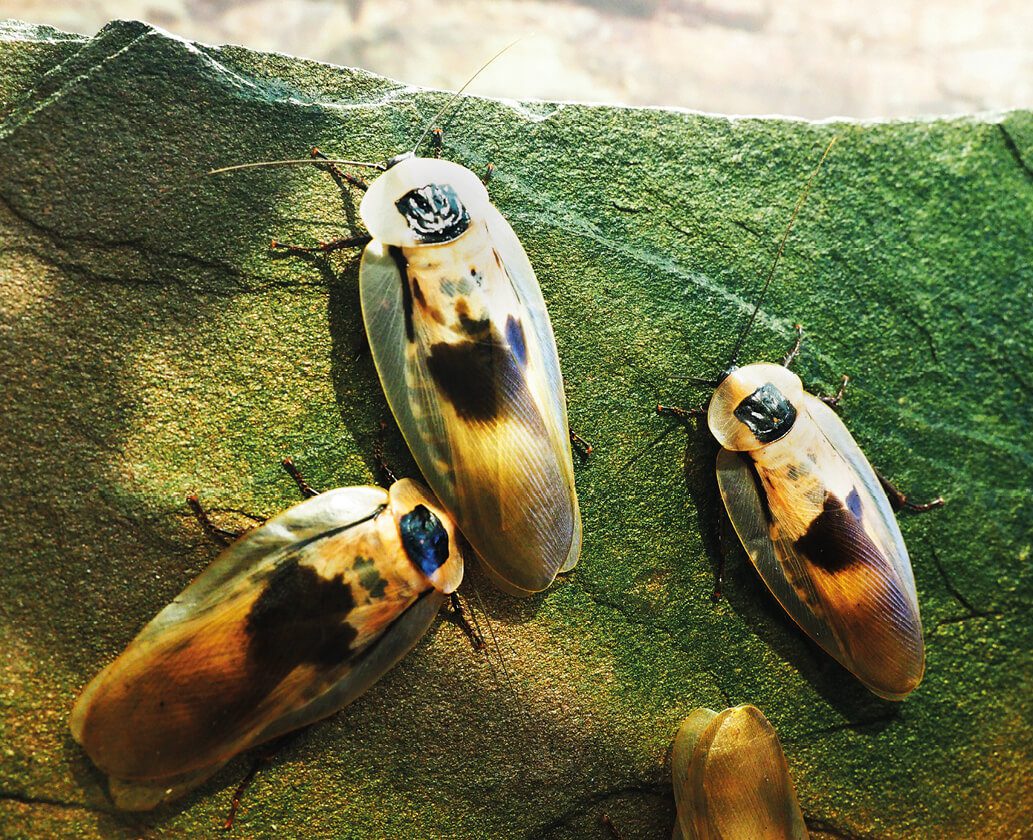
The giant cave cockroach, Blaberus giganteus, is sometimes imported together with bananas to countries that have temperate climates
The most important resources in our homes are water, food, and heat. This, first of all, means that such insects can invade any house, even the cleanest one. They aren’t big fans of dirt, but it doesn’t bother them, either. Secondly, this explains why we most often find cockroaches in the kitchen, garbage, and sewer: this is where their most precious resources are most easily accessible.
Why Are Cockroaches So Durable?
Synanthropic cockroaches (non-synanthropic species are rare) seem nasty and even dangerous to many. There is some truth to this idea. Cockroaches spoil human food with their nibbling, trail feces and scales from molting around our homes — to which some people are allergic — and involuntarily transfer various bacteria, parasitic protozoa, and fungi. Therefore, we have to fight back against these invaders.
However, this is not an easy task. Decades and even centuries of human war against the black beetle and German and American cockroaches have served as a powerful selection force, hardening these insects against many dangers. The oothecae also helped, as well as the structure of the cockroach’s body covering (cuticle): they do not absorb water, so droplets of water-soluble insecticides roll off of them and don’t seep into their pores. The main substance in the cuticle is chitin, which cannot be dissolved in alcohol, ether, or weak acids and alkalis. Digestive enzymes don’t work against it, either.
Cockroaches Survival Strategies
Starving a cockroach isn’t simple, either. The Blattella germanica can live for a month without any food, provided that they have access to water. Cockroaches have a well-developed tissue structure called a fat body, an organ that stores nutrients. When there is a lot of food available, special cells transfer some of those nutrients from the intestines to the fat body so that, when a time of famine comes, these same cells deliver sustenance to the various organs in need.
The behavior of insects also plays a significant role. They rarely live on their own and usually form well-coordinated communities in which the roles of individuals of the sexes differ. In German cockroaches, males are about 1.5 times more mobile than females, and they periodically venture out to explore new territories. If an area seems suitable to them, they leave behind feces with chemical tags, pheromones, and return to their colony. Later on, females and larvae find these marks by smell, and then they settle in the new territory. Of course, they take their own “reconnaissance” along with them.
To avoid getting caught by the enemy, cockroaches avoid open spaces and try to stay close to walls. This behavior is known as thigmotaxis, and it is also typical of mice and rats, among other creatures. Synanthropic cockroaches spend most of their time dormant in numerous small, difficult-to-access shelters so that humans can’t wipe them all out at once.
                                                <img width="300" height="200" src="https://oyla.us/wp-content/uploads/2023/11/img14.jpg" alt="A brown cockroach on a white background." />
    <p>The American cockroach looks similar to the German cockroach, but it’s much larger</p>
                                                <img width="300" height="282" src="https://oyla.us/wp-content/uploads/2023/11/img15.jpg" alt="A black and white drawing of a cockroach." />
    <p>Periplaneta americana</p>
        <h2>Why Are There Fewer of Them?
Sometimes it seems that cockroaches have decreased over the years and aren’t as common in households as they used to be 20 or 30 years ago. This may be true, but it is difficult to know for sure: no one really conducts mass censuses of urban cockroaches. Rather, we only note in which areas they are present. If there truly are fewer cockroaches near us, it is most likely due to updated standards for construction and pest control. Many newer apartment buildings, for example, don’t have garbage chutes or trash collection rooms inside, which are traditionally hotbeds for cockroaches. Additionally, there are fewer cracks in the ceilings and floor trim. Regular treatment with insecticides, which began to be carried out across major cities in the 1980s, has also played a role.
Other Cockroaches
In addition to synanthropic cockroaches, which specialize in human-settled areas, we also have cave cockroaches, as well as water and tree roaches — but that’s only the beginning. Some cockroaches share their homes with birds, while others, like the ant-eating Attaphila fungicola, are only found in the nests of leaf-cutter ants. Still other cockroaches dig holes and burrow into the ground.
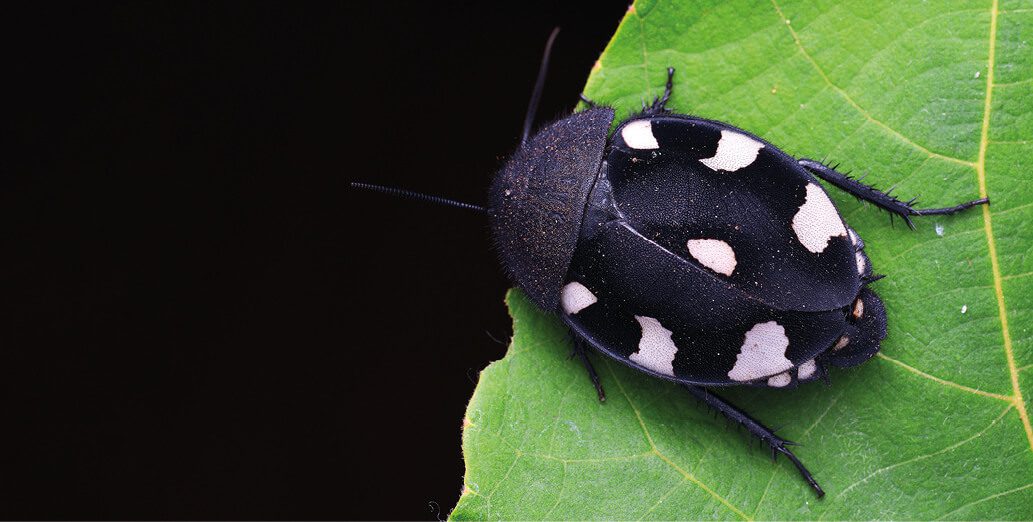
The desert cockroach, Therea petiveriana, lives in southern India and spends most of the day hiding in tree roots
In one forest, different types of cockroaches can occupy plants of different heights: some will live in the grass or below grounds, some in the bushes, and so on. Besides omnivorous species, there are also specialized ones: some eat pollen while others prefer only wood shavings. The ecological niches of cockroaches are so diverse that species rarely compete with one another. Each has its own place and occupation.
Maybe you don’t like cockroaches and even try to avoid them. But you cannot deny that they are caring parents and responsible team players. They lived on this planet long before we did, and they may just outlive us. Insects are not as simple as they seem at first glance, so perhaps we ought to think about their unique abilities and even learn something from them.
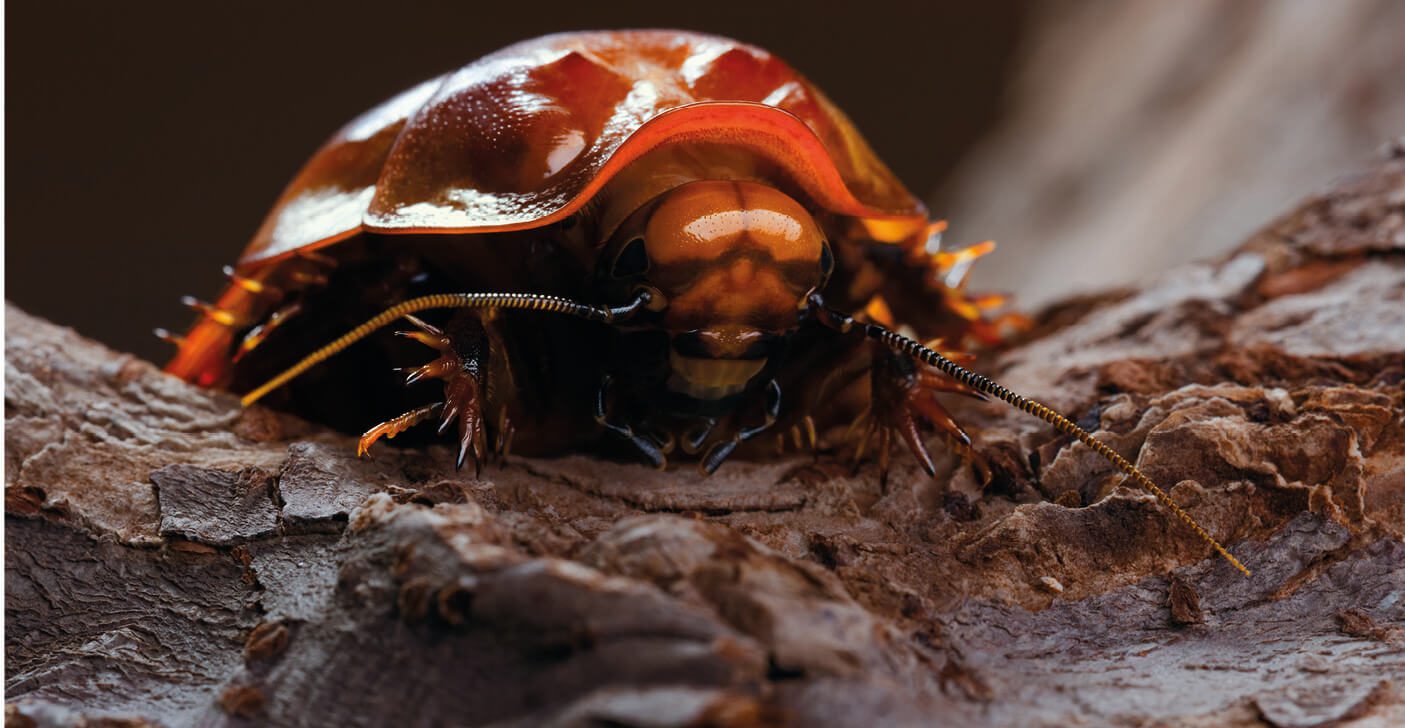
The spiral burrow of the giant burrowing cockroach, Macropanesthia rhinoceros, the heaviest cockroach in the world, is typically no deeper than 3 ft but can be up to 20 ft long
Prevent and Defeat
Though there are some people who breed these insects (giant cockroaches, peppered cockroaches, Madagascar hissing cockroaches, and the like) for their beauty or to feed their reptiles, no one wants to see one of these guys roaming freely around their apartment. So how do we prevent this?

Regularly throw out junk. Cockroaches love to make shelters out of piles of unnecessary items, and they leave behind chemical signals for their relatives to join them.

Immediately wash your dishes after eating, and dispose of any leftover food. Anything you want to finish eating later should be stored in the refrigerator. That way the cockroaches won’t have anything to eat. A few of them might be able to squeeze into your fridge, but they won’t be able to actively move around inside due to the low temperature.

Fix leaks in taps and pipes in a timely fashion. Even if they don’t bother you that much, they are integral to the survival of cockroaches since they increase the humidity in a space.

Minimalist apartment designs are a major enemy of insects, as they leave nowhere for them to hide. Decorative panels and tiered ceilings are excellent sources of shelter, so it’s best to avoid creating any space in your home where a cockroach might show up.
Many cockroaches are detritivores, meaning that they eat the decomposing remains of organisms and their waste products. In fact, they free the planet of organic garbage. The work is dirty but extremely important. Imagine what your house would be like if you never took out the trash!
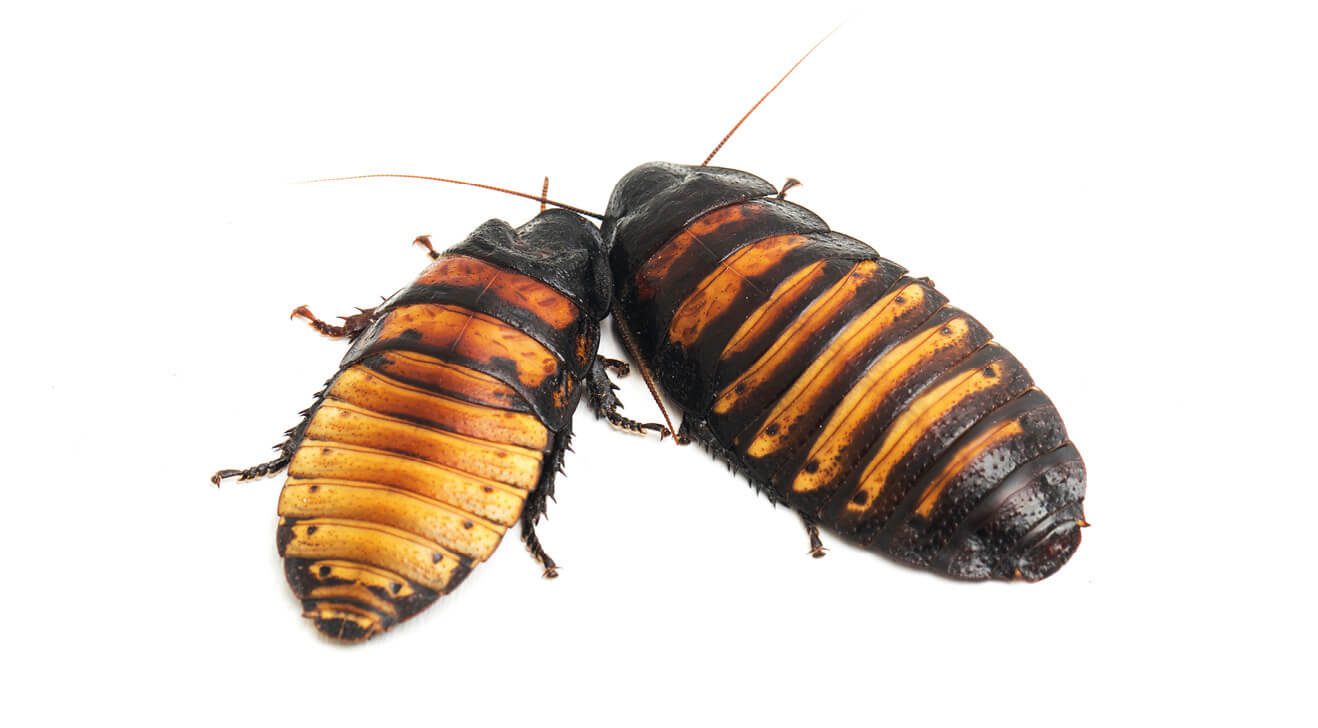
Madagascar cockroaches, one of the largest species of cockroach in the world, don’t have wings. In case of danger, they scare away their enemies by hissing.
Gromphadorhina portentosa
If we can’t avoid them completely, then how do we fight them?
Manually: throw out leftovers and other garbage, get rid of unnecessary items and furniture, and put glue traps in nooks and crannies of your home.
Physically: sharply heat the entire room to at least 113 °F and/or use boiling water to scald the places where cockroaches are likely to accumulate. Or you can take an opposite approach and try cooling — keep the temperature in your home no higher than 50 °F for several days. This doesn’t guarantee complete destruction, however. Contrary to what you may have heard, ultrasonic sound repellers don’t really work on cockroaches because they can’t penetrate most of the places where cockroaches hide, mingle, and lay eggs. All it does is bother people’s nervous systems, even though they can’t hear it.
Chemically: use insecticides. It’s better if they’re processed by professionals, and you may have to repeat a treatment several times to destroy all surviving insects. In any case, a chemical approach should be used very carefully. Many insecticides that act on the nervous systems of insects can also be poisonous to humans and our pets. Natural folk remedies such as tobacco dust, chamomile flowers, and elderberry are generally not effective.
Did you like the post? We invite you to read our other topics in Education category.
Follow us on Instagram.
<svg xmlns="http://www.w3.org/2000/svg" xmlns:xlink="http://www.w3.org/1999/xlink" id="Layer_1" x="0px" y="0px" viewBox="0 0 597.03 475.39" style="enable-background:new 0 0 597.03 475.39;" xml:space="preserve"><style type="text/css"> .st0{clip-path:url(#SVGID_00000021828697454809692600000004318893268413411000_);fill:#54A7B7;}</style><g> <defs> <rect id="SVGID_1_" x="63.22" y="2.39" width="470.59" height="470.65"></rect> </defs> <clipPath id="SVGID_00000125586198135712050590000014503595150480814249_"> <use xlink:href="#SVGID_1_" style="overflow:visible;"></use> </clipPath> <path style="clip-path:url(#SVGID_00000125586198135712050590000014503595150480814249_);fill:#54A7B7;" d="M352.92,237.74 c0-30.06-24.38-54.38-54.38-54.38c-30.06,0-54.38,24.32-54.38,54.38c0,30.01,24.32,54.38,54.38,54.38 C328.54,292.12,352.92,267.74,352.92,237.74 M440.15,237.74c0,78.06-63.55,141.62-141.62,141.62 c-78.12,0-141.62-63.55-141.62-141.62c0-78.12,63.5-141.62,141.62-141.62C376.6,96.12,440.15,159.61,440.15,237.74 M533.83,237.74 c0-129.78-105.58-235.3-235.3-235.3c-129.78,0-235.3,105.52-235.3,235.3s105.52,235.3,235.3,235.3 C428.26,473.03,533.83,367.51,533.83,237.74"></path></g></svg>