Post on topic: Bionics: How People Imitate Nature
Natural Patents
“The human being is the center of the universe and the purpose for everything that happens.” This axiom of anthropocentric philosophy has been passed down the generations since antiquity. Let us complete the world picture with the theory of evolution, in particular, anthropogenesis: the human being, the “crown of creation,” the perfect final link of the evolutionary chain, breaking outside of nature itself! But even this way of thinking is challenged by paradoxical human curiosity: not wanting to have anything in common with our animal origins, distancing ourselves from their “wild” nature, we still look to the “imperfect” creatures, mimicking their forms, structures, and mechanisms.
The human interest in the “dismantling” of nature eventually gave rise to a stand-alone scientific discipline, bionics. It is the applied science of the technological application of the principles of living nature — the organization of living forms, their properties, functions, and structures. In fact, bionic models mimic nature. Even the synonymous term biomimetics comes from the Greek word “mimesis” or “imitation.”
Bionics | Let’s Fly
So what are we copying? A classic example of bionics is wings that people tried to construct so diligently for several centuries. History tells us of at least three notable attempts, not counting the legendary flight of Icarus. In the 9th century, the Andalusian scholar, inventor, doctor, engineer, and poet Abbas Ibn Firnas made wings from feathers and cloth stretched on wooden struts and jumped from the tower of the Great Mosque in Córdoba. These wings were more like an umbrella or a parachute. He didn’t stay in the air long. The engineer managed to land safely, sustaining only a few minor injuries.
The second, less successful attempt was made by the English monk Eilmer of Malmesbury in the 9th century. He tried to take off with the help of mechanical wings. William, another monk from the abbey, wrote that “he had, by some contrivance, fastened to his hands and feet in order that he might fly like Daedalus, and collecting the air, on the summit of a tower, had flown for a distance of a furlong (656 ft); but agitated by the violence of the wind and a current of air, as well as the consciousness of his rash attempt, he fell and broke both his legs, and was lame ever after.”
Da Vinci’s Quest for Flight
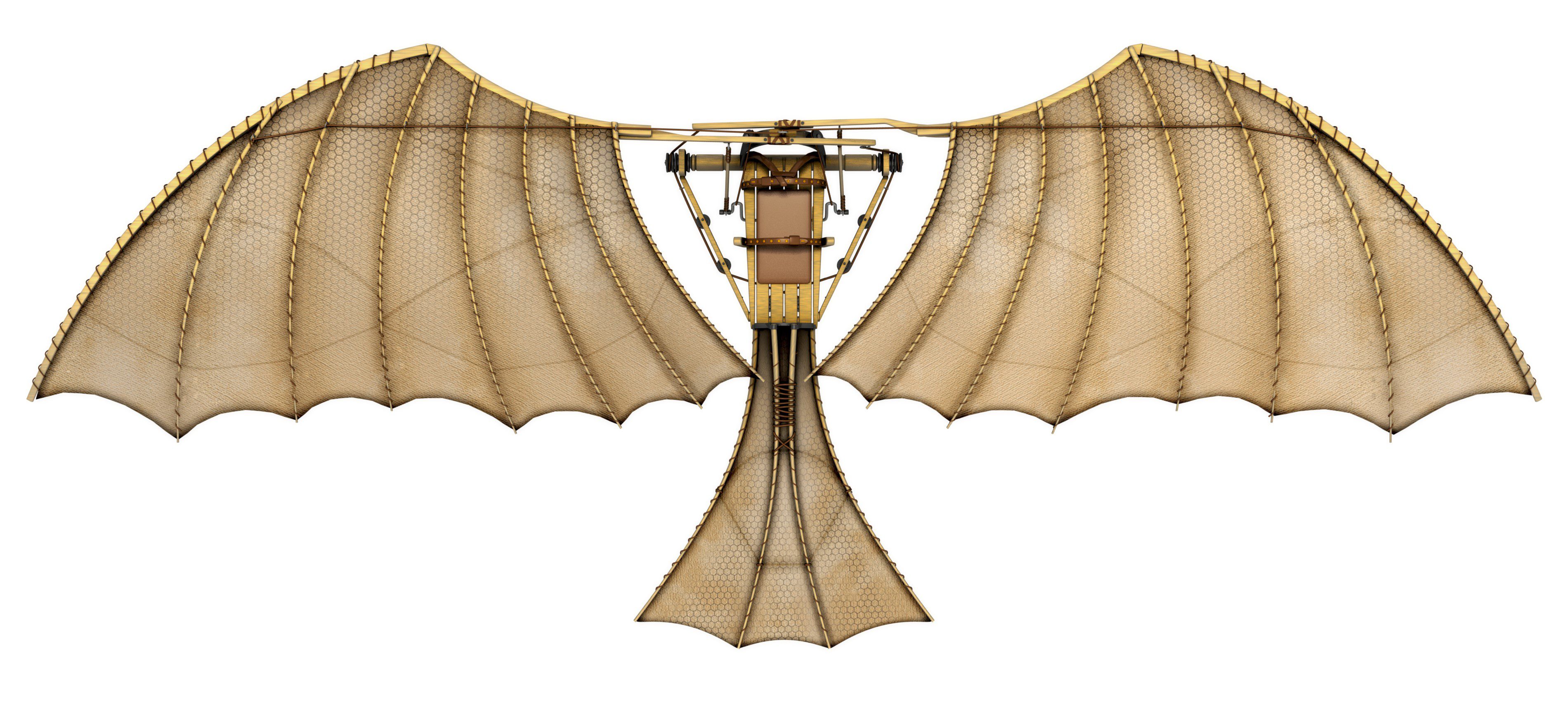
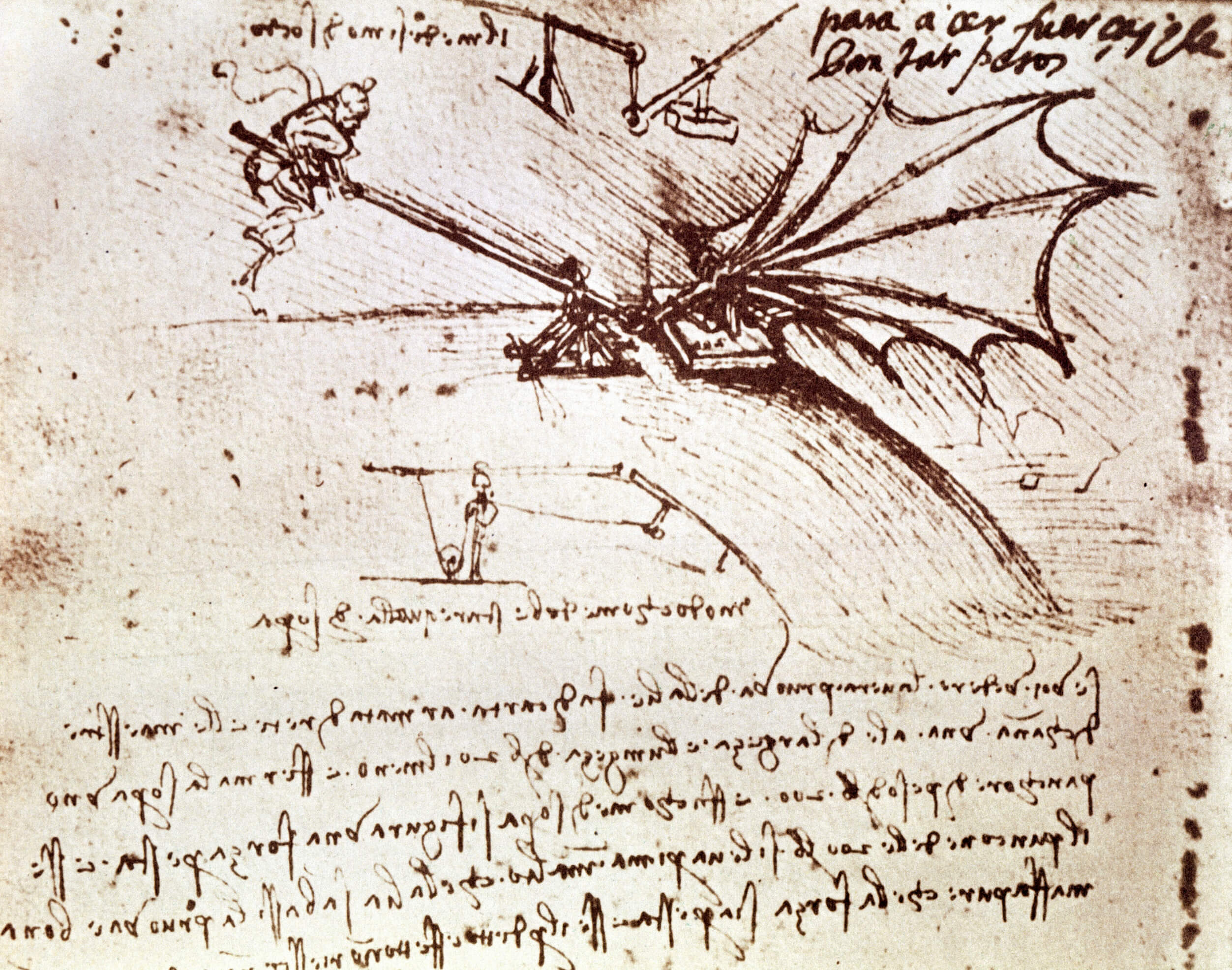
The Italian scientist and inventor Leonardo da Vinci approached the matter of flight thoroughly. The flight of birds and bats fascinated him, and at the same time, he studied it as a physical phenomenon. Already in the 1480s, the scientist became seriously involved in the development of an ornithopter flying machine. In 1505, he compiled the Codex on the Flight of Birds, a collection of bird flight principles and descriptions of his own flying machines.
Like other inventors, da Vinci first tried to engineer the wings set in motion only by the muscular strength of a single man. Having lost faith in this undertaking, he began to think about an aircraft, to which a person would not be directly attached but would be in control of while remaining completely free.
Bionics | Lotus Effect

The effect was discovered by the German botanist Wilhelm Barthlott in 1977. Microscopic protrusions on its leaves give the lotus hydrophobic properties; this makes the plant capable of self-cleaning from dirt, fungi, and excess moisture. This effect is used in the textile industry, as well as in solar panels and ceramic dishes.
Living Barometers and Velcro Fasteners
Accurate weather predictions have always been of great importance. Both bionics specialists and those not involved in science were interested in how sea animals could “predict” a storm’s approach. While a typical barometer does not show any signs of danger, the dolphins are already looking for shelter behind the cliffs, the whales go out into the open sea, and small crustaceans come ashore.
The explanation of this talent of sea inhabitants is associated with the discovery of the “voice of the sea,” a beautiful name for the phenomenon described by Soviet academic Vasily Shuleikin. The closer the storm, the higher the wind speed and waves, which amplifies the infrasound from the sea waves carried by the wind. Infrasonic oscillations spread at a rate of 4921 ft/s and are far ahead of the hurricane that causes them. They are perceived by marine inhabitants with the help of specialized organs. For example, the jellyfish has a kind of “infra-ear,” which catches the vibrations at 8–13 Hz — the infrasonic “voice of the sea.”
Jellyfish’s Secret Weapon
This “ear” consists of tiny bubbles with liquid located on the edges of the umbrella. They are called statocysts, or auditory cones, and they usually hang on stalks and fluctuate. The water that surrounds the jellyfish vibrates as well, and these fluctuations get intense during storms! In clear weather, the liquid fluctuations in the cone and the water in the ocean differ. When a storm gets closer, the frequency of ocean water oscillation changes and coincides with that of the liquid in the statocysts, producing resonance and increasing their amplitude. Statocysts are thus set in motion and excite the nerves. The excitement is transmitted to the nerve center. The jellyfish understands that something is wrong and dashes towards the open sea to escape being smashed against rocks.
Biophysicists from Moscow State University studied the “infra-ear” and used the principles to build a storm prediction device. “The ‘ear of the jellyfish’ has already been designed — it resembles the original not only in its name: it rather accurately imitates the sensitive jellyfish organ. The device works with high precision. It warns about the approaching storm 15 hours in advance,” wrote the Soviet biologist and popularizer of science Igor Akimushkin in the book Where to? And How?
                                                <img width="800" height="493" src="https://oyla.us/wp-content/uploads/2021/02/Scheme01-3.jpg" alt="Bionics: The work of the Jellyfish Ear device that predicts storms" />
    <h3>Unveiling the Storm Prediction Device</h3><p>The device consists of a tubular air vibration sensor (about 10 Hz), a resonator, a piezo sensor (it turns the perceived signals into pulses of electric current), an amplifier, and a measuring device. When the apparatus is on, the tube slowly rotates, searching for infrasound. When it is detected, the sensor stops pointing in the direction from which the storm is coming. With the help of a system of pointers, the device transmits a light or sound signal to the captain’s bridge notifying the team of the approaching storm.
By the way, such a device is useful not only at sea but on land too: with its help, one can predict hurricanes that threaten the destruction of crops.
Interesting Abilities

Natural Prototypes

FUR AND SKIN OF THE POLAR BEAR
Thermal insulation
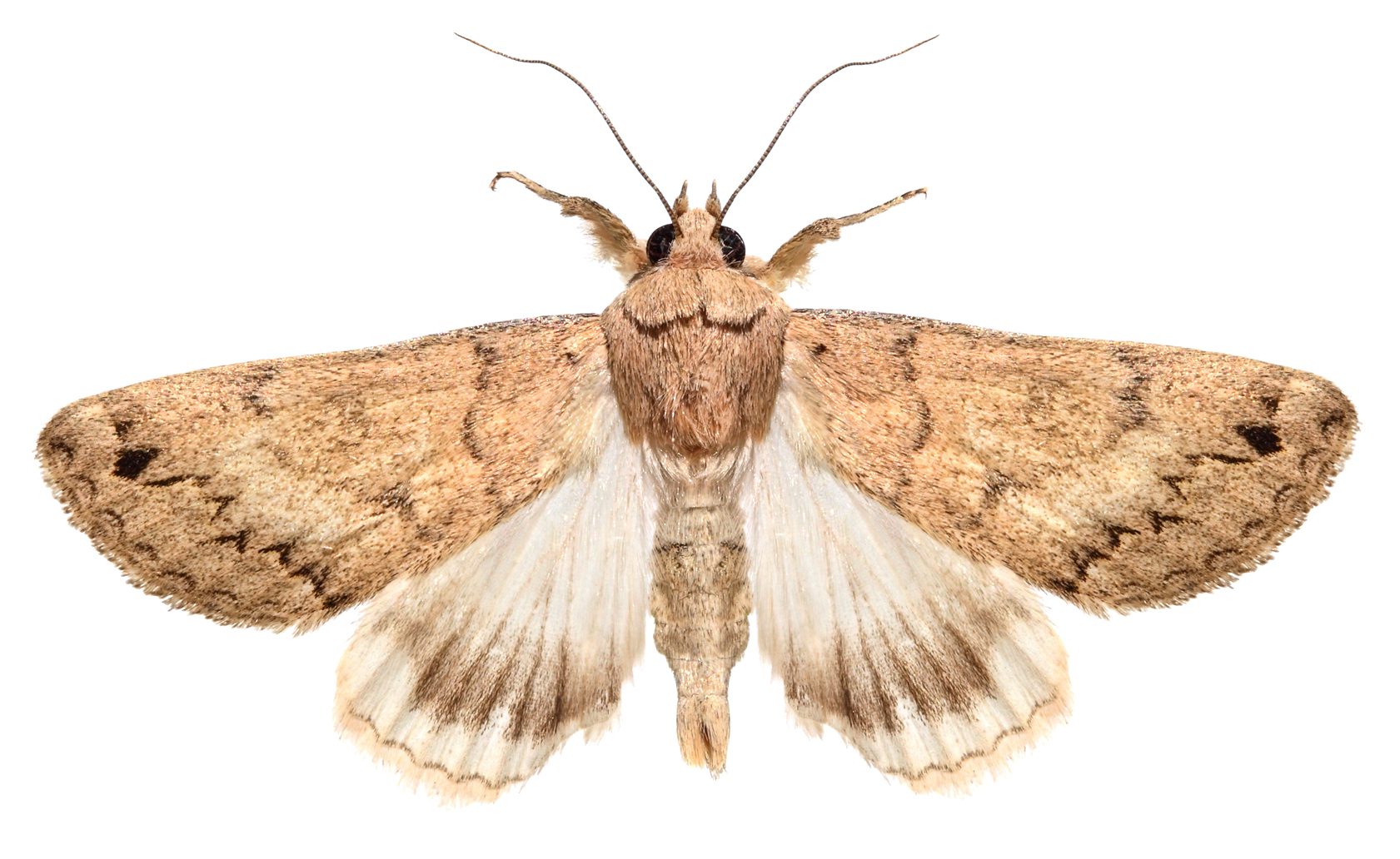
MOTH WINGS
Structural coloring
Antireflection surfaces

SPIDER WEB
Biological self-assembly
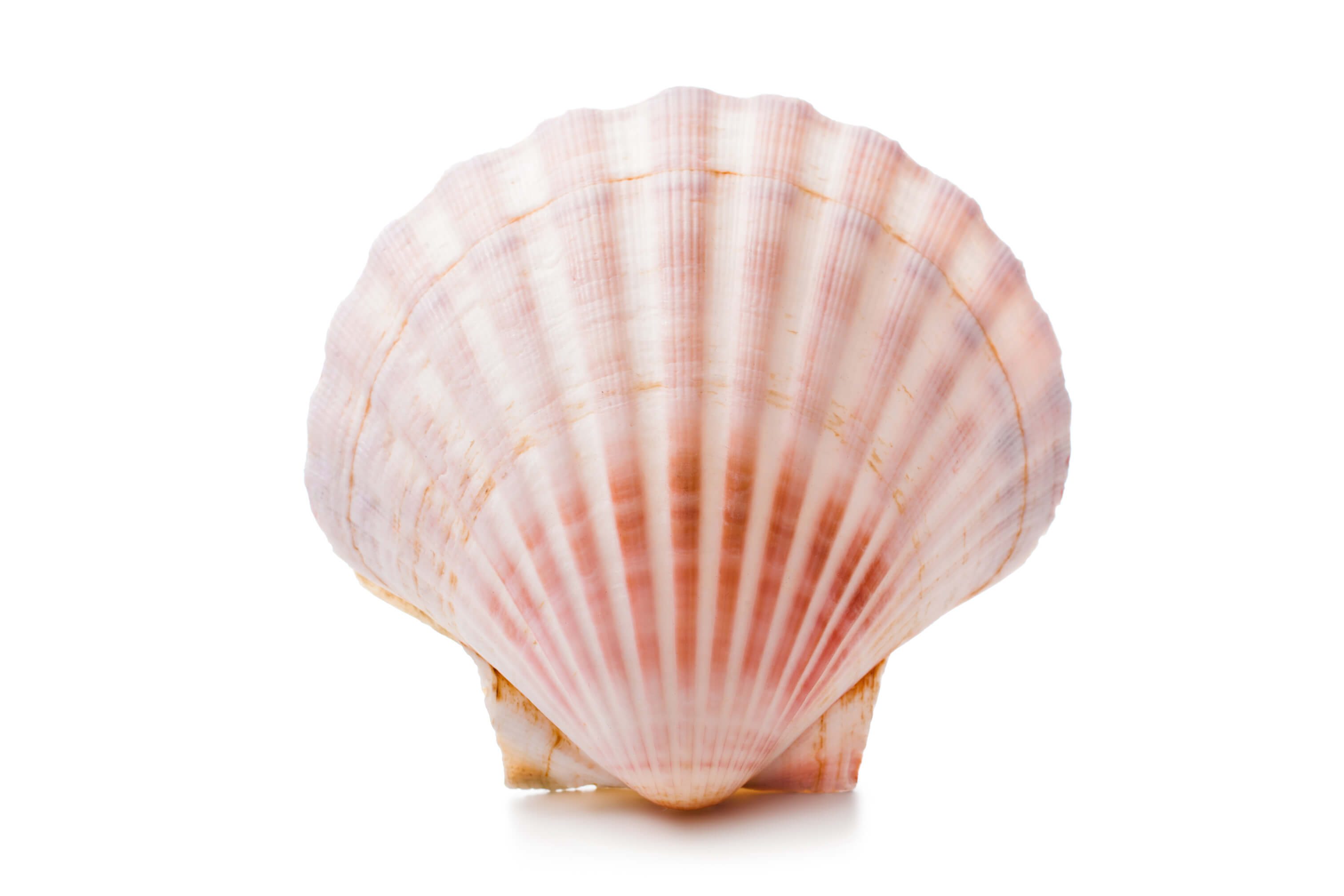
SEASHELLS, BONES AND TEETH
High mechanical strength

BIOLOGICAL SYSTEMS
Self-healing
Sensory-aid devices
Bionics | Cat’s Eyes

The idea to use special reflectors (cat’s eye) was brought up by English inventor Percy Shaw in 1934. It all started with the dismantling of tram lines when Percy noticed that polished steel rails were an excellent night mark for drivers. The reflective lens was invented six years earlier for use in advertising signs by accountant Richard Hollins Murray.
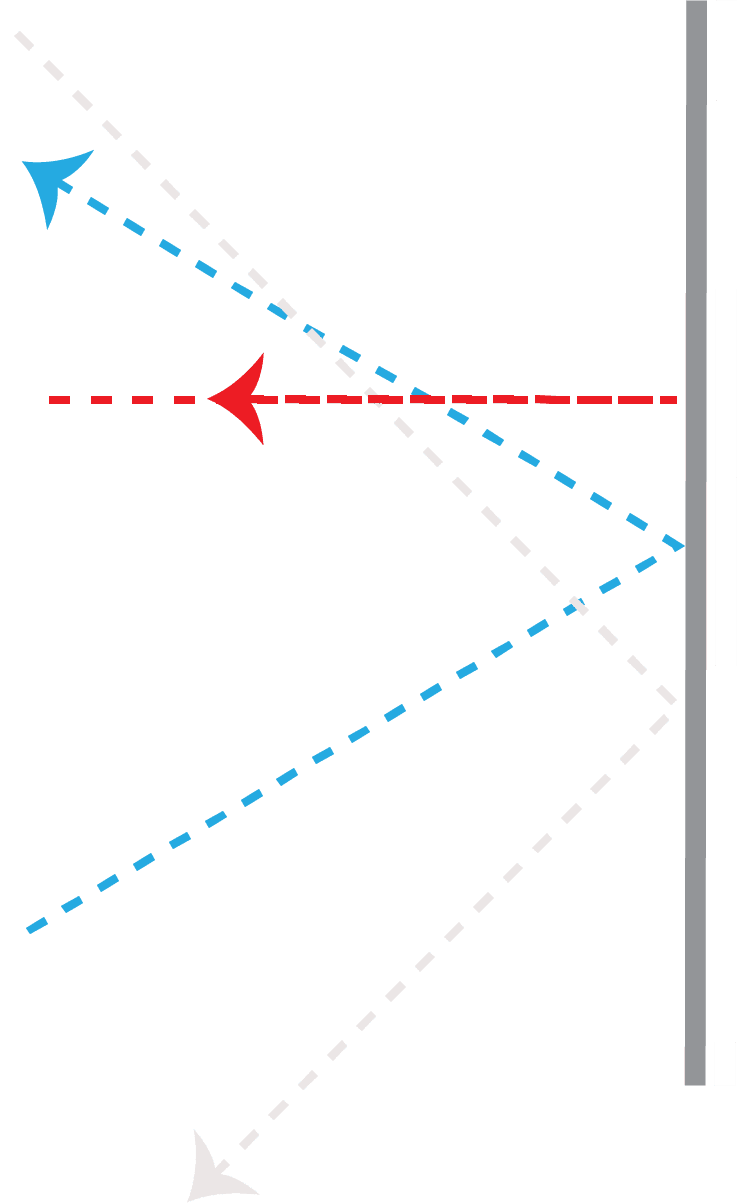
The invention was so useful that the BBC recognized the cat’s eye as one of the 10 best UK design ideas, along with the Concorde aircraft, the Mini car, and the K2 red telephone booth. The spherical design of a cat-like reflector sends a beam of light in the exact direction it came from.

While Soviet scientists carried out performance tests of new barometers, the hook and loop fastener, or Velcro, was produced, destined to become a classic Swiss bionic design. The idea dates back to 1941, when, Swiss engineer George de Mestral was habitually cleaning burrs off of his dog after each morning walk. Surprised by the tenacity of the spiny inflorescences, he carefully removed them from the animal’s fur and studied them under the microscope. One burr was covered with hundreds of tiny tenacious hooks that instantly and firmly “took hold” even in microscopic fibers on clothes. Mestral wondered: what if the surface of the clingy ball was several times as large? And what if it were not a sphere but a plane… So, in 1955, the engineer patented the hook and loop fastener, which is now found everywhere from school bags to the equipment of astronauts.
bionics | Life in a Cypress
Sound insulation based on the structure of owl feathers; medical bandages strong as a spider’s web; ship coatings similar to shark scales — the list of modern bionic devices continues to grow.

One of the youngest and most promising areas of applied science is associated with urbanism. The construction of a vertical tower city, Bionic Tower, began in Shanghai in the 2000s. The 4,029 ft-high city will be located on a piece of land with a base size of only 436 by 361 ft and will accommodate about 100,000 inhabitants, according to the design. The tower will have 300 floors located in 12 vertical blocks. The blocks will be composed of houses with vertical gardens. The design of the future city resembles the structure of the cypress branches. The foundation of a 300-story skyscraper will rest on piles that mimic the cypress root system spreading wide at a shallow depth.
If construction is successful, several more such city buildings will be built. In one interview, the project’s creators, the Spanish architects María Rosa Cervera and Javier Gómez, noted that they did not have to invent anything — “Nature has already done it before.”
Did you like the post? We invite you to read our other topics in Education category.
Follow us on Instagram.
<svg xmlns="http://www.w3.org/2000/svg" xmlns:xlink="http://www.w3.org/1999/xlink" id="Layer_1" x="0px" y="0px" viewBox="0 0 597.03 475.39" style="enable-background:new 0 0 597.03 475.39;" xml:space="preserve"><style type="text/css"> .st0{clip-path:url(#SVGID_00000021828697454809692600000004318893268413411000_);fill:#54A7B7;}</style><g> <defs> <rect id="SVGID_1_" x="63.22" y="2.39" width="470.59" height="470.65"></rect> </defs> <clipPath id="SVGID_00000125586198135712050590000014503595150480814249_"> <use xlink:href="#SVGID_1_" style="overflow:visible;"></use> </clipPath> <path style="clip-path:url(#SVGID_00000125586198135712050590000014503595150480814249_);fill:#54A7B7;" d="M352.92,237.74 c0-30.06-24.38-54.38-54.38-54.38c-30.06,0-54.38,24.32-54.38,54.38c0,30.01,24.32,54.38,54.38,54.38 C328.54,292.12,352.92,267.74,352.92,237.74 M440.15,237.74c0,78.06-63.55,141.62-141.62,141.62 c-78.12,0-141.62-63.55-141.62-141.62c0-78.12,63.5-141.62,141.62-141.62C376.6,96.12,440.15,159.61,440.15,237.74 M533.83,237.74 c0-129.78-105.58-235.3-235.3-235.3c-129.78,0-235.3,105.52-235.3,235.3s105.52,235.3,235.3,235.3 C428.26,473.03,533.83,367.51,533.83,237.74"></path></g></svg>