The Half-Blood Prince
Our hero’s real name is <a href="https://en.wikipedia.org/wiki/Paracelsus"><b>Philippus Aureolus Theophrastus Bombastus von Hohenheim</b></a>. The father of the future luminary of medicine was the illegitimate son of an old aristocratic family and passed on to his son an intricate, noble family name. However, he decided to choose a shorter alias for himself. “Paracelsus” means “alongside of, or near Celsus.” <a href="https://en.wikipedia.org/wiki/Celsus"><b>Celsus</b></a> was an ancient scientist and encyclopaedist (not to be confused with<b> Celsius</b>, by whose degrees we measure the temperature!). Celsus wrote several detailed books on medicine and introduced many terms — for example, the name of the disease cancer. It is not surprising that Paracelsus, an avid student of the medical field, took the name of his Roman predecessor. However, there is another version of events: some say the name should be translated as “surpassing Celsus” — our hero supposedly wanted to contrast himself with outdated, archaic works.
Paracelsus’s interest in medicine and other natural sciences was not accidental: his father was a doctor himself, and his mother worked at a hospital. From childhood, the young man studied botany, mineralogy, and medicine, and he received a theological education at the monastery school of St. Paul (this was a common occurrence for educated people of that time). At the age of 16, Paracelsus began to study medicine at the University of Basel, the oldest and most prestigious university in Switzerland, and he showed remarkable talent and diligence (again, the spitting image of Snape!), and sometime in 1515−1516, he received a doctorate.
Paracelsus: A Maverick Scholar’s Unconventional Journey
Before becoming a professor, Paracelsus went on to see the world: he served as a military surgeon, treated people in different parts of Europe, and never missed an opportunity to gain new knowledge from executioners or barbers. Upon his return to the university, the scientist had already developed a reputation for eccentricity and rebellion, which he did not intend to abandon. On the contrary, ignoring tradition, Paracelsus began to teach lectures not in Latin, but in German, so that medical science would be accessible to everyone.
                                                <img width="800" height="716" src="https://oyla.us/wp-content/uploads/2021/01/Comics01.jpg" alt="Paracelsus did not lecture in Latin, but in German" />
                                                <img width="800" height="713" src="https://oyla.us/wp-content/uploads/2021/01/Comics03.jpg" alt="Paracelsus did not lecture in Latin, but in German" />
                                                <img width="800" height="719" src="https://oyla.us/wp-content/uploads/2021/01/Comics02.jpg" alt="Paracelsus did not lecture in Latin, but in German" />
                                                <img width="800" height="714" src="https://oyla.us/wp-content/uploads/2021/01/Comics04.jpg" alt="Paracelsus did not lecture in Latin, but in German" />
    <p>Other professors in their classes simply retold the works of <a href="https://en.wikipedia.org/wiki/Galen"><b>Galen</b></a>, <a href="https://en.wikipedia.org/wiki/Aristotle"><b>Aristotle</b></a> and <a href="https://en.wikipedia.org/wiki/Avicenna"><b>Avicenna</b></a>, but Paracelsus taught medicine from extensive experience. In disputes with more orthodox colleagues, the difficult nature of the scientist was revealed: Paracelsus did not begrudge sarcastic taunts and insults, and he ridiculed those who relied only on the authority of others. The sharp-tongued professor had so many foes that he was forced to leave the university and even move away (he didn’t have to kill Dumbledore, though).</p>
        <h2>Paracelsus | The Philosopher’s Stone</h2>
    <p>If you’re imagining Paracelsus as a pragmatic skeptic who rejected everything unscientific, you are mistaken. Paracelsus believed in magic and all sorts of occult disciplines, and he studied astrology, divination, and demonology. Like many other educated people of his time, he was fascinated by <b>Hermeticism</b>, the interpretation of secret esoteric texts, the creator of which was held to be the mythical sage <a href="https://en.wikipedia.org/wiki/Hermes_Trismegistus"><b>Hermes Trismegistus</b></a>.
Studying hermetic philosophy, Paracelsus concluded that everything in the universe is interconnected and everything, including humans, has a certain divine part inside of it. This seemingly abstract idea gave the scientist a universal justification: if there is god in man, then there is no forbidden knowledge for him, and anything can be studied. The Catholic Church, however, did not approve of such thoughts.
Exploring Esoteric Notions in Medicine
Paracelsus merits acknowledgment for his holistic approach to medicine, embracing esoteric beliefs for their potential therapeutic applications. He delved into astrology, believing in the celestial influence on health, and explored the doctrine of signatures, using plants resembling organs to treat related ailments. For instance, he advocated using lung-shaped honeydew flowers to alleviate coughing. While some remedies aligned with their appearances, Paracelsus encountered mixed success in his explorations.
                                                <img width="790" height="1024" src="https://oyla.us/wp-content/uploads/2021/01/Comics05.jpg" alt="Paracelsus believed that plants resembling human organs could cure their corresponding ailments" />
    <p>Paracelsus was drawn to alchemical texts for their accounts of substance transformation, the creation of mystical elixirs, and the legendary Philosopher’s Stone, purported to confer immortality and transmute base metals into gold. Remarkably, this concept transcended alchemy, finding its way into popular culture like the <em>Harry Potter</em> series, which draws heavily from Hermeticism. Rumors even circulated that Paracelsus possessed such a stone, purportedly concealed within the hilt of his sword.</p>
                                                <img width="675" height="1024" src="https://oyla.us/wp-content/uploads/2021/01/Comics06.jpg" alt="Paracelsus was not interested in gold, he was focused on Alchemy, which helped him treat ailments" />
    <p>Paracelsus approached alchemy not merely as a pursuit of riches, but as a path to healing. He revolutionized medicine by integrating chemical compounds such as lead, mercury, and arsenic, thereby paving the way for pharmacology. This pioneering methodology represented a notable progression, transitioning from traditional reliance on herbal remedies to the incorporation of synthesized substances.</p>
        <h2>The Deathly Hallows</h2>
    <p>Let’s go into more detail. How did Paracelsus come up with the idea to make chemicals? His thinking was based on ideas similar to those attributed to <a href="https://en.wikipedia.org/wiki/Hippocrates"><b>Hippocrates</b></a> — <b>the theory of four humors</b>. We’ll remind you that the ancient doctor believed that there are four liquids, or humors, balanced in the human body: blood, phlegm, and yellow and black bile. When one of them is lacking or, on the contrary, grows too powerful, a person falls ill.</p>
                                                <img width="715" height="1024" src="https://oyla.us/wp-content/uploads/2021/01/IMG02-2.jpg" alt="In the book Deathly Hallows, death gives one of the brothers an invisibility robe that symbolizes the triangle sign" />
    <p>Paracelsus had more modern views on the theory of humors. He claimed that such a balance really exists, only it contains not liquids, but chemicals — mercury, sulfur, and salt. Their lack or excess causes diseases. Paracelsus came to this conclusion by the teachings of the very same Hermeticism. Everything in the universe is interconnected, remember? This means that a person and the world around them are made up of the same elements. This is why Paracelsus believed that alchemy, the science of converting substances, should not be concerned with obtaining gold from lead but with making medicines. He even gave this science a new name, <b>iatrochemistry</b> (<i>iatros </i>from ancient Greek meaning “doctor”), and the corresponding field of medicine, called <b>spagyric</b> (<i>spao</i> — “extract”, <i>ageiro</i> — “gather”).</p>
                                                <img width="502" height="1024" src="https://oyla.us/wp-content/uploads/2021/01/Comics07.jpg" alt="Ok, the Moon is in Jupiter, in the third house, so we can collect..." />
        <h4>Let’s take a minute for potion theory! </h4>
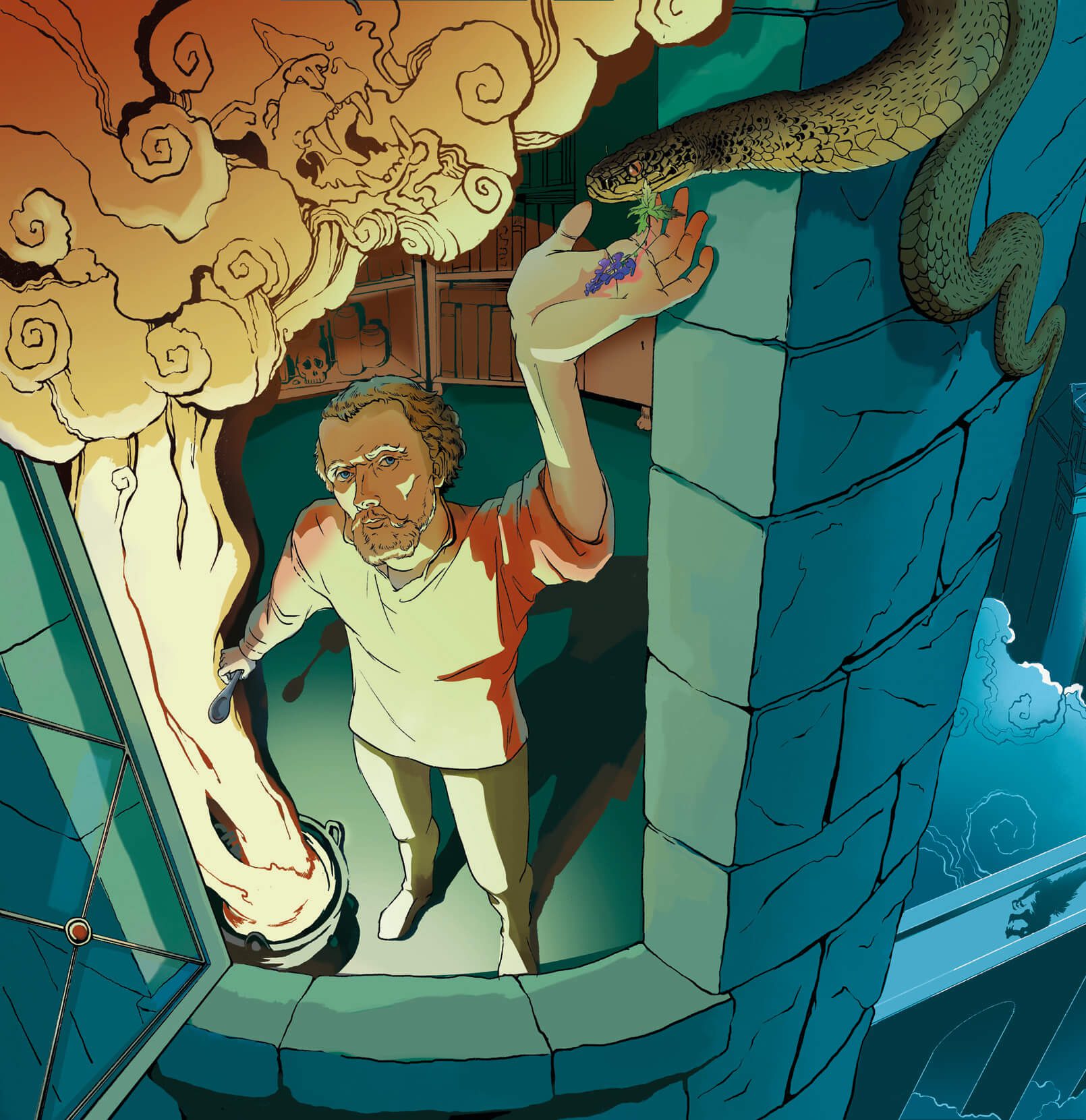
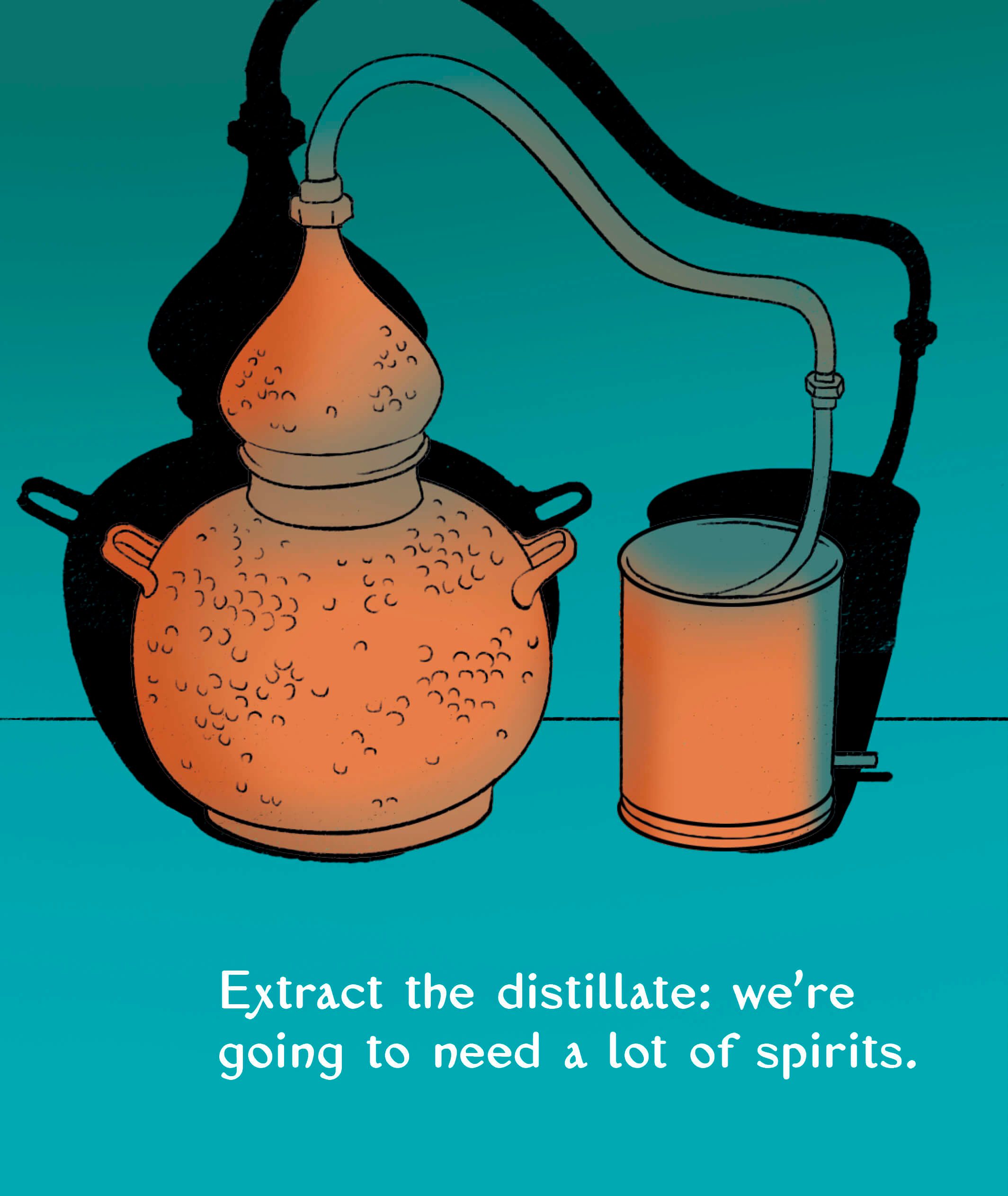
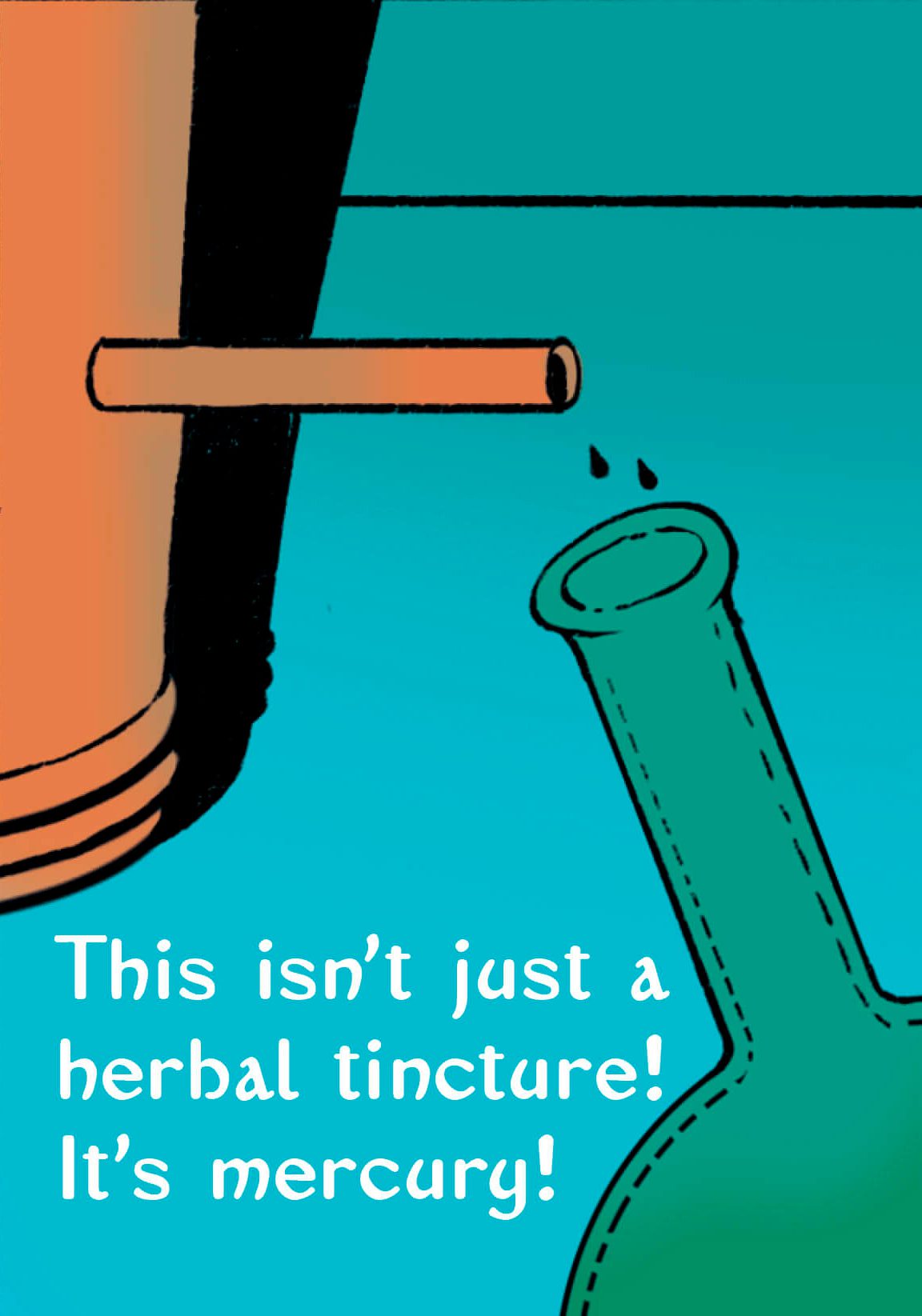
    <p>To create an iatrochemical drug, as Paracelsus did, you need to extract three basic elements from medicinal plants:
Mercury, the element of water. It is contained in distilled alcohol extracts.
Salt, the element of earth. It is contained in the ash left after burning a plant.
Sulfur, the element of fire. It is contained in the volatile essence of a plant (i.e. in essential oils).
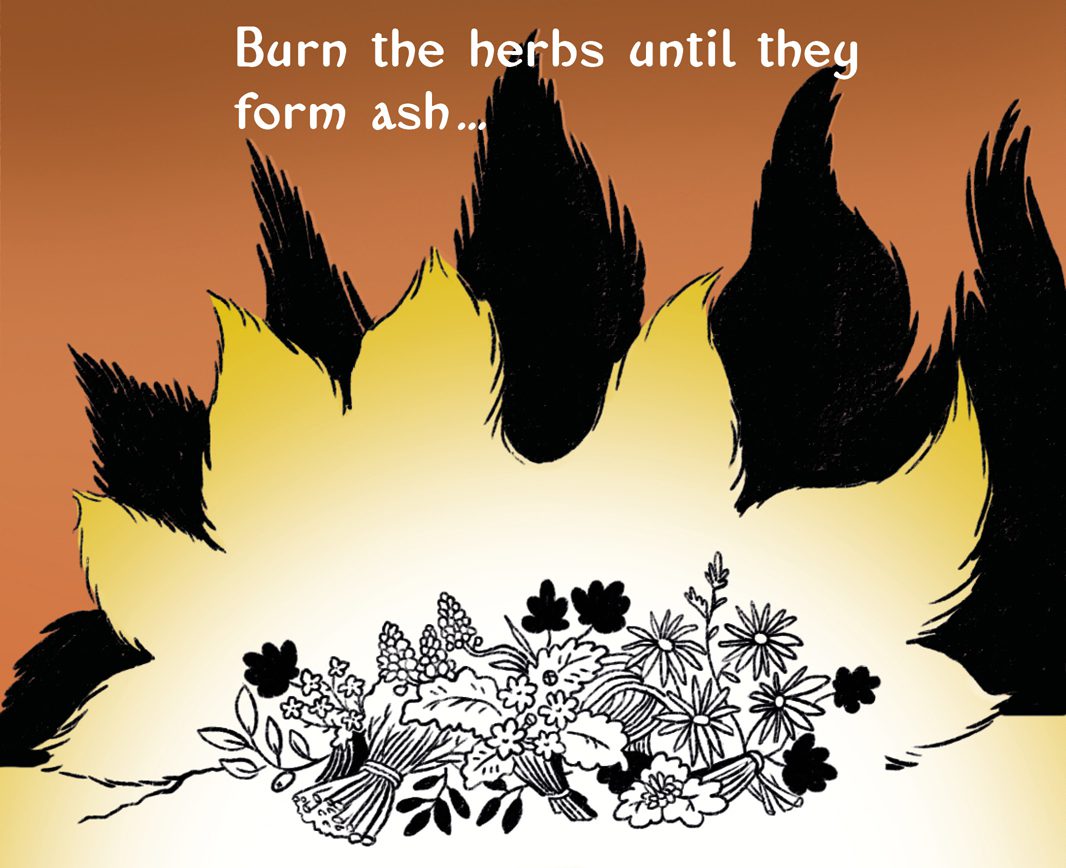
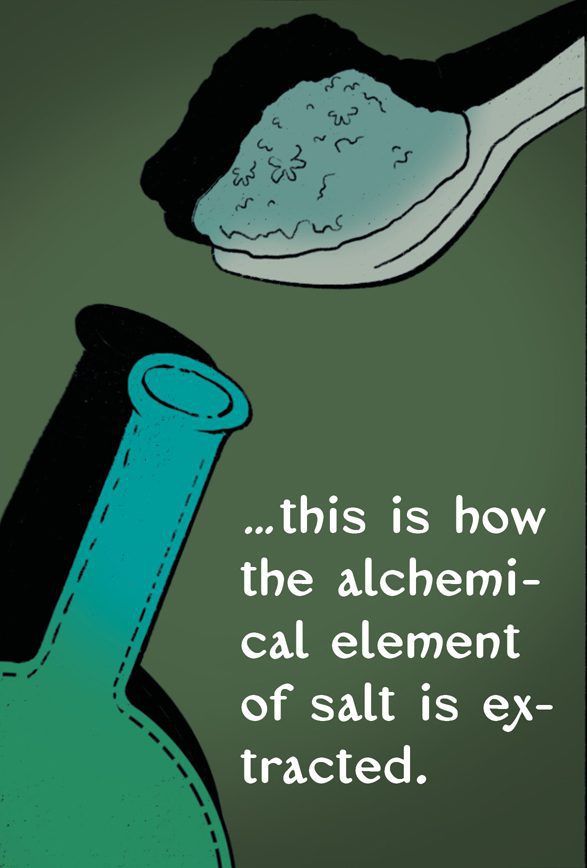
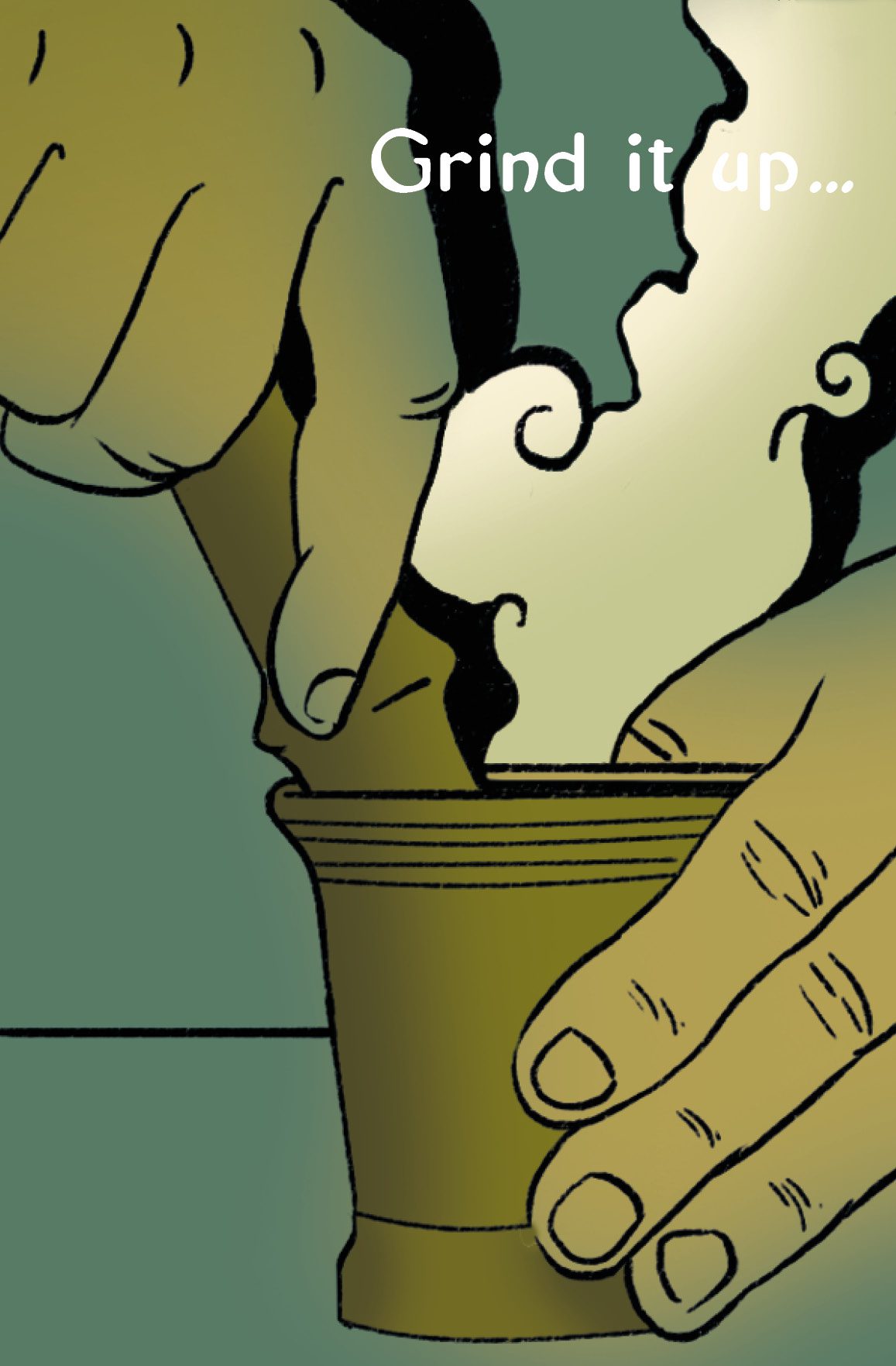

Paracelsus: Scientist or Sorcerer?
Magic, spells, elements…Is it even possible to call Paracelsus a scientist? Despite his occult interests, he was still a brilliant doctor and chemist for his time. The famous adage, “Only the dose makes the poison,” belongs to him. Paracelsus coined the modern name of the metal zinc, probably deriving it from the German zinke, “prong” (in its raw form, the metal looks like spikes or needles).
He is credited with the invention of laudanum — an opium analgesic tincture used until the beginning of the 20th century. He was the first to describe the disease that plagued miners, which later became known as lung cancer. Iatrochemistry and spagyric medicine allowed science to assume for the first time that the processes occurring in the human body have a chemical basis. Even though Paracelsus put great importance on the phases of the Moon and wrote seriously in treatises about dwarves and demons, he approached all knowledge rationally and sought a way to put it to use.
How did Paracelsus die? Under unknown circumstances. Rumor has it that the legendary doctor’s death was no less tragic than that of Severus. His enemies either tried to poison him, or they hired hitmen to do the job. On September 24, 1541, Paracelsus died. He was 48 years old.
Post on topic: Paracelsus: Alchemy to the Aid of Medicine.
Did you like the post? We invite you to read our other topics in Education category.
Follow us on Instagram.
<svg xmlns="http://www.w3.org/2000/svg" xmlns:xlink="http://www.w3.org/1999/xlink" id="Layer_1" x="0px" y="0px" viewBox="0 0 597.03 475.39" style="enable-background:new 0 0 597.03 475.39;" xml:space="preserve"><style type="text/css"> .st0{clip-path:url(#SVGID_00000021828697454809692600000004318893268413411000_);fill:#54A7B7;}</style><g> <defs> <rect id="SVGID_1_" x="63.22" y="2.39" width="470.59" height="470.65"></rect> </defs> <clipPath id="SVGID_00000125586198135712050590000014503595150480814249_"> <use xlink:href="#SVGID_1_" style="overflow:visible;"></use> </clipPath> <path style="clip-path:url(#SVGID_00000125586198135712050590000014503595150480814249_);fill:#54A7B7;" d="M352.92,237.74 c0-30.06-24.38-54.38-54.38-54.38c-30.06,0-54.38,24.32-54.38,54.38c0,30.01,24.32,54.38,54.38,54.38 C328.54,292.12,352.92,267.74,352.92,237.74 M440.15,237.74c0,78.06-63.55,141.62-141.62,141.62 c-78.12,0-141.62-63.55-141.62-141.62c0-78.12,63.5-141.62,141.62-141.62C376.6,96.12,440.15,159.61,440.15,237.74 M533.83,237.74 c0-129.78-105.58-235.3-235.3-235.3c-129.78,0-235.3,105.52-235.3,235.3s105.52,235.3,235.3,235.3 C428.26,473.03,533.83,367.51,533.83,237.74"></path></g></svg>