GET TO KNOW OUR GUESTS FROM SPACE
    <strong>Meteorite time!</strong></p>
                                                <img width="800" height="497" src="https://oyla.us/wp-content/uploads/2021/01/IMG02-1.jpg" alt="Comet" />
    <p><b>Comet</b><b> </b>— A small body of dust and frozen gases that orbits the Sun. When approaching the Sun, the substance of the comet heats up, and the ice in its composition turns into gas and forms a tail. Sometimes comets pass close enough to our planet to be seen without falling to the Earth’s surface.</p>
                                                <img width="800" height="750" src="https://oyla.us/wp-content/uploads/2021/01/IMG333.jpg" alt="Asteroid" />
    <p><b>Asteroid </b>— A large body more than 10 m (32.8 ft) in diameter that moves in orbit around the Sun.</p>
                                                <img width="800" height="800" src="https://oyla.us/wp-content/uploads/2021/01/IMG222.jpg" alt="Meteoroid" />
    <p><b>Meteoroid</b><b> </b>— A small body measuring from a tiny grain of sand to 10 m (32.8 ft) in diameter.</p>
                                                <img width="800" height="571" src="https://oyla.us/wp-content/uploads/2021/01/IMG444.jpg" alt="Meteor" />
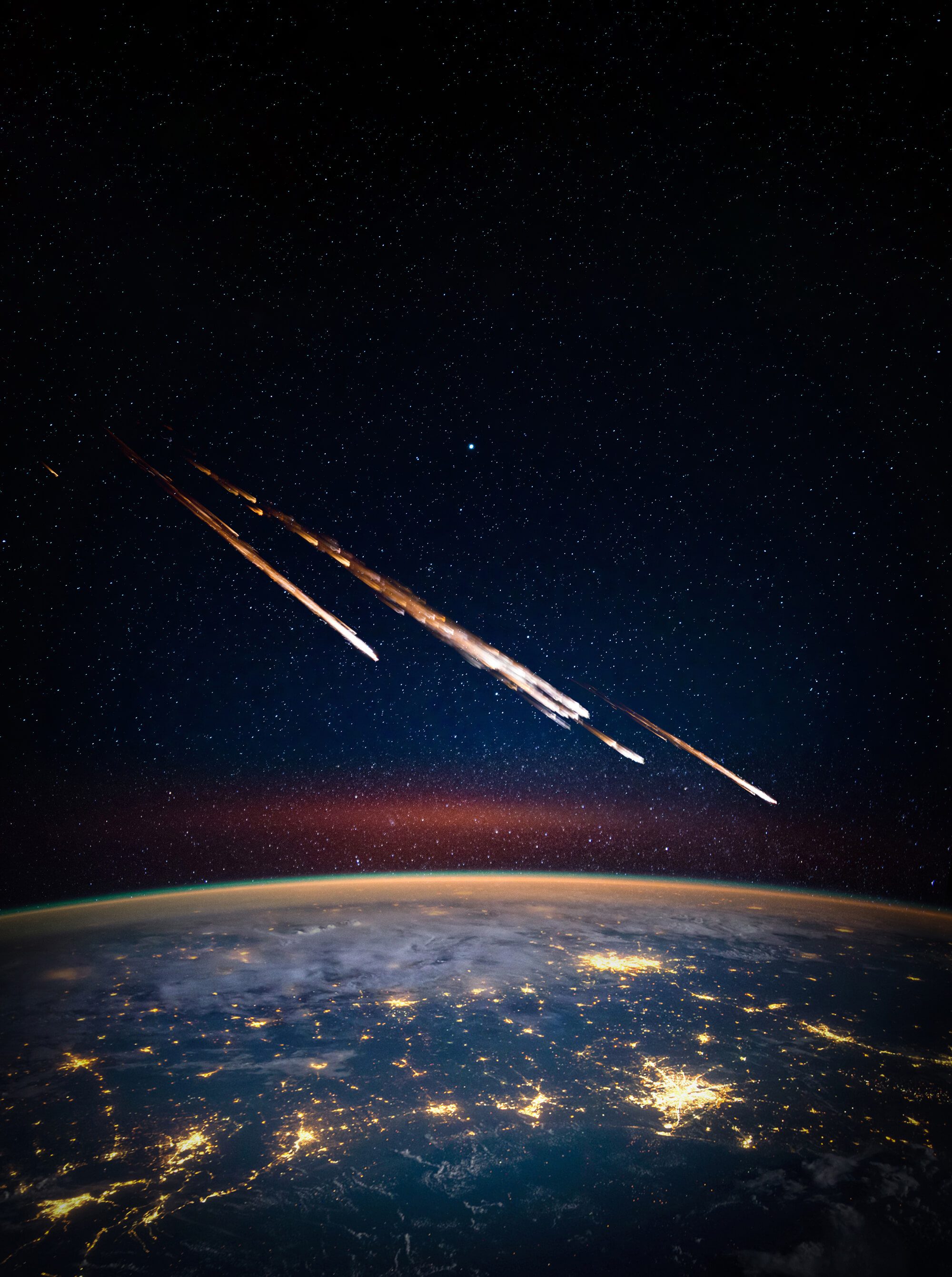
    <p><b>Meteor</b><b> </b>— A trail of light that occurs when a meteoroid enters the Earth’s atmosphere.</p>
                                                <img width="800" height="482" src="https://oyla.us/wp-content/uploads/2021/01/IMG555.jpg" alt="Meteor shower" />
    <p><b>Meteor shower </b>— A group of meteors.</p>
                                                <img width="800" height="533" src="https://oyla.us/wp-content/uploads/2021/01/IMG666.jpg" alt="Meteorite" />
    <p><b>Meteorite</b><b> </b>— A fragment of a meteoroid or asteroid that survived a fall through the atmosphere and landed successfully.
Meteor storm — An intense shower of a large group of meteors.

Fireball — A meteor whose brightness is greater than that of Venus. Fireballs usually explode in the atmosphere.
The Journey and Significance of Meteorites
A rock that is flying through space is called a meteoroid (or, if it is more than 10 m in diameter, it’s an asteroid). Where do they come from? These are fragments of large cosmic bodies or particles of the tail of comets. If a space rock comes close enough to Earth, it’s affected by gravity. Under its influence, the stone will enter the atmosphere and begin to fall. Flying through atmospheric gases is not as easy as through the vacuum of space: friction ignites the stone and can completely burn through it. Unburned remnants of meteoroids that have reached the surface of our planet are called meteorites.
Ancient civilizations knew about meteorites. The celestial bodies they found were worshipped and considered sacred. But with the advent of the Enlightenment, the scientific world began to seriously doubt their existence. At that time, the scientific community did not have any carefully documented cases of meteorites, only stories from uneducated eyewitnesses. Therefore, stories about meteorites were thought to be popular superstition — the idea of stones falling from the sky caused the same sort of skepticism as stories about people kidnapped by aliens do in our time.
Among the people, meteorites were called “thunderstones,” and they were believed to be formed by lightning. At the end of the 18th century, scientists from the French Academy of Sciences studied a meteorite that fell during a thunderstorm. The specimen was melted on the outside, but there was nothing unusual in its composition. In the 18th century, lightning was already well-studied, so it was known that stones could not materialize from it. Moreover, the “thunderstone” in question resembled a rather ordinary piece of rock, only melted, as if the Earth had been hit by an electric discharge. So, the Academy of Sciences concluded that no stones could fall from the sky.
Catalysts of Scientific Revolution
Unfortunately, this forced many museums to simply throw out the meteorites they had stored there, which included some large specimens.
They didn’t have to wait long for a rebuttal from the universe: in 1803, a meteor shower took place in the vicinity of Paris, and French scientists who witnessed the event had no choice but to believe their eyes. Since then, meteorites have become welcome guests on Earth, because their study allows us to learn more about the mysteries of the cosmos.
Meteorites, depending on their composition, are classified as either stony, iron, or stony-iron. For the most part, the ingredients of space rocks are quite familiar to earthlings: iron, nickel, sulfur, silicon, various oxides, and so on. Sometimes (but not always!) scientists are able to detect an alien chemical compound in the meteorite — for example, the aluminum alloy khatyrkite or the silicon carbide moissanite, which are not formed in natural conditions on our planet.
I found a strange stone. What if it’s a meteorite?
To determine whether a rock you’ve found came from space, just run a few simple tests. First, the meteorite should not have cavities or bubbles (like pumice does, for example). Secondly, it should stick to a magnet — many such “aliens” contain iron. Third, the surface of such stones is often charred and covered with dents that resemble finger marks on modeling clay.
    <h3>Extraordinary Meteorites</h3><p>Every year, about 500 space rocks reach the surface of our planet, but most of them fall into the ocean. Though meteorites might be commonplace, they do have some outstanding examples among them, which we will discuss in more detail.</p>
                                                <img width="800" height="800" src="https://oyla.us/wp-content/uploads/2021/01/Scheme02.jpg" alt="Location of Hoba" />
        <h3>Hoba</h3>
    <p><strong>Discovered:</strong>  in 1920
Location: Namibia
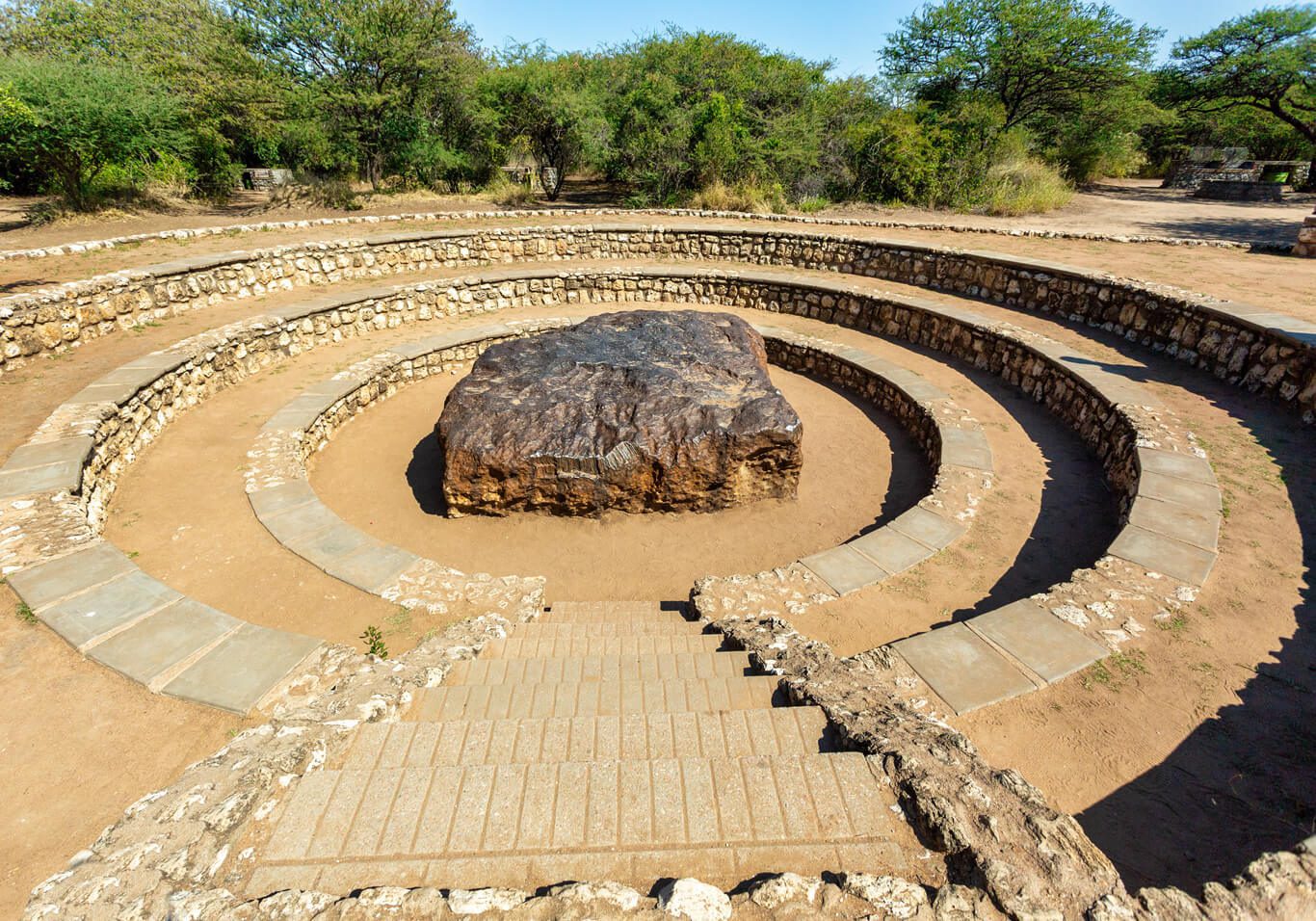
The Hoba meteorite is the largest meteorite ever found, and at the same time the largest piece of natural iron on the planet’s surface. It came to Earth about 80,000 years ago, but it was discovered relatively recently. The meteorite was found lying on the territory of the Hoba West farm, and the owner himself came across it. It was an amazing coincidence: in the language of one of the peoples of Namibia, “Hoba” means “gift,” and this was the farm’s name long before the discovery of the space gift! A hundred years ago, the meteorite weighed 72.7 t, but by 1955 it had “slimmed down” to 66 t. The blame falls on all of the tourists who wanted to chip off a piece of the extraterrestrial nugget as a souvenir. Hoba is now under the protection of the government of Namibia.
Tunguska
Discovered: in 1908
Location: Russia
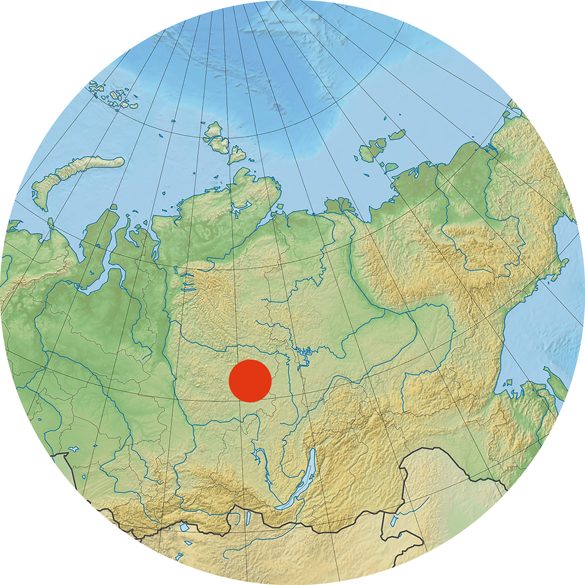
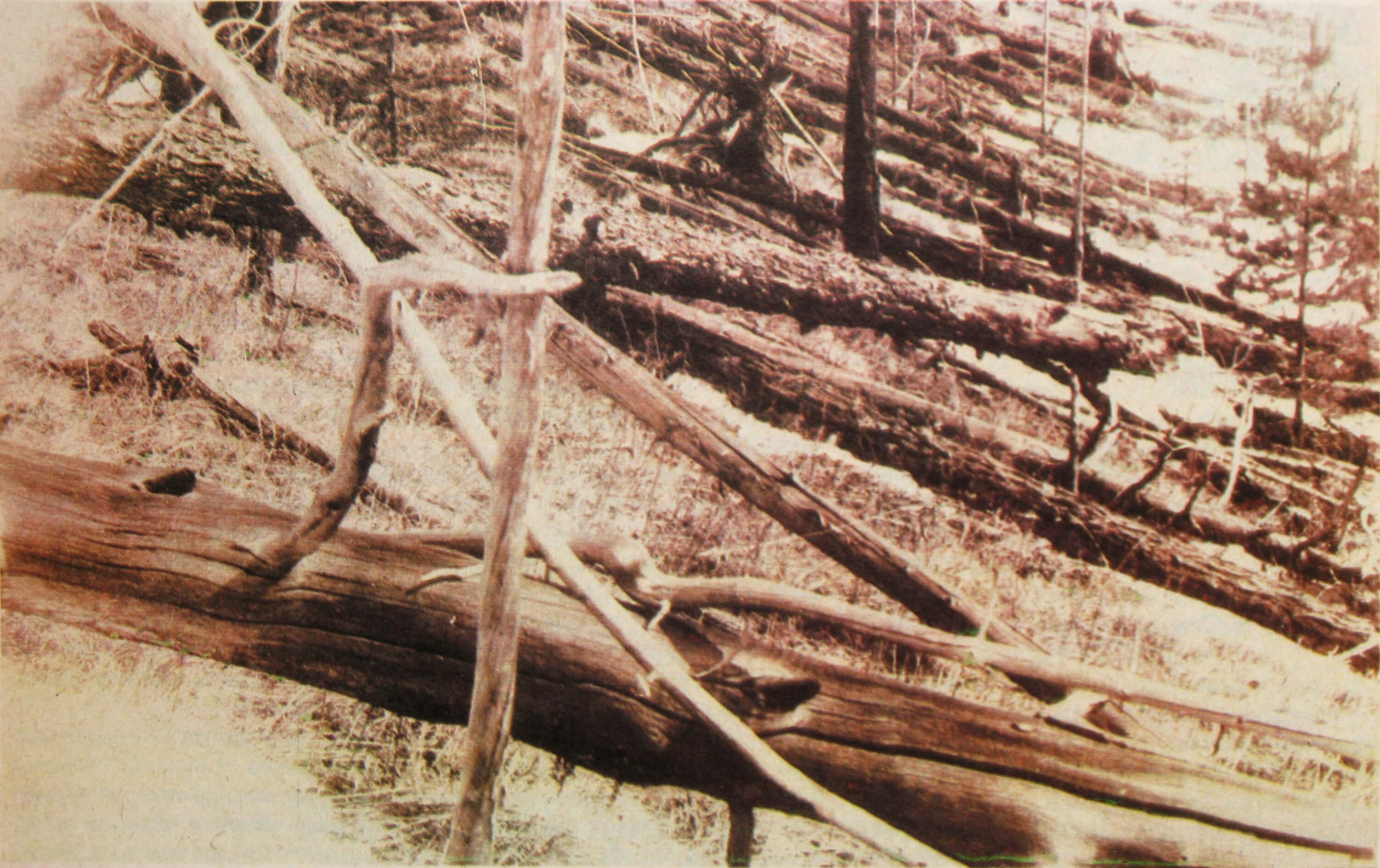
Have you ever heard about the most powerful of all meteorites, which fell on the Siberian taiga? It exploded in the air several miles short of the Earth’s surface. The shock wave from the explosion circumnavigated the globe twice, and its power reached 44 million tons (for comparison, the power of the atomic bomb dropped on Hiroshima was “only” 14–20 thousand tons!). In a 772-mi² area surrounding the Podkamennaya Tunguska River, trees were felled, and the forest was covered with small silica balls — fused fragments of the meteorite. However, not everyone agrees that there was even a meteorite at all: there are some improbable theories that an atomic explosion or a spaceship crash occurred in the taiga.

АLH 84001
Discovered: in 1984
Location: Antarctica
This meteorite with a boring name gained worldwide fame in 1996. NASA scientists found fossilized structures in the rock that look like traces of bacteria. However, the traces were so microscopic that it couldn’t be determined for sure, and it hasn’t been proven that life originated in the rock before its collision with the Earth. So, where did the meteor with the sensational contents come from? Mars! Scientists were able to prove this with the help of radiocarbon dating. The stone broke off about four billion years ago from its native red planet, and it fell in Antarctica merely 13,000 years ago. The meteorite’s mass is only 4.2 lb.

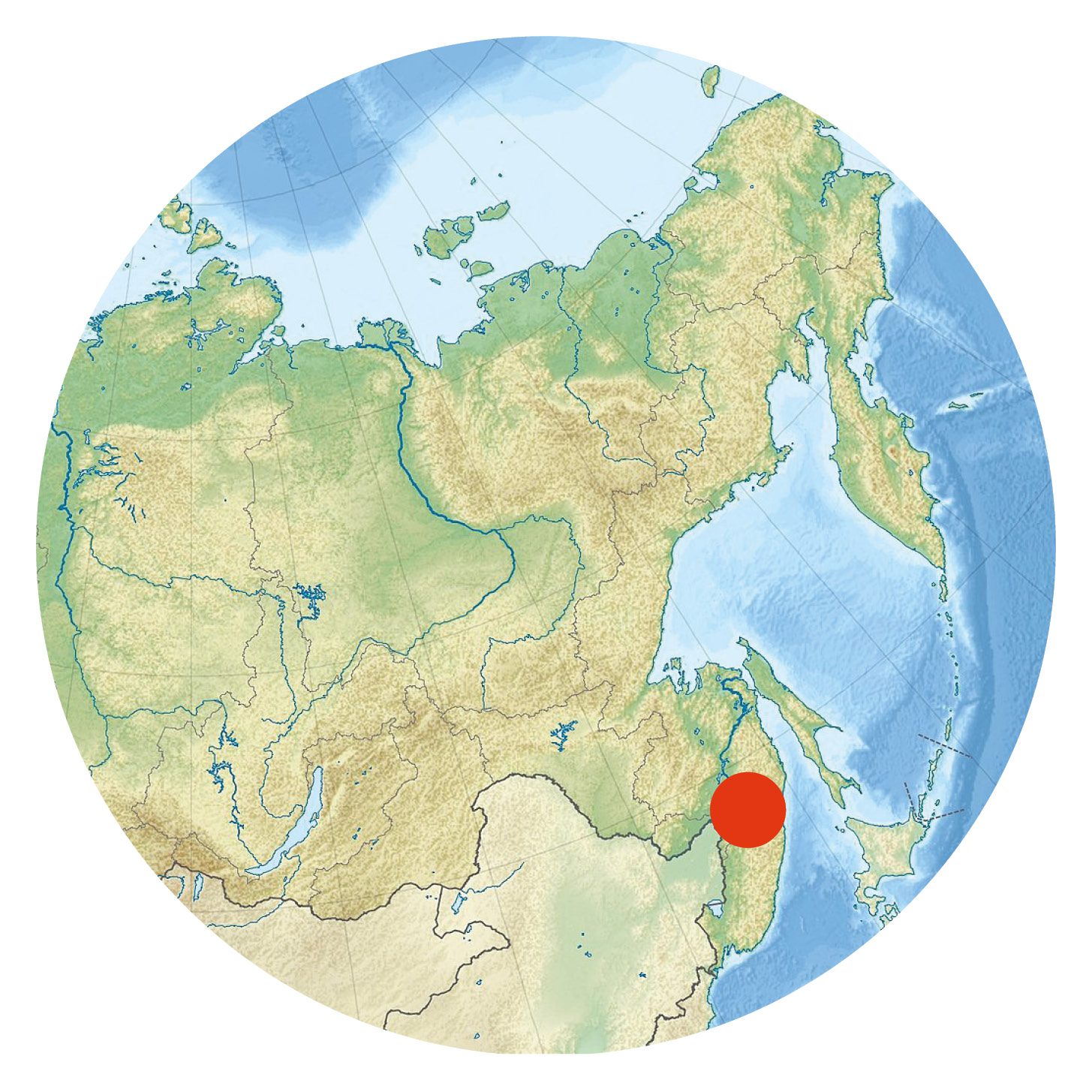
Sikhote-Alin
Discovered: in 1947
Location: Russia
This is another very large meteorite, weighing dozens of tons, which did not reach the surface of the Earth but collapsed when entering the atmosphere. A bright meteor flash was visible from a radius of 250 mi! Fragments of the iron nugget formed a meteor shower, which literally broke the earth into multi-meter-wide craters upon landing. Several thousand fragments were found, many of them weighing thousands of pounds. The mass of the largest fragment is 3847 lb. How much did the original meteorite weigh? At least 25 t. Scientists, though, are constantly recalculating and even believe that the true value may have been several times greater.


Meteorite | Allende
Discovered: in 1969
Location: Mexico
This is the largest carbonaceous meteorite (i.e. containing carbon) and the most studied. Like its Sikhote-Alin counterpart, it broke into pieces, though not in the atmosphere but instead at the moment of collision with the Earth. Fragments littered the area for dozens of surrounding miles. So far, a total of about three tons of fragments have been collected. Scientists have thoroughly studied the chemical composition of the meteorite: in addition to well-known iron, nickel, carbon, etc., it contained a previously unknown mineral, panguite. Astrophysicists at the US Department of Energy claim that the age of the compounds inside the Allende meteorite is about 4.6 billion years — the stone is older than any of the planets in our system and even than the Sun itself!


Meteorite | Chelyabinsk
Discovered: in 2013
Location: Russia
How couldn’t we mention the most recorded meteorite? Car dashcams in several regions of Russia and Kazakhstan captured its fall from different angles, and the videos instantly went viral. Most of the pieces found (the meteorite exploded at an altitude of about 12 mi) are very small, but the initial mass of the space visitor was about 11 t. The shock wave broke the windows in Chelyabinsk homes, affecting more than a thousand people. In the composition of the stone, the mineral jadeite was discovered, which is formed only under very strong pressure and high temperature. This may mean that even before the asteroid hit the Earth it experienced a collision with another large space body.

Post on topic: Where did the meteorites go?
Did you like the post? We invite you to read our other topics in Education category.
Follow us on Instagram.
<svg xmlns="http://www.w3.org/2000/svg" xmlns:xlink="http://www.w3.org/1999/xlink" id="Layer_1" x="0px" y="0px" viewBox="0 0 597.03 475.39" style="enable-background:new 0 0 597.03 475.39;" xml:space="preserve"><style type="text/css"> .st0{clip-path:url(#SVGID_00000021828697454809692600000004318893268413411000_);fill:#54A7B7;}</style><g> <defs> <rect id="SVGID_1_" x="63.22" y="2.39" width="470.59" height="470.65"></rect> </defs> <clipPath id="SVGID_00000125586198135712050590000014503595150480814249_"> <use xlink:href="#SVGID_1_" style="overflow:visible;"></use> </clipPath> <path style="clip-path:url(#SVGID_00000125586198135712050590000014503595150480814249_);fill:#54A7B7;" d="M352.92,237.74 c0-30.06-24.38-54.38-54.38-54.38c-30.06,0-54.38,24.32-54.38,54.38c0,30.01,24.32,54.38,54.38,54.38 C328.54,292.12,352.92,267.74,352.92,237.74 M440.15,237.74c0,78.06-63.55,141.62-141.62,141.62 c-78.12,0-141.62-63.55-141.62-141.62c0-78.12,63.5-141.62,141.62-141.62C376.6,96.12,440.15,159.61,440.15,237.74 M533.83,237.74 c0-129.78-105.58-235.3-235.3-235.3c-129.78,0-235.3,105.52-235.3,235.3s105.52,235.3,235.3,235.3 C428.26,473.03,533.83,367.51,533.83,237.74"></path></g></svg>