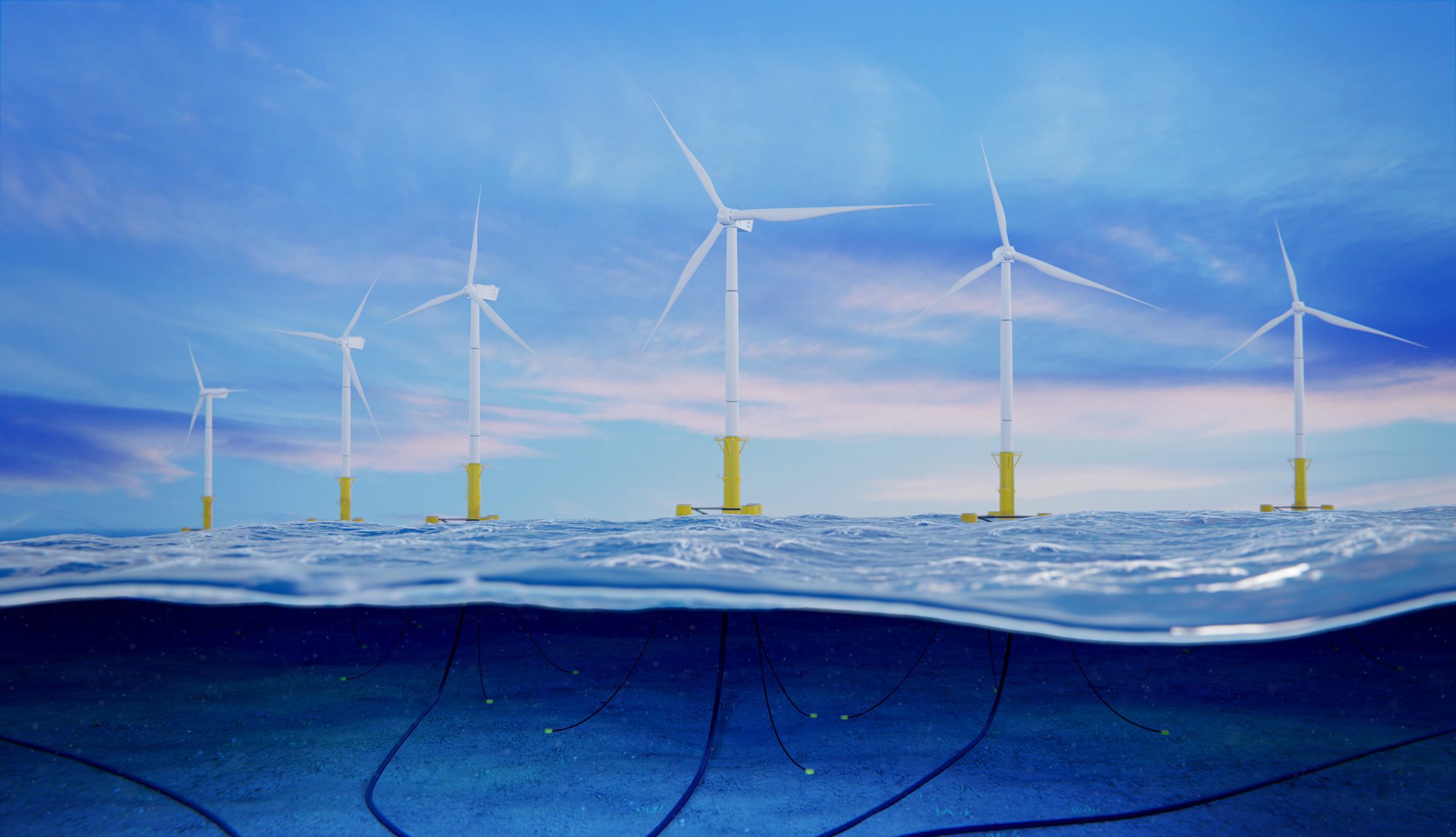
Early Joys
    Post on topic: Underwater Cables.<br /><br />Contemporaries celebrated the event as epoch-making. The press on both sides of the Atlantic competed to express their enthusiasm, practically equating a few telegram messages to the discovery of a new continent. The celebration, however, turned out to be premature: cables that had been laid only after a third attempt broke down after a little more than a month.</p>
                                    <figure>
                                    <img width="800" height="515" src="https://oyla.us/wp-content/uploads/2023/06/img02.jpg" alt="Coating an undersea telegraph cable with gutta-percha (latex) at a factory in Greenwich, 1865" />                                           <figcaption>Coating an undersea telegraph cable with gutta-percha (latex) at a factory in Greenwich, 1865</figcaption>
                                    </figure>
    <p>Only 732 messages were sent via its copper wires. From the point of view of modern volumes of information transfer, this was but a speck of dust — but that was only the beginning! Even then, it was obvious that communication cables would soon be the “backbone” of the infrastructure of the coming epoch. And the future came so suddenly that today, installations of new cables, grandiose in their capacities, are taken for granted and don’t spark much public interest.</p>
                                                <img width="800" height="800" src="https://oyla.us/wp-content/uploads/2023/06/map01.png" alt="Direct connection between Virginia Beach and Rio de Janeiro offers the lowest latency available today. It was designed specifically to minimise risks in the event of natural disasters" />
        <h5>Brusa</h5>
    <p>The first cable establishing a direct connection between Virginia Beach and Rio de Janeiro offers the lowest latency available today. It was designed specifically to minimise risks in the event of natural disasters.</p>
        <h2>Underwater Cables | The Coming Tide</h2>
    <p>In February 2018, the Spanish company Telxius began data transmission along the <b>Marea cable</b> (from the Spanish <i>marea</i>, “tide”) — an underwater cables connecting Virginia Beach on the East Coast of the US with Sopelana, a town near Bilbao in Spain. Another cable? The total length of global underwater communication cables only recently reached 930,000 mi, and there are no more than 500 of them overall (excluding military cables). What is so interesting about this project, then? Well, for one, we can use it to understand the principles and logic behind the installation of undersea cables.
To some degree, this cable can be called a corporate project: it was started by Microsoft, who later partnered with Facebook and the giants of the telecommunications industry, AT&T, Sprint, and Telefónica (Spain). The total cost of the project was more than $15 billion. For a 4,100 mile-long cable, the price for each mile was over $3.6 million. For comparison, the cost of optical fibers for data transmission doesn’t exceed $16 per mile! So, what makes it so expensive? Well, the difference between glass fiber and a communications cable is similar to that of a spool of thread and an evening gown by a high-fashion designer.
UnderWater Cables | What’s Inside?
Underwater cables have few but extreme requirements: durability, full waterproofing (even at depths of 3 miles with pressures up to 500 atm), mechanical strength for installation and operation, and stable performance over its 25-year lifespan.

The cable’s interior consists of fiber-optic cables with a core and cladding of different refractive indices. A light pulse travels through the fiber, repeatedly reflecting off surfaces, experiencing total internal reflection due to the optically dense environment. This reduces signal transmission speed by 40% compared to vacuum speed.
Layers of Submarine Cable Protection
A cable’s primary expense stems from its layered protective design. The first defense against seawater is polyethylene, resistant to various marine elements. Despite its impermeability, water eventually breaches its tiny pores, met by a BoPET film, often reinforced with Kevlar fibers.
Additionally, stranded galvanized steel wires form the next layer, akin to chainmail, safeguarding against tears from anchors, trawls, and marine life, as well as potential sabotage.
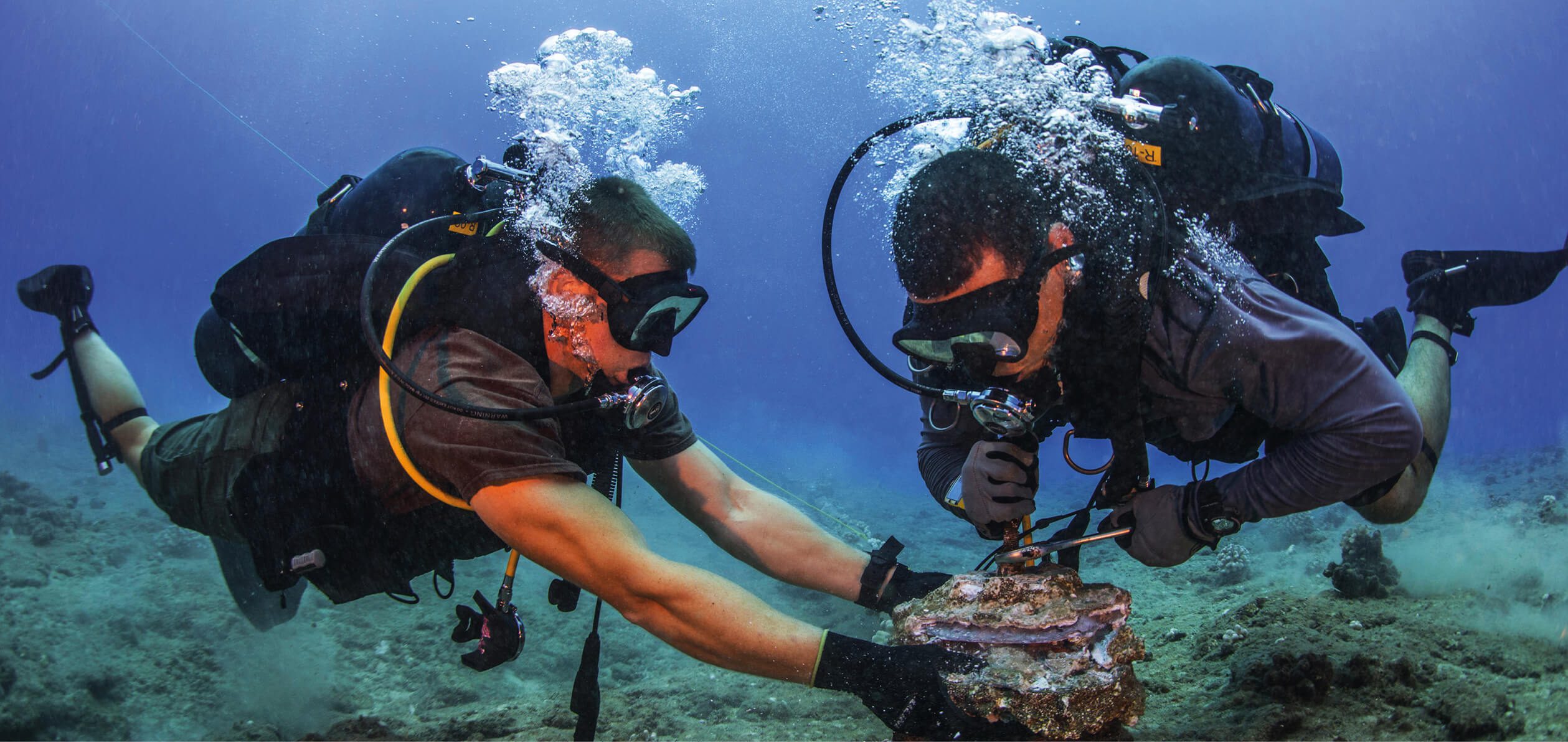
Anatomy of Submarine Cables
Beneath the steel armor lies a layered composition including polyethylene-aluminum, polycarbonate, and a tube filled with water-repellent gel. Inside this gel, thin copper tubes house optical fibers.
These copper elements serve several functions: reinforcing the cable, shielding from interference, and conducting current for control nodes and repeaters. Repeater stations manage laser retransmission, error control, and are spaced about 60 miles apart, enabling fast and accurate damage localization.
FIBER-OPTIC Data Transmission Cables
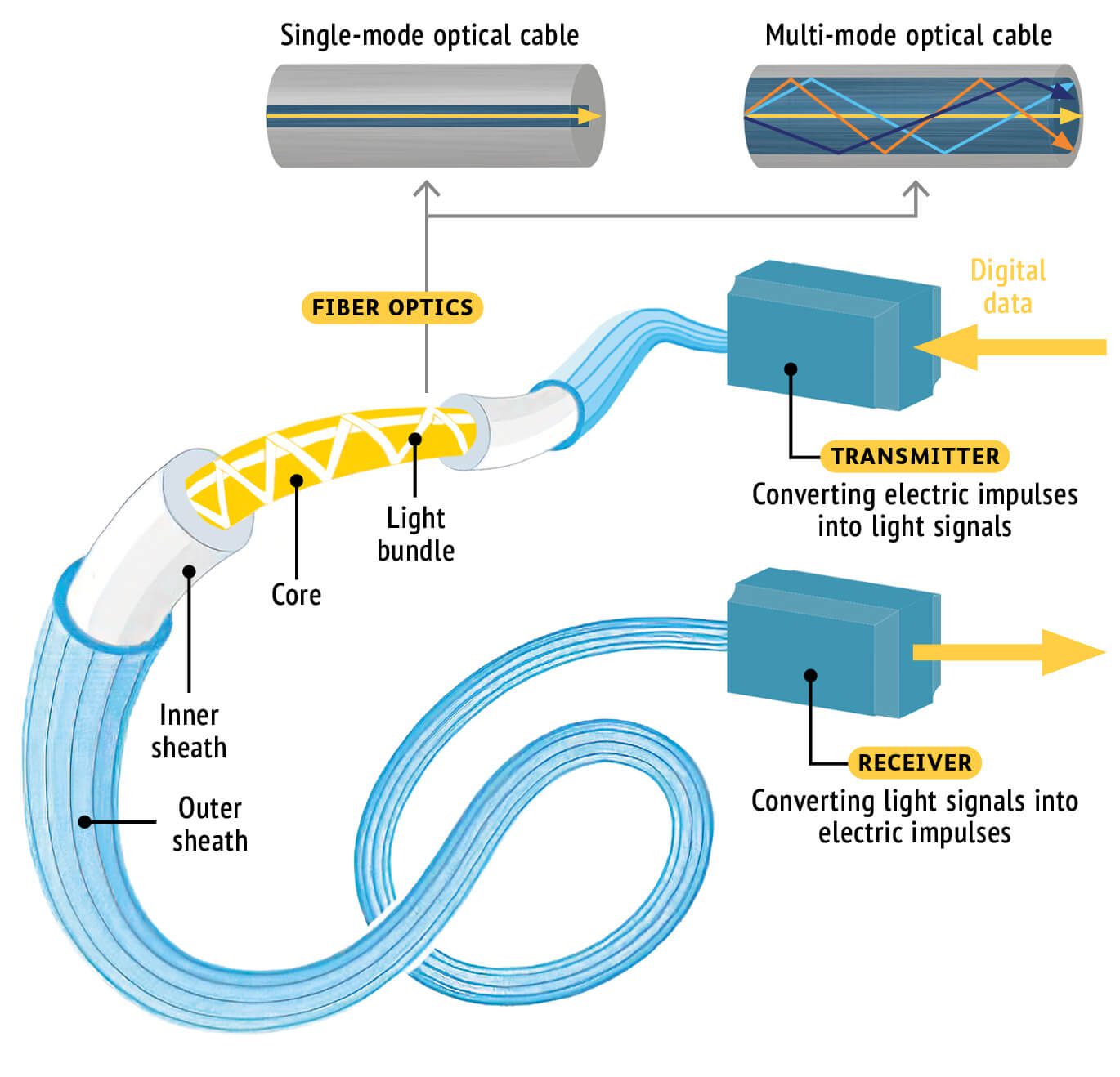
Optical fiber is an optically transparent material, usually plastic, through which pulses of light (or information) travel. In this process, the effect of total internal reflection against the cable’s walls is used. This is why the signal doesn’t attenuate and maintains a high speed when transmitted over long distances.
Underwater Cables | A Ton per Yard
A transatlantic cable’s weight per yard can reach up to one ton, but usually, the only fragments that are encased in extreme protection are those laid down at coastal and shallow-water areas. At great depths, where the effects of human activity are not as significant, there is no point in increased protection; therefore, a lighter, water-resistant cable with a diameter of 1 in is laid there, instead.
Still, the total weight of a cable running thousands of miles long reaches a few thousand tons. For example, Marea totaled at 5,125 t! Transporting such a delicate and bulky load is obviously not a simple task. Construction workers took a radical approach to this problem: the Spanish company Sanjo, specializing in the manufacture of fine blanking parts, built a small plant in Virginia Beach. The cable was constructed from ready-made fragments into long, multi-mile lines, which were then transported onto cable-laying vessels straight from the factory. This decision helped avoid the damage that occurs over ground transportation.

marea
With a 4101-mi length and a 200Tbps capacity, this transatlantic cable has the lowest latency and the highest capacity available today.
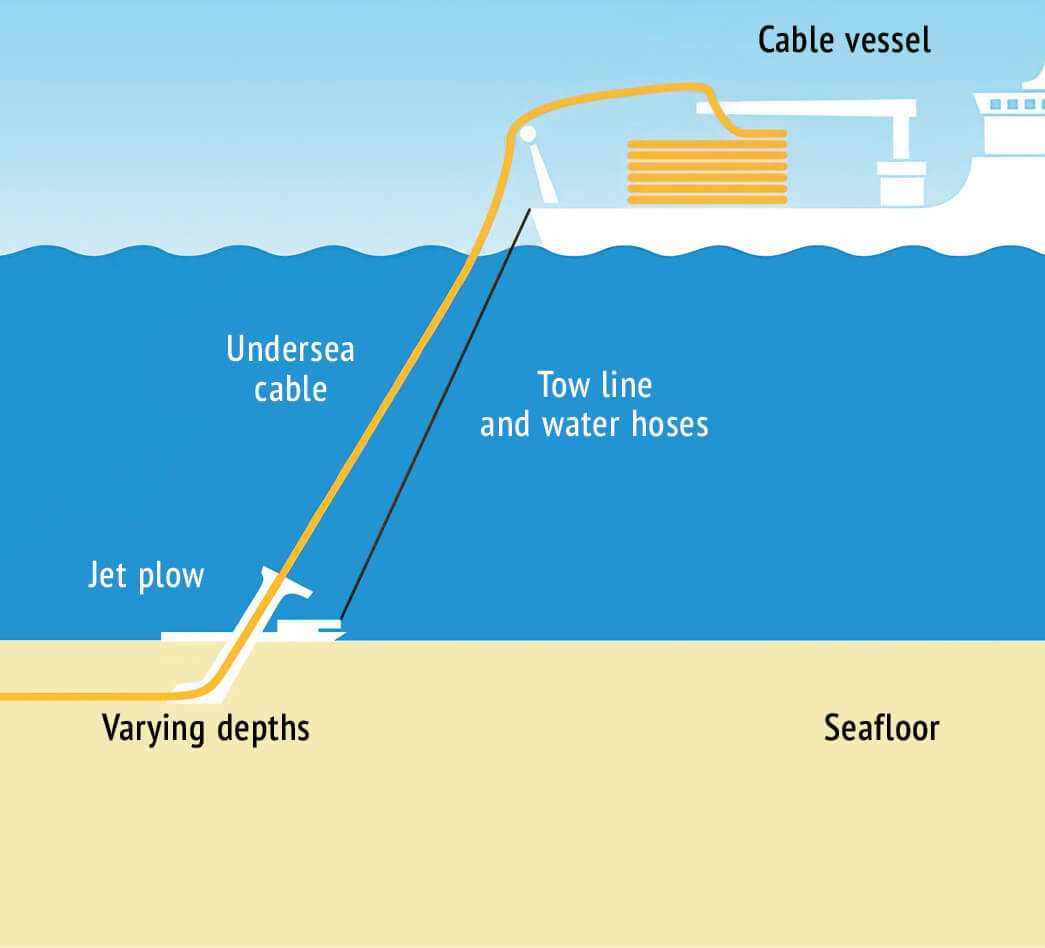
Couple that with the geological and oceanographical investigations required for route planning, the cost of renting and renovation of specialized vessels, and the construction of terrestrial infrastructure…Perhaps, the cost of Marea doesn’t seem so fantastically high to you anymore! Additionally, you have to develop the shortest route (requiring less cable) that avoids hazardous conditions like seismic and volcanic activity, mudslides, and landslides, etc. At the same time, you have to take into account the depth and topology of the seabed, the density and stability of the soil, and many other factors. All of this takes time. Even such authoritative players like Microsoft and Telefónica spent an entire year on preparations — and twice as long to actually lay the cable.
Nearly the Speed of Light
So, what was all of this effort for? On the one hand, it gave us a record bandwidth of 160 Tbps, allowing you to download all eight seasons of Game of Thrones in Ultra HD-quality (around 2.5 Tb) in less than 0.2 seconds, for example! In reality, however, all this power is spread over eight streams that correspond to fiber-optic pairs: both Facebook and Microsoft own two pairs, while the remaining four belong to Telxius.
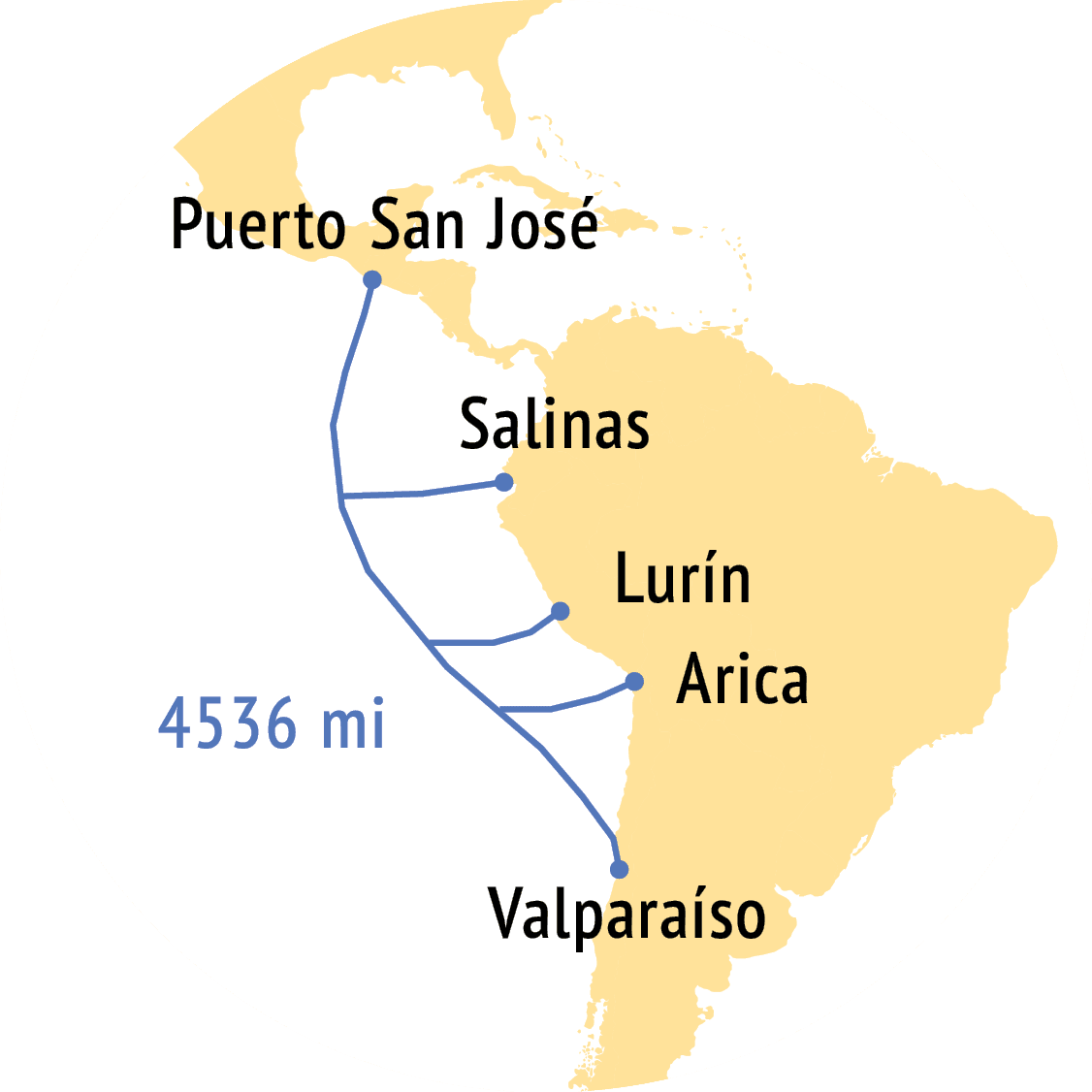
Pacífico
This cable is a joint project by the two largest telecommunications companies of Latin America, whose goal is to improve global communications. The cable is expected to begin operation in 2021.
Another motivation behind designing Marea was Hurricane Sandy, which hit the East Coast of the US in 2012. Afterward, Francisco (Frank) Rey, director of global network strategy at Microsoft, explained this decision as follows: “It was a major disruption. The entire network between North America and Europe was isolated for several hours. For us, the storm brought to light a potential challenge in the consolidation of transatlantic cables that all landed in New York and New Jersey.” In other words, a bundle of geographically proximate communications is not the most reliable solution. You need to have high-capacity networks with enough redundancy and contingency, removed from each other at a sufficient distance so as not to be damaged by natural disasters.
The Web Is Breaking!
In July 2005, a section of the submarine cable linking Pakistan to the expansive 24,000-mile SEA-ME-WE 3 communications system experienced a breakdown. This disrupted internet access for over 10 million users.
Especially amusing was one event that led to a dramatic speed decrease in Vietnam’s Internet connection in March 2007. Fishermen managed to steal nearly 7 mi of cable from the TVH system connecting Thailand, Vietnam, and Hong Kong. The thieves tried to sell over 100 t of fiber-optic cable as scrap, clueless about its real cost. It took three months of repair work to restore the cable to normal operation. Meanwhile, the earthquake and tsunami in Japan that took place on March 11, 2011, damaged the undersea cables that connected the islands with the rest of the world, including the APCN-2 system — an intra-Asia submarine cable system linking China with Hong Kong, Japan, South Korea, Malaysia, the Philippines, Singapore, and Taiwan; as well as the newly-built Unity/ AC-Pacific system laid down by Google to connect Japan and the US.
CAUSES OF SUBMARINE CABLE FAULTS
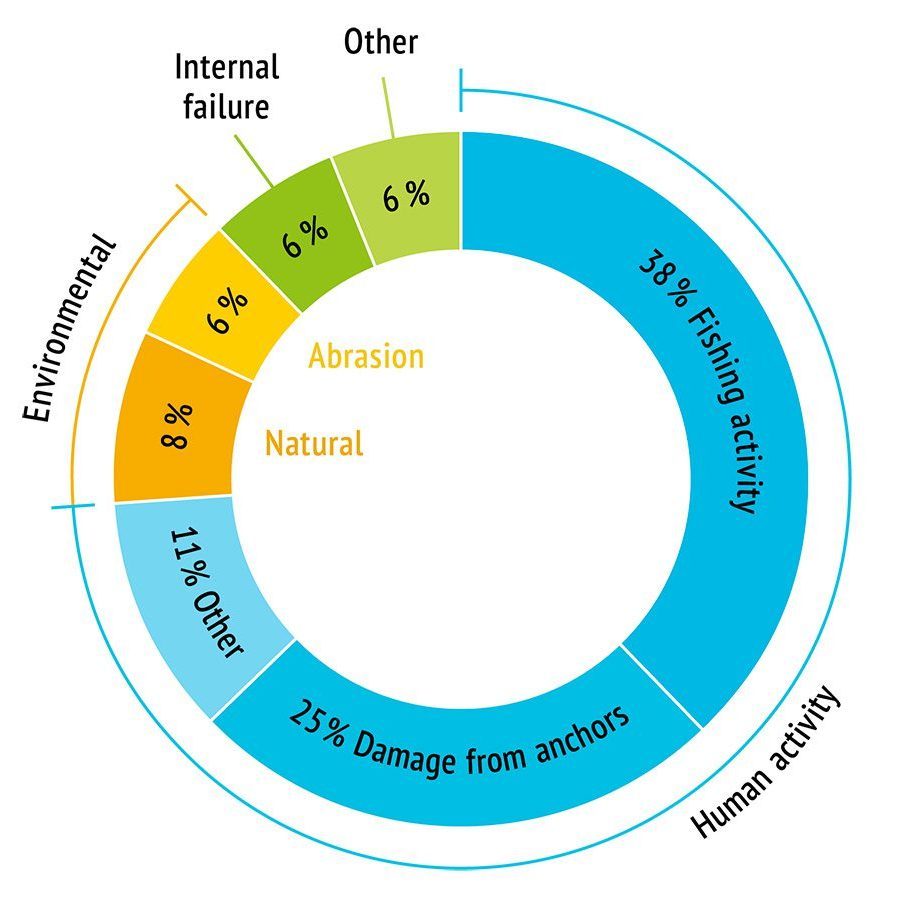
Over 100 faults occur annually, but we seldom hear about them because companies spread their network capacity across multiple cables. If one cable breaks, the network seamlessly operates on others until repairs are made.
In addition to telecommunications companies, behind most of today’s major data transfer projects are Google, Amazon, or Facebook. It’s an investment “with room for growth,” based on projected increases in the number of Internet users and a steady rise in data consumption.
Did you like the post? We invite you to read our other topics in Education category.
Follow us on Instagram.
<svg xmlns="http://www.w3.org/2000/svg" xmlns:xlink="http://www.w3.org/1999/xlink" id="Layer_1" x="0px" y="0px" viewBox="0 0 597.03 475.39" style="enable-background:new 0 0 597.03 475.39;" xml:space="preserve"><style type="text/css"> .st0{clip-path:url(#SVGID_00000021828697454809692600000004318893268413411000_);fill:#54A7B7;}</style><g> <defs> <rect id="SVGID_1_" x="63.22" y="2.39" width="470.59" height="470.65"></rect> </defs> <clipPath id="SVGID_00000125586198135712050590000014503595150480814249_"> <use xlink:href="#SVGID_1_" style="overflow:visible;"></use> </clipPath> <path style="clip-path:url(#SVGID_00000125586198135712050590000014503595150480814249_);fill:#54A7B7;" d="M352.92,237.74 c0-30.06-24.38-54.38-54.38-54.38c-30.06,0-54.38,24.32-54.38,54.38c0,30.01,24.32,54.38,54.38,54.38 C328.54,292.12,352.92,267.74,352.92,237.74 M440.15,237.74c0,78.06-63.55,141.62-141.62,141.62 c-78.12,0-141.62-63.55-141.62-141.62c0-78.12,63.5-141.62,141.62-141.62C376.6,96.12,440.15,159.61,440.15,237.74 M533.83,237.74 c0-129.78-105.58-235.3-235.3-235.3c-129.78,0-235.3,105.52-235.3,235.3s105.52,235.3,235.3,235.3 C428.26,473.03,533.83,367.51,533.83,237.74"></path></g></svg>